


Seeing blood after a bowel movement can be alarming. Many individuals immediately wonder whether they should panic, wait it out, or start treating it at home that same day.
In many adults, bleeding from hemorrhoids is manageable with conservative care, especially when the bleeding is tied to hard stool, straining, or irritated tissue. But not every episode of rectal bleeding should be assumed to be a hemorrhoid, which is why the safest approach is to treat the common causes of irritation while also paying attention to the pattern of bleeding and any warning signs.
What to Do When You See Blood
Start by staying calm and looking at the context. Bright red blood on toilet paper, a few drops in the bowl, or streaking on the outside of stool can happen with irritated hemorrhoids, especially after straining or passing a hard bowel movement. That said, bleeding from the rectal area shouldn’t be dismissed automatically.
The first practical step is simple. Stop wiping aggressively, clean the area gently, and notice whether the bleeding seems light and brief or ongoing. If you’re trying to sort out what blood after wiping can mean, this guide on blood when you wipe and what doctors need you to know can help you think through the possibilities.
Focus on the next bowel movement
What you do over the next day matters more than what cream you buy first. The tissue needs less friction, less pressure, and softer stool.
A helpful short-term plan looks like this:
-
Clean gently: Use warm water or a damp, soft, unscented wipe. Dry toilet paper can keep reopening irritated tissue.
-
Avoid straining: Don’t sit and push. If the bowel movement isn’t coming easily, get up and try again later.
-
Support stool softness: Start correcting constipation early with fluids and fiber rather than waiting for another painful bowel movement.
-
Watch the pattern: Light bleeding that settles is different from recurrent, unexplained, or worsening bleeding.
Bleeding hemorrhoids often improve when the bowel movement itself becomes easier to pass. The real target isn’t just the blood. It’s the pressure and irritation causing it.
Immediate First Aid for Bleeding Hemorrhoids
When hemorrhoids are actively bleeding or feel freshly irritated, the goal is to calm the tissue down fast. That means reducing friction, swelling, and pressure on the area.
What to do right away
Use this sequence:
-
Finish the bathroom visit without lingering. Don’t keep sitting on the toilet to see if more blood appears.
-
Rinse instead of scrubbing. Warm water is usually the least irritating option.
-
Pat dry carefully. Press, don’t rub.
-
Apply a cold compress wrapped in cloth. This can help settle swelling and reduce irritation.
-
Lie on your side or stand up. Prolonged sitting can add pressure to already swollen veins.
Many people accidentally make things worse. They see blood, panic-clean the area, and use more toilet paper than usual. That repeated friction can keep the tissue raw.
What not to do
A few habits tend to prolong bleeding:
-
Don’t use harsh dry toilet paper repeatedly, or wipes. Most people think that wipes are gentle, but most are not. Dr. Carmen Fong, Bummed’s Chief Medical Officer, explains here in this video.
-
Don’t scrub with soap or scented products. These often sting and can inflame the skin further.
-
Don’t keep checking the area. Frequent wiping to “see if it’s still bleeding” can worsen irritation.
-
Don’t strain to finish a bowel movement. The extra pressure is exactly what fragile hemorrhoidal tissue doesn’t need.
If the skin around the anus feels raw, inflamed, or chafed from over-cleaning, it can help to think about barrier care the same way you would for other irritated skin.
A simple comfort measure that often helps
Warm soaking later in the day can ease soreness after the bleeding has stopped. If you want a practical walkthrough, this explanation of sitz bath benefits is a good place to start.
Practical rule: Clean less aggressively than your instincts tell you to. With bleeding hemorrhoids, gentleness usually helps more than “getting perfectly clean.”
Your At-Home Treatment Plan for Healing
Healing usually comes down to one practical goal. Protect the tissue long enough for it to stop getting reopened by bowel movements.
For mild to moderate bleeding hemorrhoids, the home plan works best when it addresses both friction and pressure. OTC creams may calm the surface. They do much less if constipation, prolonged toilet sitting, or repeated straining keeps injuring the same spot. If you want to understand the underlying mechanics of why some hemorrhoids resist healing even with good home care, our how to heal hemorrhoids guide covers that in more depth.
We recommend booking your consult with a Bummed provider as soon as you feel a hemorrhoid coming on. Bummed’s compounded prescription treatments are much more effective than OTC, and are made with multiple active ingredients clinically-proven to help actually heal your hemorrhoids and fissures, not just provide symptom relief.
Build your routine around easier bowel movements
The American Academy of Family Physicians recommends 25 to 35 g of fiber per day, along with increased water intake, sitz baths, and stool softeners, and notes that fiber supplementation decreases hemorrhoidal bleeding by about 50% in supported evidence on conservative management of hemorrhoids (AAFP guidance).
That recommendation matters because the tissue often bleeds again before it has fully healed. If you are not sure whether constipation is driving the problem, this guide on when constipation can cause rectal bleeding can help you sort out the pattern.
A practical daily plan
A simple home routine is usually enough to settle an early flare:
-
Use fiber consistently: Increase it gradually so you are more likely to stick with it.
-
Drink fluids through the day: Fiber works better when stool has enough water in it.
-
Use warm sitz baths: Warm water can reduce soreness and help the area relax after a bowel movement or before bed.
-
Try Bummed’s compounded prescription creams: Target inflammation, infection, swelling, and pain, under the care of a licensed medical provider. Prescription products require an online consultation with a physician who will determine if a prescription is appropriate.
-
Keep toilet time brief: Sit long enough to pass stool, then get up.
If constipation is the sticking point, some readers also benefit from reviewing natural constipation relief methods, especially when diet changes alone have not been enough.
How to use sitz baths well
A sitz bath does not need additives. Warm water alone is often enough.
| What helps | Why it matters |
|---|---|
| Warm water, not hot | Hot water can aggravate sensitive tissue |
| Short, regular soaks | Consistency is usually more helpful than one long soak |
| Skip fragrances and bath additives | These can sting or irritate broken skin |
| Pat dry gently after | Rubbing can restart irritation |
Choose the next step based on what is actually causing the flare
This is the part many people miss. The right home plan depends on what keeps reinjuring the area.
If the main issue is hard stool, focus first on fiber, fluids, and a stool softener if your clinician has recommended one. If the main issue is frequent loose wiping after multiple bowel movements, barrier protection and gentler cleanup matter more. If symptoms started after pregnancy-related constipation, the plan needs to be safe for pregnancy and realistic for a body already under pressure. Bummed provides pregnancy-safe treatment options, but we also recommend to consult with your medical provider before starting any new medication. If symptoms worsened after starting a GLP-1 medication and bowel habits slowed down, a more specific regimen often makes sense because nausea, reduced intake, and constipation can all feed the cycle.
When it makes sense to get extra help
Home care is reasonable for a mild flare that is clearly improving. Recurrent bleeding, repeat flares whenever stool firms up, or symptoms linked to pregnancy, travel, or GLP-1-related constipation deserve a more individualized plan.
Bummed offers an online intake reviewed by a board-certified provider who may prescribe treatment if appropriate, including pregnancy-friendly formulations and care for people dealing with constipation-related anorectal symptoms. That can be a practical option when basic home care is not breaking the cycle of irritation and bleeding.
Diet and Lifestyle Changes to Prevent Future Bleeding
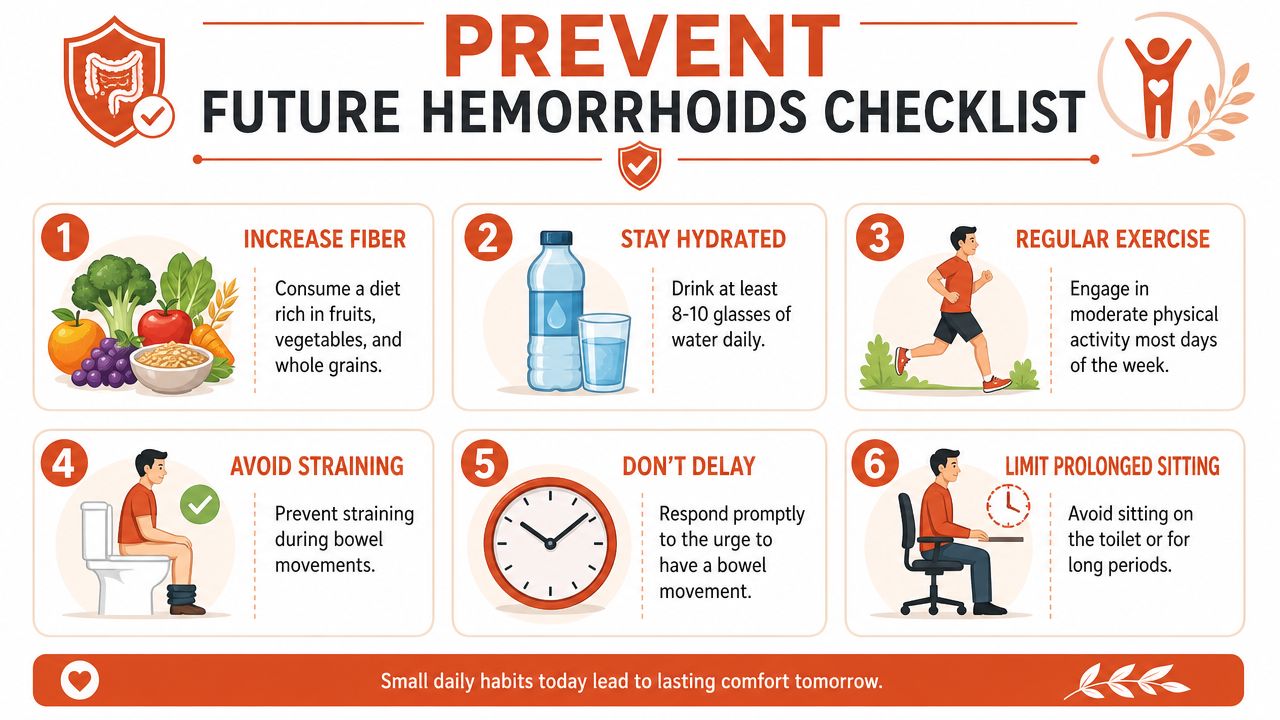
Individuals often look for a fast fix. Prevention usually comes from changing the mechanics of bowel movements so the tissue stops getting reinjured.
Why fiber deserves more attention
A meta-analysis of 7 clinical trials involving 378 patients found that fiber supplementation consistently reduced the risk of hemorrhoid symptoms and bleeding by about 50% (clinical review and meta-analysis). That’s why fiber isn’t just generic wellness advice. It’s a core part of how to heal bleeding hemorrhoids and lower the chance of another flare.
The catch is that people often use fiber poorly. They add a lot overnight, don’t drink enough water, feel gassy, and then stop. Slow, steady increases are usually easier to tolerate and more likely to stick.
What to change in daily life
Think of prevention as pressure management. Every habit that reduces pressure and friction helps.
-
Respond to the urge to go: Waiting too long can make stool drier and harder to pass.
-
Stop straining: If you have to push hard, the setup isn’t working yet.
-
Limit toilet sitting: The toilet shouldn’t become a second office chair.
-
Move your body regularly: Exercise supports bowel regularity and reduces the sluggish pattern that often feeds constipation.
-
Rethink cleanup: Warm water, a bidet, or soft unscented wipes are often kinder than repeated dry wiping.
For adults trying to fix the constipation side of the problem, these natural constipation relief methods can be a useful companion resource, especially if you’re building a more sustainable bowel routine.
Special situations that need a tailored approach
Not every case is simple low-fiber constipation. Some adults are dealing with medication-related stool changes, including GLP-1 medications that slow digestion for some users. Others are pregnant and need a plan that emphasizes stool softness, low irritation, and treatment options cleared through a provider.
Here, prevention looks less like “eat more fiber” and more like troubleshooting:
-
If medication is constipating you: Focus on a complete bowel regimen, not just hemorrhoid cream.
-
If wiping causes burning or spotting: Shift to gentler cleansing and consider whether the skin is being traumatized after each bowel movement. Most people assume that wipes are gentle, but in fact most are quite irritating. We recommend a solution like Qleanse.
-
If bleeding keeps recurring with travel, schedule changes, or dehydration: Build routine into meals, water intake, and bathroom timing.
If you’re not sure whether constipation is driving the bleeding, this article on whether constipation can cause rectal bleeding can help connect the dots.
When Bleeding Hemorrhoids Require Medical Attention
One of the hardest parts of this problem is knowing when home care is reasonable and when you need a provider to evaluate the bleeding. Hemorrhoids are common, but “common” doesn’t mean every case should be self-diagnosed.

A practical decision rule
Cleveland Clinic describes hemorrhoid treatment as starting with conservative measures such as fiber, water, sitz baths, and topical agents, with escalation to office procedures like rubber band ligation or other treatments when symptoms persist. That progression matters. It means persistent or recurrent bleeding deserves medical evaluation rather than indefinite self-treatment (Cleveland Clinic hemorrhoid overview).
Here is the simplest way to consider it:
| Situation | What to do |
|---|---|
| Light bleeding with a clear hemorrhoid flare and improving discomfort | Reasonable to try home care and a telehealth service like Bummed |
| Bleeding that keeps coming back | Schedule evaluation |
| Severe pain, new lump, or worsening swelling | Seek prompt medical care |
| Dark, tarry, or black stool | Get medical attention |
| Dizziness, weakness, or feeling faint | Seek urgent care |
| No improvement after a week of solid home care | Contact a provider |
Signs that should move you out of self-treatment mode
These situations deserve more caution:
-
Bleeding that is persistent or recurrent
-
Pain that is severe or getting worse
-
A lump that can’t be pushed back in or becomes increasingly tender
-
Blood that seems mixed with stool instead of just on paper or on the surface
-
Dark or tarry stool
-
Symptoms that don’t settle after about a week of home care
Mayo Clinic notes that symptoms often improve within about a week of home care, and persistent bleeding or severe pain should prompt medical evaluation. That timeline is useful because it gives people a reasonable window without encouraging them to wait indefinitely.
Pregnancy and GLP-1 use change the plan
Pregnancy and GLP-1 medications don’t automatically make bleeding dangerous, but they do make constipation and recurrence more likely. That means treatment has to be more deliberate. The priorities are softer stool, less straining, and products or prescriptions that fit the situation safely.
If bleeding has been frequent enough that you’re worried about blood loss or symptoms like fatigue and lightheadedness, it can also help to understand the basics of interpreting anemia test results before you speak with a provider.
For adults deciding whether this is the point to get professional help, this guide on whether you should go to a doctor and what doctor deals with hemorrhoids can make the decision clearer.
Frequently Asked Questions About Bleeding Hemorrhoids
How long does it take for a bleeding hemorrhoid to heal?
Many mild flares start settling once you reduce friction and stop passing hard stool. Home care often helps within about a week. If bleeding continues, keeps returning, or pain is getting worse instead of better, it’s time to involve a provider. Bummed’s prescription compounded creams can help heal the root cause of your hemorrhoids, including inflammation, swelling and infection, and will likely speed time to recovery.
Is it normal for hemorrhoids to bleed on and off?
It can happen, especially when bowel habits haven’t changed enough to protect the tissue. On-and-off bleeding often means the hemorrhoid is being reinjured by constipation, straining, prolonged toilet sitting, or abrasive wiping. “Common” doesn’t mean “ignore it forever,” especially if the pattern is recurrent.
How can you tell if the blood is from a hemorrhoid or something else?
Hemorrhoid bleeding is often bright red and noticed on toilet paper, on the outside of stool, or in the toilet after a bowel movement. But rectal bleeding has more than one possible cause. Bleeding with little or no pain is a classic pattern for internal hemorrhoids specifically — our how to heal internal hemorrhoids guide walks through that symptom pattern in more detail if that sounds like what you’re experiencing.
If the bleeding pattern is new, persistent, mixed into stool, dark, or accompanied by other symptoms, don’t assume it’s only hemorrhoids.
Should you keep using hemorrhoid cream if you’re still bleeding?
A topical product may soothe symptoms, but it won’t fix hard stool, repeated straining, or friction from wiping. If bleeding continues despite gentler care and better bowel habits, the issue may need a more complete treatment plan or a medical evaluation. Bummed’s telehealth providers are good first step but if bleeding is persistent or is not improving, we recommend seeking in-person care.
Can constipation from GLP-1 medications trigger bleeding hemorrhoids?
Yes, it can. Any situation that leads to firmer stool, delayed bowel movements, or more straining can set off hemorrhoid bleeding. In that setting, treating the hemorrhoid alone usually isn’t enough. The bowel regimen has to improve too.
Are sitz baths enough on their own?
Usually not. They can be very helpful for comfort and local irritation, but a combined plan is often necessary, including stool-softening strategies, hydration, gentler hygiene, and less straining. Sitz baths are supportive care, not the whole fix.
If you’re dealing with bleeding hemorrhoids that aren’t improving, Bummed offers discreet online evaluation for anorectal symptoms, with provider review and prescription treatment when appropriate. It can be a practical option when you want guidance without waiting weeks for an in-person visit.
Bummed content is for general education and should never replace professional medical advice that considers your individual health. If you think you’re experiencing a medical emergency, call 911 or head to the nearest emergency department.
Prescription products require an online consultation with a physician who will determine if a prescription is appropriate.