
Burning after a bowel movement, itching that won't quit, a tearing pain that makes you tense up before you even sit down. Anorectal symptoms can take over your day fast. They also make a lot of people delay care because the problem feels embarrassing, personal, or easy to ignore for one more week.
A sitz bath is one of the simplest ways to get relief at home. It isn't a cure-all, and it won't fix every hemorrhoid, fissure, or irritation problem on its own. But used correctly, it can calm the area, ease discomfort, and make the next step in treatment more manageable.
That matters, because symptom relief has real value. When pain drops, the pelvic floor can relax, bowel movements can feel less intimidating, and it becomes easier to follow through on hydration, fiber, movement, and topical treatment. If rectal itching is part of the picture, these home remedies for rectal itching can also help round out your routine.
Your Simple Guide to Soothing Sitz Bath Benefits
The reason sitz bath benefits keep coming up in anorectal care is straightforward. Warm water is accessible, low effort, and often feels good quickly. For many adults with mild hemorrhoid irritation, fissure pain, or soreness after straining, that immediate soothing effect is the first win.
What a sitz bath does best is symptom management. It can reduce the feeling of tightness, calm itching, and make irritated tissue feel less raw. That's why providers often suggest it as part of a broader plan rather than as a standalone answer.
Bottom line: A sitz bath helps many people feel better, but it doesn't remove the root cause by itself.
That distinction matters. If constipation, repeated straining, ongoing diarrhea, muscle spasm, or inflamed hemorrhoidal tissue is driving the problem, the bath may help you cope while the underlying issue still needs attention.
People usually do best when they treat the sitz bath as one tool among several:
Warm water for comfort: Useful for short-term relief of pain, itching, and irritation.
Daily habits for prevention: Hydration, fiber, and regular movement can reduce the strain that keeps symptoms going.
Targeted treatment when needed: Topical care or prescription management may be necessary when symptoms persist. Bummed gives patient access to custom compounded creams for hemorrhoids, fissures, itching and more.
A practical mindset helps here. Use the sitz bath because it may soothe. Don't rely on it to do a job it can't do.
What a Sitz Bath Is and How It Soothes
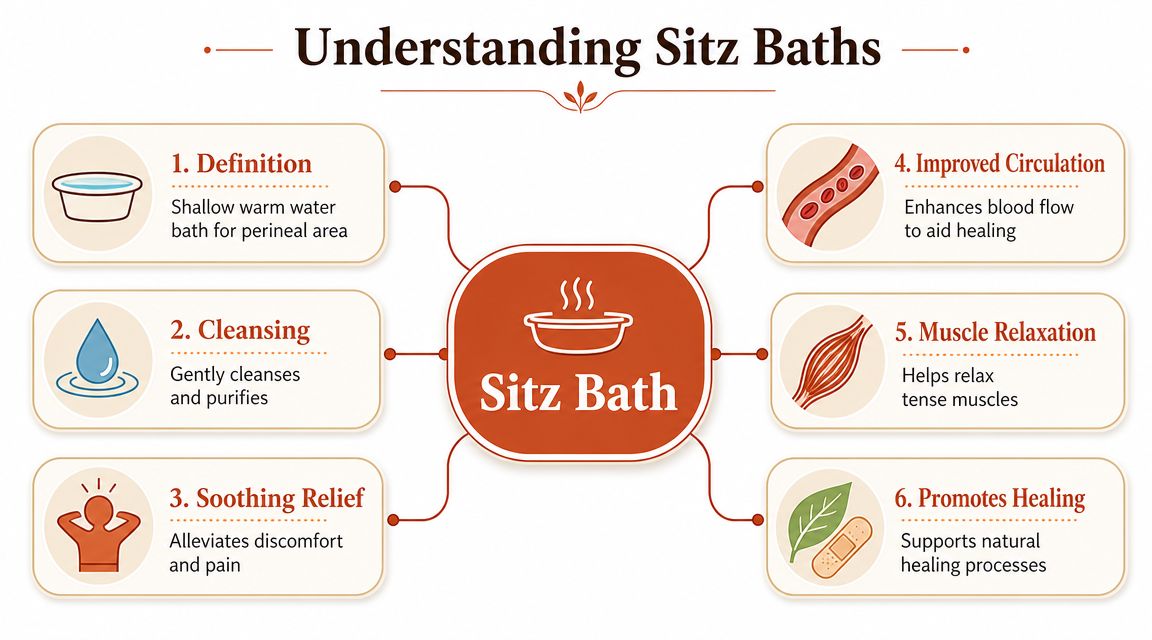
A sitz bath is a shallow warm-water soak for the perineal and anorectal area. You can do it in a clean bathtub or with a basin that fits over the toilet. It's more targeted than taking a full bath, and that focus is the point.
Warm water affects the area in two useful ways. First, it helps the anal sphincter relax. Second, it can improve local blood flow. UMass Memorial Health describes those local muscle and circulation effects as the main reason sitz baths may reduce pain, itching, irritation, and swelling while supporting healing in anorectal tissue, while also noting that the overall strength of high-quality evidence remains modest in the UMass sitz bath overview.
Why warm water helps
A sitz bath acts as a warm compress for a sensitive muscle group. When the anal sphincter is tight, pain often feels sharper. That's especially relevant in anal fissures, where spasm can keep the cycle going. Relaxing that muscle can make the area feel less guarded and less painful.
Improved circulation may also help irritated tissue recover. That doesn't mean a sitz bath is a guaranteed healing treatment. It means the local environment may become a little less hostile and a little more comfortable.
Warm water can soothe tissue even when it doesn't solve the underlying disorder.
What it is not
A sitz bath isn't surgery, and it isn't a replacement for prescription treatment when symptoms keep returning. It also isn't proof that a condition is harmless. Relief can coexist with a problem that still needs evaluation.
If you're interested in the broader idea of using water as a calming tool, this healing with water guide offers a thoughtful wellness perspective. In anorectal care, though, the practical takeaway is narrower. Warm water may help you feel better locally, for a period of time, with relatively low risk when done properly.
Sitz Bath Benefits for Common Anorectal Conditions
Different problems respond to sitz baths in different ways. The common thread is comfort, not cure. For anorectal healing, the clearest practical benefit is short-term pain relief. A 2022 review on sitz baths for anal fissures found that studies consistently supported an analgesic benefit, reported no side effects in the reviewed studies, and also made clear that surgical treatment can produce superior healing compared with conservative care.
Hemorrhoids
With hemorrhoids, people usually want the itching, pressure, and irritated feeling to calm down. A sitz bath can help there. Warm water may make swollen tissue feel less angry and can gently cleanse the area without the friction that comes from over-wiping.
It's most useful when symptoms are mild to moderate and tied to recent constipation, prolonged sitting, or straining. If you need a fuller home-care plan, this guide on how to treat hemorrhoids at home covers the basics beyond soaking alone.
What it won't do is shrink every hemorrhoid permanently or prevent recurrence if bowel habits stay the same.
Anal fissures
It is often when dealing with fissures that sitz bath benefits feel most noticeable. Fissures hurt not only because of the tear itself, but because the anal sphincter can tighten in response. Warm water may help interrupt that pain-spasm cycle.
People often describe the result as less burning and less clenching after a bowel movement. That's useful. It still doesn't mean the fissure is fully healed. If hard stool, repeated trauma, or ongoing spasm continues, symptoms can come right back.
For fissures, the bath often helps most when it reduces guarding and makes bowel movements less dreaded.
Postpartum perineal and pelvic floor soreness
Warm-water soaking is also commonly recommended for soreness in the perineal region after vaginal delivery or after anorectal or vaginal procedures, as noted in standard sitz-bath guidance discussed in clinical education references. In this setting, the value is usually comfort and gentle cleansing.
The same caution applies. Relief doesn't automatically mean recovery is complete. Worsening pain, foul drainage, or concerning swelling should prompt medical review.
General anorectal irritation
Sometimes the issue isn't one dramatic diagnosis. It's a miserable mix of itching, tenderness, moisture, wiping irritation, and discomfort after constipation or diarrhea. A sitz bath can be a low-friction reset for that irritated skin.
Best expectations here:
Less sting: Warm water may calm raw tissue.
Less rubbing: Soaking can reduce the urge to over-clean aggressively.
A better setup for topical care: Clean, relaxed tissue is often easier to treat afterward.
How to Take a Sitz Bath Safely and Effectively
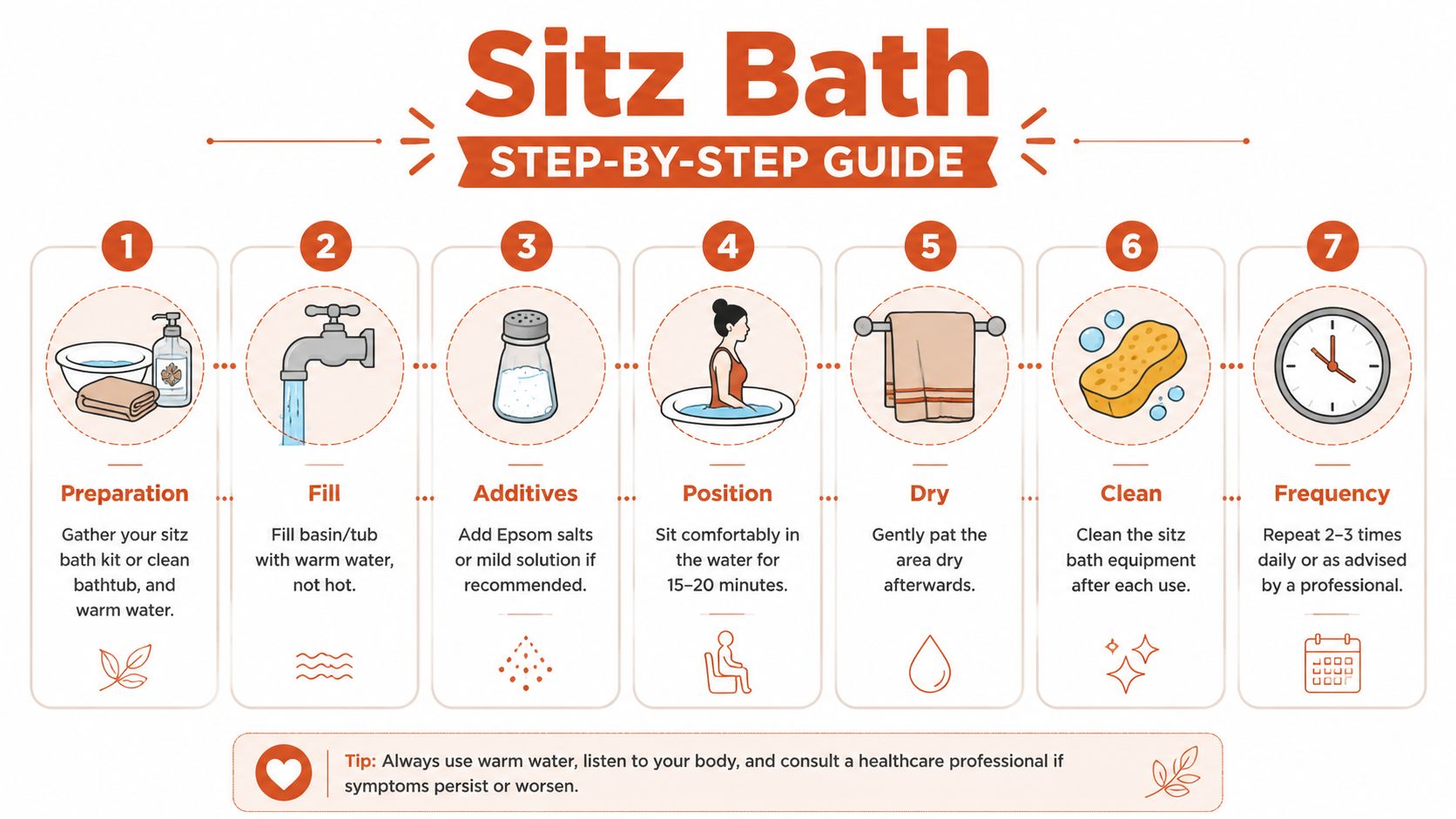
Done right, a sitz bath is simple. Done carelessly, it can irritate skin or expose you to overly hot water. Standard consumer guidance describes using 3 to 4 inches of warm water at about 110°F (43°C) for 15 to 20 minutes.
Two ways to do it
You can use either method below:
A sitz bath basin over the toilet
This is convenient if you don't want to get into the tub. Make sure the basin is clean before and after each use.A clean bathtub
Fill it with just enough warm water to cover the affected area. You don't need a full bath.
Practical steps that work
Use this checklist:
Check the temperature first: Warm is the goal. Hot water can burn sensitive skin.
Keep the water shallow: You only need enough to soak the anorectal or perineal area.
Stay in for 15 to 20 minutes: Longer isn't always better if skin starts to feel over-soaked or irritated.
Pat dry gently: Don't rub. Friction can make symptoms worse.
Clean the equipment afterward: This matters if you're using a reusable basin.
What to apply afterward
If you use a topical medication, cream, or ointment, apply it after the sitz bath. That's often the best time because the area is clean, the muscles are less tense, and you're less likely to trap residue or stool against the skin.
A few common-sense rules help:
| Step | Best approach | Avoid |
|---|---|---|
| Water | Warm, comfortable | Very hot water |
| Drying | Pat gently with a soft towel | Vigorous rubbing |
| Timing | After bowel movements or when symptoms flare | Random use with no routine |
| Topicals | Apply after soaking and drying | Applying before soaking |
Practical rule: If the bath leaves you redder, more irritated, or lightheaded, stop and reassess the temperature, duration, and cleanliness of the setup.
When a Sitz Bath Is Not Enough
A sitz bath is home care. It is not a substitute for proper evaluation when symptoms are intense, persistent, or changing in a concerning way.
That's especially important because the historical evidence base is thinner than many people assume. A 2005 PubMed review of sitz bath literature identified 36 articles, found only one randomized study comparing sitz bath to placebo, and concluded there was a lack of scientific data supporting sitz baths for anorectal disorders. That same review also noted five articles reporting complications such as burns and infections.
Signs you should contact a provider
Seek medical care if you have:
Severe pain: Especially if pain feels out of proportion or suddenly escalates.
Heavy or persistent bleeding: Blood that keeps recurring needs a real assessment.
A new painful lump: A thrombosed external hemorrhoid or another acute issue may need targeted treatment.
Symptoms that don't improve: If a week of home care hasn't moved things in the right direction, it's time to stop guessing.
Constipation that keeps driving the problem: In some people, stool texture and straining are the real engine behind repeat flares. This guide on how long is too long for stool softeners can help you think about the bowel-habit side of the problem.
What a sitz bath cannot do
It can't diagnose bleeding. It can't treat every infection. It can't reverse all chronic fissures. It also can't reliably fix a cycle of recurrent hemorrhoid irritation if the trigger keeps repeating.
When a simple comfort measure stops being enough, more soaking usually isn't the answer. Better diagnosis is.
Complementing Home Care with Telehealth Support
The best use of a sitz bath is as part of a complete routine. Warm water can calm symptoms. Hydration, fiber, and movement support bowel function. Targeted treatment addresses the condition itself.
That's where telehealth can help. For many adults, the barrier isn't willingness to get care. It's time, privacy, and not knowing whether symptoms are serious enough to justify an appointment.
A telehealth provider can review symptoms, help separate likely hemorrhoids from fissure-predominant pain or irritation, and decide whether prescriptions make sense. That's often the missing piece. Sitz baths may soothe the sphincter and skin, but they usually work best when paired with a plan that also addresses stool consistency, spasm, inflammation, and recurrence.
If you're exploring prescription care from home, this guide on how to get prescribed explains what that process looks like.
Frequently Asked Questions About Sitz Baths
How quickly do sitz bath benefits kick in
Many people feel some soothing during or shortly after the soak. That doesn't mean the underlying condition is healed. Think relief first, healing second.
Is a sitz bath better than a regular bath
For anorectal symptoms, usually yes. A sitz bath targets the area directly and uses less water, which makes it easier to do consistently.
Should you add anything to the water
Plain warm water is the safest default. If you're considering additives, ask a provider first. Sensitive or already-inflamed skin can react poorly to products that seem harmless.
How often should you do one
A common practical routine is after bowel movements or when symptoms flare, as long as the skin isn't getting more irritated from repeated soaking. Consistency helps more than overdoing it.
Can a sitz bath heal hemorrhoids or fissures by itself
Sometimes mild symptoms improve with conservative care, but many people need more than soaking alone. Sitz baths help comfort. They don't always correct the reason symptoms started. For prescription creams that help aid in healing and symptom relief, check out Bummed.
When should you stop doing sitz baths
Stop if the area feels more irritated, if the water temperature may be too hot, or if symptoms are getting worse instead of better. At that point, get medical guidance rather than pushing through.
Bummed offers discreet online care for hemorrhoids, fissures, pruritus ani, and related anorectal issues. A board-certified provider reviews your symptoms online and can prescribe treatment if appropriate. Learn more at Bummed.
Bummed content is for general education and should never replace professional medical advice that considers your individual health. If you think you're experiencing a medical emergency, call 911 or head to the nearest emergency department.
Prescription products require an online consultation with a physician who will determine if a prescription is appropriate.