


A lot of people notice rectal bleeding, itching, swelling, or a painful lump and then get stuck on a simple question: what doctor deals with hemorrhoids. The confusion makes sense. Hemorrhoids sit at the intersection of primary care, digestive care, and surgical care, so the right answer depends on what symptoms you have and how severe they are.
Most hemorrhoids are treatable, and many improve without a procedure. What matters is getting to the right level of care quickly, especially if you’re busy, embarrassed, uninsured, or trying to avoid a long wait for a specialist.
When Home Care Is Enough, and When It Isn’t
Before deciding which doctor to see, it helps to know whether you need one yet. Here’s a quick way to sort that out by symptom:
| Symptom | Manage at Home (up to one week) | Consult a Provider |
|---|---|---|
| Itching & discomfort | Mild and intermittent | Severe, constant, or disrupts daily life/sleep |
| Swelling | Small, soft lumps, only slightly tender | Hard, very painful lumps, or swelling that doesn’t decrease |
| Bleeding | A few streaks of bright red blood on toilet paper | Bleeding with every bowel movement, blood in the bowl, or dark/tarry blood |
| Pain | Dull ache or mild soreness after a bowel movement | Sharp, severe, or constant pain that affects sitting or walking |
| Duration | Improves within 5–7 days | Persists past a week or worsens despite home care |
Only around 4.4% of people with hemorrhoids actually seek treatment, according to the National Institute of Diabetes and Digestive and Kidney Diseases — most people wait far longer than they need to. If your symptoms fall into the right-hand column, that’s your answer on whether; the rest of this guide covers who.
Understanding Your Options for Hemorrhoid Care
A common scenario goes like this. You notice bright red blood on the toilet paper, maybe some itching, maybe pressure when you sit, and then you open your phone and see five different answers about who to call. One site says GI doctor. Another says proctologist. Another says urgent care. None of that feels simple when you’re already uncomfortable.

The good news is that hemorrhoid care usually follows a clear path. Mild symptoms often start with home care, primary care, or telehealth. Internal hemorrhoids that need closer evaluation often move to a gastroenterologist. More advanced, recurrent, or prolapsing hemorrhoids often belong with a colorectal surgeon, also called a proctologist in everyday conversation.
Existing content often points people straight to specialists, but it can skip practical first steps like primary care and telehealth. That matters because up to 80% of cases can resolve with conservative treatment, and U.S. telehealth visits for GI issues surged 154% post-2020, according to MedicineNet’s overview of who to see for hemorrhoids.
If your symptoms are mild, simple at-home measures may help while you decide where to start. We’ve outlined those basics in our guide to treating hemorrhoids at home.
Hemorrhoids are common, treatable, and nothing to be embarrassed about. The main job is matching the symptom to the right provider.
The main provider types
-
Primary care provider for first evaluation, symptom review, and conservative treatment
-
Telehealth provider for convenient triage, privacy, treatment planning from home, and access to prescription medications
-
Gastroenterologist for internal hemorrhoids, rectal bleeding workup, and office procedures
-
Colorectal surgeon or proctologist for severe, prolapsing, recurrent, or surgical cases
-
Urgent care or ER when symptoms suggest something more serious than a routine hemorrhoid flare
When to Start with Primary Care or Telehealth
For many adults, the best first step isn’t a specialist. It’s a provider who can sort out whether this sounds like a straightforward hemorrhoid problem or whether it needs a deeper workup.
A primary care provider can often handle mild hemorrhoid symptoms. That includes reviewing bleeding, pain, bowel habits, constipation, straining, and any medicines that might be making things worse. They may recommend fiber, hydration, stool-softening strategies, topical treatment, and follow-up if symptoms don’t improve.
What a first visit usually focuses on
Think of the first visit like traffic control. The provider is trying to answer three questions:
-
Does this sound like hemorrhoids at all
-
Is it likely mild or more advanced
-
Are there warning signs that need urgent or specialist care
That first pass matters because not every anorectal symptom is a hemorrhoid. A fissure, skin irritation, thrombosed external hemorrhoid, abscess, or another source of bleeding can feel similar.
What a physical exam usually involves
If you do see a provider in person, the exam is quicker and less involved than most people expect. It typically has two parts: an external inspection, where the provider looks for visible signs of external hemorrhoids, fissures, or other surface issues, and sometimes a digital rectal exam (DRE), where a gloved, lubricated finger checks for internal hemorrhoids or other irregularities just inside the rectum. It can feel briefly uncomfortable, but it’s fast and it’s one of the most useful diagnostic steps available — confirming what’s actually going on rather than guessing from symptoms alone.
Why telehealth can be a practical first step
Telehealth works especially well when the main barrier is time, privacy, or access. A good telehealth visit can cover symptom history, bowel patterns, bleeding details, prior treatment attempts, and whether an in-person exam is needed next.
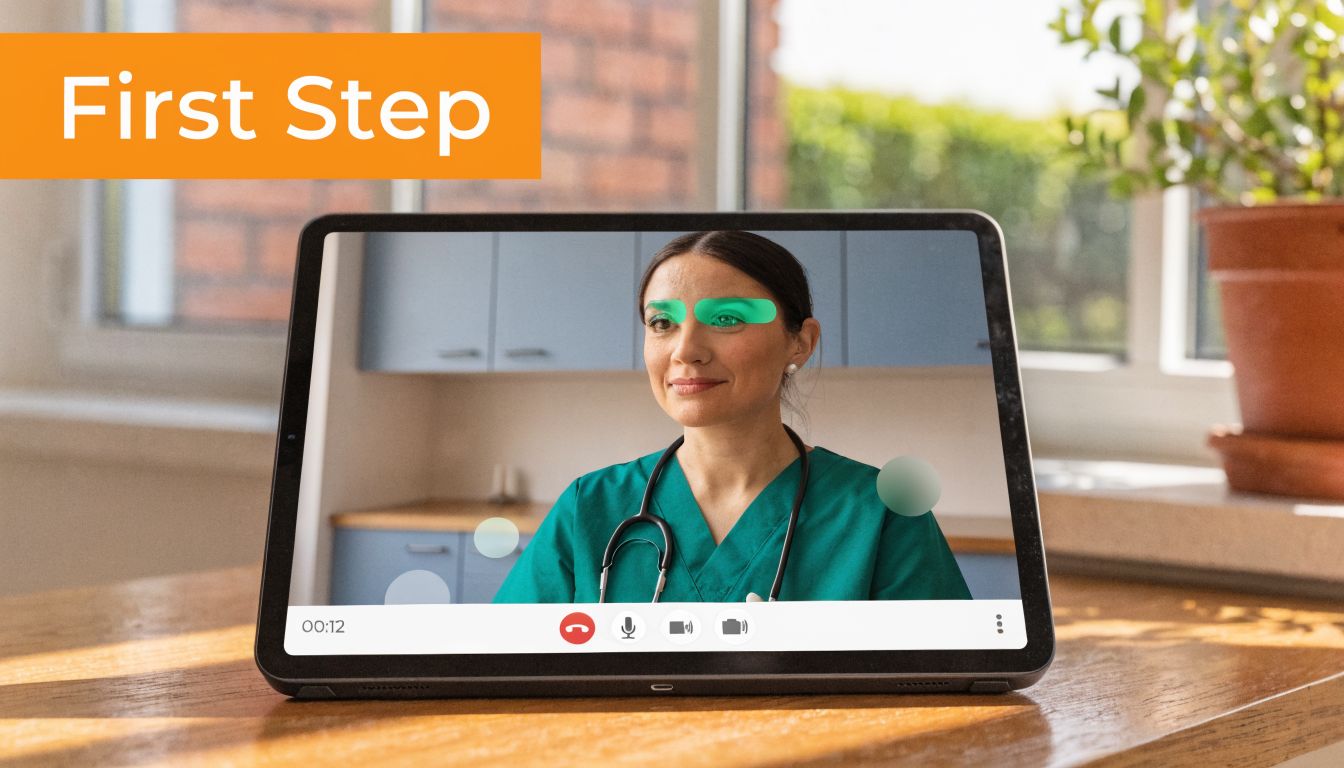
One telehealth option, the only one focused on anorectal health, is Bummed. With this digital health platform, board-certified providers review symptoms within 24 hours, and patient care is overseen by a double-board certified colorectal surgeon. If appropriate, patients will be prescribed custom compounded medications that are shipped to them. That kind of setup can help when local specialist scheduling takes weeks or months.
Practical rule: Start with primary care or telehealth when symptoms are mild, recent, and otherwise typical. Move faster to in-person specialty care if bleeding is persistent, pain is severe, or something feels off.
Good reasons to start here
-
You want privacy and don’t want to wait for an in-person specialist visit
-
Your symptoms are mild such as itching, small amounts of bright red blood, or discomfort with bowel movements
-
You need triage to figure out whether this is home-care level, office-procedure level, or surgery level
-
You may need a prescription rather than just over-the-counter treatment
Seeing a Gastroenterologist for Hemorrhoids
A gastroenterologist is a digestive system specialist. For hemorrhoids, their role is strongest when symptoms suggest internal hemorrhoids, when bleeding needs evaluation, or when an office-based procedure may help.
Internal hemorrhoids are easy to miss because they aren’t always visible from the outside. A person may only notice bleeding, mucus, pressure, or tissue that briefly slips out during a bowel movement. That’s where GI tools and training become useful.
What a GI doctor actually does
A gastroenterologist may use an exam or scope-based evaluation to figure out whether the bleeding is coming from hemorrhoids or from something else higher in the rectum or colon. That distinction matters. “Rectal bleeding” is a symptom, not a diagnosis.
GI specialists also perform office-based treatments for lower-grade hemorrhoids. The best known is rubber band ligation, where a small band cuts off blood flow to the hemorrhoid so it shrinks and falls away over time.
According to the AAFP review on hemorrhoids, the American Society of Colon and Rectal Surgeons strongly recommends office-based treatments for grade I and II hemorrhoids. That same review notes a Cochrane review of 12 trials found that stapled hemorrhoidopexy had higher recurrence than traditional excisional surgery, which helps explain why procedure choice changes as hemorrhoids become more advanced.
When a GI is a strong fit
-
Bleeding is the main symptom and the source needs confirmation
-
You likely have internal hemorrhoids
-
You may need anoscopy, endoscopy, or a colonoscopy-based workup
-
You’re a candidate for office treatment such as rubber band ligation rather than surgery
A gastroenterologist is often the right middle step. They go beyond basic triage, but they usually aren’t the surgeon for the most advanced hemorrhoids.
Where the GI role usually stops
Gastroenterologists are experts in diagnosis, medical management, and non-surgical procedures. If hemorrhoids are large, repeatedly prolapsing, thrombosed, or keep coming back after office treatment, the next stop is often colorectal surgery.
That handoff isn’t a failure. It’s just the normal escalation path. Hemorrhoid care works best when each provider handles the part they’re trained for.
The Role of a Colorectal Surgeon or Proctologist
If you’ve been asking what doctor deals with hemorrhoids when they’re severe, the clearest answer is a colorectal surgeon, often called a proctologist. These are the specialists trained specifically in conditions of the anus, rectum, and lower bowel, including the procedures that other providers typically don’t perform. Bummed is overseen by colorectal surgeon, Dr. Carmen Fong.
It is important to understand that hemorrhoids aren’t all the same. A small internal hemorrhoid that bleeds occasionally is different from a prolapsing hemorrhoid that has to be pushed back in, or one that stays out and causes ongoing pain, swelling, hygiene problems, or recurrent bleeding.
Why these specialists are the definitive experts
If you’re in need of a qualified in-person colorectal surgeon, check out our resource below:
https://imis.fascrs.org/portal/portal/Member_Directory/Find-a-Colorectal-Surgeon.aspx
A colorectal surgeon may recommend:
-
Hemorrhoidectomy, which removes problematic hemorrhoidal tissue
-
Stapled hemorrhoidopexy, used in selected internal hemorrhoid cases
-
Other advanced procedural options, depending on anatomy, symptoms, and recurrence
When referral to colorectal surgery makes sense
Referral is common when hemorrhoids are recurrent, prolapsing, thrombosed, or not improving after conservative care or office procedures. This is also the right specialty when the diagnosis is less certain and another anorectal condition might be involved.
Only a small percentage of patients need surgery. That’s important because many people hear “surgeon” and assume an operation is inevitable. It isn’t. Often, the surgical consultation is about getting the most accurate exam and discussing all options, not automatically booking a procedure.
When symptoms keep coming back or the hemorrhoid won’t stay reduced, a colorectal surgeon can tell you whether a procedure would actually solve the problem instead of just calming it down temporarily.
Red Flag Symptoms and When to Seek Urgent Care
Most hemorrhoids are uncomfortable, not dangerous. But some symptoms should push you out of “wait and see” mode.
The tricky part is that people often assume every rectal symptom must be a hemorrhoid. That can delay care. Severe pain, unusual bleeding patterns, fever, or black stools deserve faster evaluation.
Warning signs that need prompt attention
-
Heavy or persistent bleeding that doesn’t seem minor or keeps recurring
-
Black or tarry stools, which can suggest bleeding from higher in the digestive tract
-
Severe pain with a hard lump, which may reflect a thrombosed external hemorrhoid or another acute problem
-
Fever, drainage, or feeling sick, which can point to infection rather than a routine hemorrhoid
-
Rapidly worsening swelling or pain that makes sitting or walking very difficult
-
Uncertainty about the diagnosis, especially if treatment for “hemorrhoids” isn’t helping
If any of those are happening, urgent care, the emergency department, or a same-day in-person medical evaluation is more appropriate than routine self-treatment.
Who to see for your hemorrhoid symptoms
| Symptom or Situation | Recommended Provider |
|---|---|
| Mild itching, small amounts of bright red blood, discomfort with bowel movements | Primary care or telehealth provider |
| Ongoing bleeding or suspected internal hemorrhoids | Gastroenterologist |
| Prolapse, recurrent symptoms, or possible need for surgery | Colorectal surgeon or proctologist |
| Sudden severe pain, hard painful lump, fever, black stools, or heavy bleeding | Urgent care or emergency department |
| Symptoms that haven’t improved with basic treatment | In-person medical evaluation, often GI or colorectal surgery depending on symptoms |
A newer option for difficult cases
Some people have persistent hemorrhoid symptoms but want to avoid traditional surgery. In that setting, vascular specialists, including interventional radiologists, may offer Hemorrhoidal Artery Embolization. A 2024 systematic review of 22 studies covering over 800 procedures found technical success rates of 93–100% and clinical success (meaningful symptom and bleeding improvement) ranging from 63–94%, with patient-reported satisfaction above 80% in every study reviewed. Results vary by case complexity, and 8–20% of patients need a repeat procedure — but for the right candidate, it’s a genuine option between office treatment and surgery.
That option won’t fit every patient, but it’s useful to know the care pathway doesn’t stop at “banding or surgery.”
How to Prepare for Your Hemorrhoid Appointment
A hemorrhoid visit is easier when you bring a clean symptom story. Providers don’t need perfect wording. They need details that help separate irritation from bleeding, bleeding from prolapse, and a hemorrhoid from something else.
What to track before the visit
Write down a few points in your phone notes or on paper:
-
Bleeding pattern. Is it on the paper, in the bowl, or mixed with stool?
-
Pain pattern. Is it burning, pressure, sharp pain, or tenderness from a lump?
-
Bowel habits. Constipation, straining, long time on the toilet, or diarrhea all matter.
-
Visible changes. Swelling, a lump, tissue that comes out, or skin irritation are worth noting.
-
What you already tried. Sitz baths, wipes, creams, fiber, hydration, or stool softeners
What helps in telehealth
If the visit is virtual, clear symptom descriptions matter even more. In some cases, a photo may help if the platform allows it and the provider requests it. Good lighting and a brief explanation of what the image shows can make the review more useful.
You should also have a medication list ready, including anything that affects bleeding or bowel habits. That makes treatment safer and saves time.
Bring the timeline, not just the symptom. “Bleeding for three days after constipation” is more helpful than “I think it’s hemorrhoids.”
Questions worth asking
Consider asking:
-
What type of hemorrhoid do you think this is?
-
Do I need an exam in person?
-
Is this something a GI doctor should evaluate?
-
At what point would you refer me to colorectal surgery?
-
What should make me seek urgent care?
If you’re looking into telehealth treatment, our blog on the best hemorrhoid medicine explains what a symptom-based intake and treatment review can look like. If a procedure is needed, Bummed also provides a database patients can use to look for local providers and cross-reference insurance coverage if applicable.
Frequently Asked Questions About Hemorrhoid Care
Can a primary care provider treat hemorrhoids
Yes. Primary care providers often treat mild hemorrhoids with conservative care, symptom review, and referral when needed. They’re a good starting point when symptoms are new, mild, or not clearly severe.
What’s the difference between a proctologist and a colorectal surgeon
In everyday use, people often say proctologist to mean a specialist in anorectal conditions. Today, the formal specialty is usually colorectal surgery. For a patient, the practical point is the same. This is the specialist for complex hemorrhoids, advanced procedures, and surgery.
Do hemorrhoids always need surgery
No. Hemorrhoids are graded from I to IV, and treatment depends on that grade. According to the Cleveland Clinic guide to hemorrhoids, office-based procedures such as rubber band ligation are strongly recommended for grades I and II and have 70% to 90% success rates, while grades III and IV may need excisional hemorrhoidectomy, which is the gold standard and offers a 95%+ cure rate.
Can a dermatologist treat hemorrhoids
Usually, no. A dermatologist treats skin disease. They may help if the issue is eczema, contact dermatitis, or another skin condition around the anus, but hemorrhoids themselves are usually managed by primary care, GI, or colorectal surgery.
What if I’m not sure whether it’s a hemorrhoid
That’s common. Anal fissures, skin tags, rashes, infections, thrombosed hemorrhoids, and other conditions can overlap. If you aren’t sure, start with a provider who can triage the symptom pattern and direct you to the right next step. You can always start with the Bummed symptom checker here.
If you want a private first step from home, Bummed offers online anorectal care through a secure intake reviewed by a board-certified provider, with treatment prescribed if appropriate and care overseen by a double-board certified colorectal surgeon. It can be a practical way to sort out symptoms quickly, start treatment, and decide whether you need in-person specialty care next.
Bummed content is for general education and should never replace professional medical advice that considers your individual health. If you think you’re experiencing a medical emergency, call 911 or head to the nearest emergency department.
Prescription products require an online consultation with a physician who will determine if a prescription is appropriate.