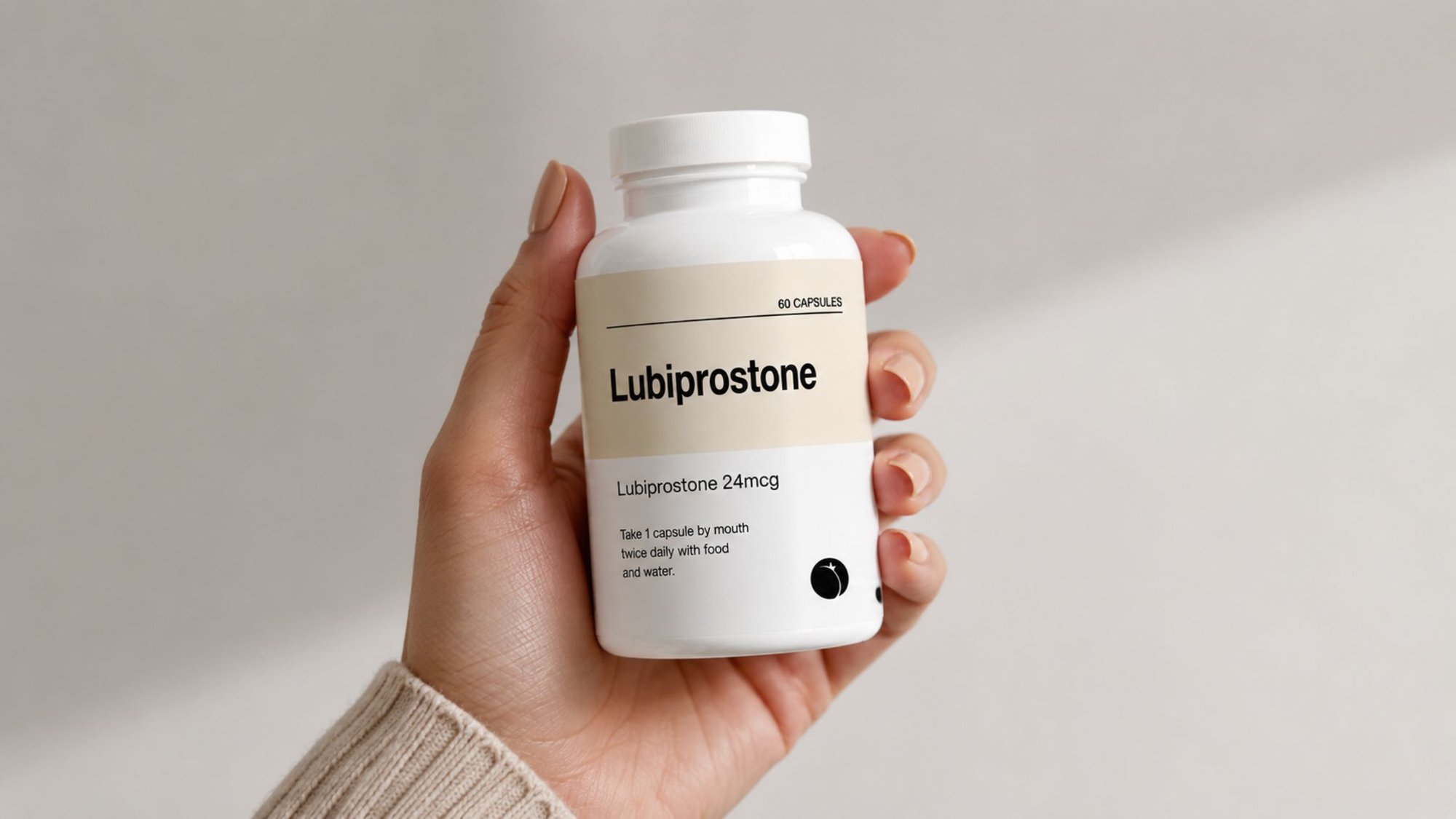


Lubiprostone is a prescription medication for specific kinds of chronic constipation, and it works differently from standard laxatives by increasing fluid inside the intestines. In studies, 60% of patients had a spontaneous bowel movement within the first 24 hours after starting it, compared with 32% to 37% on placebo.
A lot of people who look up lubiprostone are in the same spot. They’ve already tried fiber, fluids, stool softeners, or over the counter laxatives. They may be dealing with hard stools, bloating, straining, or the frustrating feeling that the bowel never fully empties. Some are taking opioid pain medication. Others are on GLP-1 medications for weight loss and suddenly their normal bathroom routine has changed.
Lubiprostone can be a useful next step when the problem is the right kind of constipation. It isn’t a general fix for every bowel complaint. It treats chronic idiopathic constipation, opioid-induced constipation, and IBS-C in women age 18 and older. Because it has a very specific mechanism, it works best when a provider matches it to the right symptoms, reviews safety issues, and helps manage side effects early. If you’re already looking for where to get it, Lubiprostone through Bummed is one online option to explore for evaluation and treatment when appropriate, including same-day pickup at your local pharmacy when a provider prescribes medication and your pharmacy has it in stock.
What Is Lubiprostone and How Can It Help
You finally get a prescription after weeks or months of hard stools, straining, bloating, or feeling like you are never fully empty. A fair question comes next. What is lubiprostone, and why would a clinician choose it instead of telling you to try another laxative?
Lubiprostone is a prescription medication for certain long lasting constipation disorders. It is sold under the brand name Amitiza. Clinicians use it when the pattern of symptoms suggests a targeted prescription may help more than cycling through over the counter products that only work part of the time or cause cramping.
Its role is fairly specific. Lubiprostone helps the intestine release more fluid into the stool so bowel movements are easier to pass. It works like opening tiny water channels in the gut lining. For the right patient, that can mean less straining, softer stools, and less of the backed-up, uncomfortable feeling that often comes with chronic constipation.
That difference matters in real life. Some people have already tried fiber, magnesium, polyethylene glycol, senna, or stool softeners and still feel stuck between two problems: not enough relief, or too much urgency. Lubiprostone offers another option with a different mechanism, which is one reason it often comes up in patients with chronic constipation, IBS-C, or constipation related to opioid use.
I also see it come up more often now in people taking GLP-1 medications for weight loss or diabetes care. Those drugs can slow digestion and change bowel habits. Lubiprostone is not automatically the right answer, but it can be part of a practical treatment plan after a clinician rules out the bigger issues, reviews your medication list, and matches the prescription to your symptoms.
A careful review still matters before starting it. Tell your provider how long constipation has been going on, what treatments you have already used, whether you have nausea or vomiting, and whether you have severe pain, belly swelling, or concern for a blockage. Those details change the plan.
Food, hydration, activity, and bowel routine still matter alongside prescription treatment. If you want a practical refresher, this guide on high fiber foods for constipation is a helpful place to start. If symptoms keep returning, it also helps to review broader chronic constipation treatment options so you can see where lubiprostone may fit, including whether it is something to discuss through a telehealth visit.
Who Can Benefit From Taking Lubiprostone
Lubiprostone is approved for three specific conditions. That’s important because many people use the word “constipation” to describe several different problems.
Chronic idiopathic constipation
This means long-term constipation without a clear single cause. “Idiopathic” means there isn’t an obvious explanation like a bowel obstruction, a temporary stomach bug, or a newly started medication.
This is the person who has been constipated for months, not just during travel or after one weekend of poor eating. They may strain often, pass hard stool, or go several days feeling full and uncomfortable.
Opioid-induced constipation
Opioid medications can slow the bowel in a predictable way. This isn’t a willpower issue and it isn’t something people can always fix with extra water alone. The bowel often becomes sluggish because the medication changes gut movement.
The FDA approved lubiprostone for chronic idiopathic constipation in 2006, and later granted supplemental approval in April 2013 for opioid-induced constipation in adults with chronic noncancer pain, with a recommended dose of 24 mcg orally twice daily, as described in an AHDB review of Amitiza approval details.
One caveat matters here. Methadone can reduce lubiprostone’s effect. If you take methadone, your provider should know before this medication is considered.
IBS-C in women age 18 and older
IBS-C is more than infrequent stool. It combines constipation with a broader gut pattern that may include abdominal discomfort, bloating, and a bowel pattern that feels inconsistent or sensitive.
For adults trying to sort out whether their symptoms sound like this condition, our guide to IBS-C and how to finally get your gut moving again can help frame that conversation before a medical visit.
Some patients who fit one of these categories may be prescribed Lubiprostone, a twice-daily prescription capsule designed to restore the body’s natural digestive rhythm. The key is fit. The right patient can do well on it. The wrong bowel problem won’t respond the same way.
When it may not be the right match
Lubiprostone isn’t ideal for every person with constipation symptoms. It may not be the best starting point if:
-
You might have a bowel obstruction. This needs urgent medical evaluation first.
-
You have severe diarrhea already. The medication can make that worse.
-
Your symptoms are mixed or shifting. Some people move between constipation and diarrhea, and treatment needs more nuance.
-
Your main issue is a secondary cause. A provider may need to address the trigger first, such as a new medication or another health condition.
The best results come when the diagnosis is right. Constipation is a symptom. Lubiprostone treats specific constipation syndromes.
How Lubiprostone Works to Relieve Constipation
A common patient question is simple: if I’m already bloated, backed up, and uncomfortable, how is one small capsule supposed to change that? The answer is that lubiprostone works on the fluid balance inside the intestine. It does not act like a harsh laxative that tries to force a bowel movement.
The simple version
Lubiprostone activates ClC-2 chloride channels in the lining of the intestine. Once those channels open, chloride moves into the gut. Sodium and water follow. That added fluid softens stool and helps it move through the colon with less resistance.
This local action is the main reason it feels different from stimulant laxatives for many patients. Instead of pushing the bowel harder, it makes the stool easier to pass.
What that means in real life
Dry, hard stool moves poorly for the same reason dry food sticks in a narrow tube. It needs moisture to pass through more easily. Lubiprostone helps create that moisture from inside the gut.
That matters for patients who strain, pass pebble-like stools, or feel like the bowel movement is there but will not come out. In practice, the goal is not a dramatic purge. The goal is a more regular, less effortful pattern over time.
Some people notice improvement quickly, while others need several days before the bowel rhythm starts to shift. As noted earlier in the article, clinical trials showed that some patients had an early response within the first 24 hours, and others improved over the first week. That is a useful expectation to set up front, especially for patients who are used to over-the-counter products that feel more immediate but also more aggressive.
If you are also dealing with slow gut movement from diet changes, low activity, or newer medications such as GLP-1 drugs for weight loss, this guide on how to improve gut motility helps explain the bigger picture.
Lubiprostone improves the bowel environment so stool can pass with less friction.
What it doesn’t do
Lubiprostone has limits. It will not treat a bowel obstruction, and it is not the right medication for severe abdominal pain, repeated vomiting, or sudden inability to pass stool or gas. Those symptoms need urgent medical evaluation.
It also may not work as well when constipation is being driven by another medication or condition that needs its own plan. That comes up often in telehealth visits. A patient may request lubiprostone, but the safer and more effective next step is sometimes to address the actual driver first, especially if constipation started after an opioid change, a GLP-1 dose increase, or a sudden shift in symptoms.
Lubiprostone Side Effects and How to Manage Them
A common real-world scenario is this: someone starts lubiprostone, takes the first capsule on an empty stomach, feels queasy, and decides the medication is not for them. In practice, a few dosing details often make the difference between stopping early and giving the medicine a fair trial.
Standard dosing
The prescribed dose depends on the condition being treated.
| Condition | Typical dose |
|---|---|
| Chronic idiopathic constipation | 24 mcg twice daily |
| Opioid-induced constipation | 24 mcg twice daily |
| IBS-C in women age 18 and older | 8 mcg twice daily |
Take each dose with food and water. That one habit reduces nausea for many patients and makes the first week easier. For timing, missed doses, and how long it takes to work, see our guide to lubiprostone 24 mcg dosing.
The side effects patients notice most
Nausea is the side effect I warn patients about first, because it is common and it is one of the main reasons people stop too soon. Diarrhea, headache, and dizziness can also happen.
In a 48-week safety study, nausea, diarrhea, and headache were among the most commonly reported side effects, and most were mild to moderate according to the PMC long-term safety study on lubiprostone. The practical point is simpler than the percentages. Side effects are common enough to plan for, but they are often manageable with the right dosing routine and early follow-up.
That matters even more for people already dealing with medication-related gut symptoms. I pay special attention to this in patients taking GLP-1 medications for weight loss, because they may already have nausea, slower stomach emptying, or reduced appetite before lubiprostone is added.
How to manage the common problems
-
Nausea after a dose
Take the capsule with a real meal or a substantial snack and a full glass of water. If nausea starts after the morning dose, some patients do better when they are more deliberate about breakfast instead of taking it with coffee alone. -
Loose stool or diarrhea
Some looseness can happen because the medicine pulls more fluid into the intestine. If diarrhea becomes frequent, disruptive, or severe, contact your prescriber. Some patients need the dose reduced to 24 mcg once daily if side effects are limiting. -
Headache
Headache is usually short-lived. If it keeps returning, feels intense, or shows up with dehydration from diarrhea, let your provider know. -
Dizziness after taking it
Stand up slowly, especially after the first few doses. Fainting and low blood pressure have been reported, particularly with the 24 mcg twice daily dose, so dizziness deserves attention if it is more than brief lightheadedness.
Consistency helps. So does honesty about how you are feeling. If side effects are building over several days, report that early instead of pushing through until you quit the medication altogether.
When to stop and call for help
Contact your provider promptly if you develop severe diarrhea, marked dizziness, fainting, or symptoms that feel much stronger than a routine medication side effect.
Get urgent medical care for severe abdominal swelling, ongoing vomiting, or an inability to pass stool or gas. Those symptoms raise concern for a blockage and should not be watched at home.
Shortness of breath has also been reported after dosing in general drug references such as Cleveland Clinic and Mayo Clinic. Breathing symptoms after a dose deserve prompt medical advice.
What to expect with longer use
Lubiprostone is often used for long-term constipation management, not just a short reset. Patients usually want fewer bad days, less straining, and a bowel pattern that feels predictable enough to trust.
Longer-term studies support ongoing use in appropriately selected adults, with symptom improvement maintained over time in many patients. In telehealth practice, that longer view matters. The goal is not just to trigger a bowel movement this week. The goal is to build a plan you can stay on, especially if constipation is part of a bigger picture such as IBS-C, opioid treatment, or newer GLP-1 therapy.
Important Safety Information and Drug Interactions
Lubiprostone is often straightforward to prescribe. It is not something to start casually without reviewing your full medication list and bowel symptoms.
Who shouldn’t take it
The clearest contraindication is known or suspected bowel obstruction. If a provider thinks stool is not passing because something is physically blocking the bowel, lubiprostone is not the answer.
It’s also contraindicated in patients with severe diarrhea. If the bowel is already moving too fast, adding a medicine that increases fluid secretion can worsen the problem.
The methadone issue
For opioid-induced constipation, one interaction is especially important. Diphenylheptane opioids such as methadone can dose-dependently inhibit ClC-2 activation by lubiprostone, which can limit how well it works. This doesn’t mean every opioid blocks it. It does mean methadone deserves a separate conversation before treatment starts.
The under-discussed GLP-1 question
A growing number of adults are dealing with constipation after starting GLP-1 medications for weight loss. That includes medicines such as semaglutide and tirzepatide. These drugs can delay gastric emptying, which may change how other medications move through the upper GI tract.
A critical information gap exists for patients on GLP-1 agonists such as semaglutide, which delay gastric emptying. This can potentially alter lubiprostone’s absorption and effectiveness, a nuance not yet addressed on standard drug labels but important for this population. Read for more on why GLP-1 medications slow your gut.
That does not automatically rule out lubiprostone. It does mean your provider should know:
-
Which GLP-1 medication you take
-
When constipation started
-
Whether nausea or delayed stomach emptying is already an issue
-
What time of day you take each medication
-
Whether your symptoms are constipation only, or constipation alternating with diarrhea
Don’t hide “weight loss meds” in the intake form. With constipation treatment, that detail can change the plan.
Pregnancy and broader safety review
Lubiprostone is generally avoided during pregnancy unless the potential maternal benefit outweighs fetal risk. In animal studies in guinea pigs, fetal loss occurred at doses two to six times the recommended human dose, and the medication is categorized as Pregnancy Category C on its FDA label.
That’s not a reason to panic if pregnancy is possible. It is a reason to discuss it before starting treatment.
A practical checklist before starting
Bring these points to your provider visit or telehealth intake:
-
Current medications including opioids, methadone, and GLP-1 drugs
-
Bowel pattern including whether you ever swing into diarrhea
-
Red flag symptoms such as vomiting, severe pain, or abdominal swelling
-
Pregnancy status or plans
-
Past response to fiber, osmotic laxatives, stimulant laxatives, or other prescriptions
This isn’t bureaucracy. It’s how we avoid giving the right drug to the wrong bowel problem.
How to Get a Lubiprostone Prescription Online
For many adults, the hardest part isn’t learning about lubiprostone. It’s getting evaluated without waiting weeks for an in-person appointment.
Telehealth can work well for constipation when the symptoms fit a routine outpatient pattern and there are no emergency warning signs. The process is usually simple, private, and fast.
What the online process usually looks like
Bummed starts with a secure intake. You’ll answer questions about your bowel pattern, symptoms, medications, health history, and any red flags.
A licensed provider reviews that information and decides whether a prescription is appropriate. If lubiprostone fits, the provider can prescribe it. If it doesn’t, the better outcome is honesty. You may need a different constipation treatment, testing, or urgent in-person care.
What to include in your intake
The quality of the prescription decision depends on the quality of the history. Be specific.
-
How long constipation has been happening
-
Whether stools are hard, infrequent, or difficult to pass
-
Any bloating or abdominal discomfort
-
Use of opioids or GLP-1 medications
-
Whether you’ve had diarrhea at times
-
What over the counter treatments you’ve already tried
That level of detail helps a provider decide whether lubiprostone is a good match or whether another approach makes more sense.
Where Bummed fits
Bummed is one telehealth option for adults dealing with constipation and related anorectal issues. Through how to get prescribed online, patients can complete a secure intake, have a provider review their case, and receive treatment if appropriate. Patients specifically looking for lubiprostone can also review Lubiprostone through Bummed as an early starting point for treatment access.
If lubiprostone is prescribed, Bummed can send the prescription to your local pharmacy for same-day pickup when possible, which can be a practical option for people who want treatment quickly without waiting for shipping. Timing still depends on provider approval, pharmacy hours, and whether the medication is in stock.
That may include constipation care, and Bummed also offers treatments such as Bummed’s Long-Acting Hemorrhoid & Fissure Rx Cream for related anorectal symptoms when a provider determines they fit the picture. Constipation often travels with hemorrhoids, fissures, and painful bowel movements; addressing one without considering the others can lead to persistent issues.
When online care is not enough
Telehealth is not the right setting for severe abdominal pain, repeated vomiting, fainting, blood loss that feels substantial, or symptoms suggesting bowel obstruction. Those situations need in-person evaluation quickly.
For everyone else, online prescribing can remove a lot of friction. You get privacy. You avoid sitting in a waiting room to discuss bowel habits. And you still get a real medical review, which is what matters most.
Frequently Asked Questions About Lubiprostone
Is Lubiprostone the same as a laxative
Lubiprostone is a prescription constipation medication that works at the intestinal lining to pull more fluid into the bowel. It does not act like a stimulant laxative that pushes the intestine to contract harder, and it is not a one-time cleanout medicine.
That difference matters for people dealing with chronic constipation, including some patients whose symptoms worsened after starting GLP-1 medications for weight loss. In that setting, the goal is usually steadier bowel function, not a harsh short-term effect.
Comparing constipation treatments
| Treatment Type | How It Works | Best For | Considerations |
|---|---|---|---|
| Bulk-forming fiber | Adds bulk and holds water in stool | Mild constipation and routine prevention | Can worsen bloating or feel slow if you’re already backed up |
| Osmotic laxatives | Pulls water into the bowel | Common first over-the-counter step | Often helpful, but some people still need a prescription option |
| Stimulant laxatives | Triggers bowel contractions | Short-term rescue when you need more immediate push | Can feel crampy for some people and may not be ideal as a long-term main strategy |
| Lubiprostone | Opens chloride channels so the bowel secretes more fluid | Chronic idiopathic constipation and opioid-induced constipation in adults | Prescription only. Often taken with food to lower nausea |
How is Lubiprostone different from Linzess
Comparing lubiprostone and Linzess starts with how they work, the side effects you are willing to tolerate, and what problem you are treating. Both are prescription options for constipation, but they act through different pathways and do not feel the same for every patient.
In practice, prior history often decides the next best step. If one medicine caused cramping, urgent diarrhea, or did very little, that should shape the choice more than online side-by-side lists.
Can you take Lubiprostone long term
Yes, for the right patient. Lubiprostone acts mainly in the gut and has minimal absorption into the bloodstream, according to the FDA prescribing information for Amitiza.
That is one reason many clinicians use it as part of ongoing treatment if it is helping, bowel movements are more predictable, and side effects stay manageable. Chronic constipation often needs chronic management.
Will my body become dependent on it
Dependency is a common worry, especially for people who have used stimulant laxatives often. Lubiprostone does not work by forcing the bowel to contract, so we do not usually think about it in the same way.
If symptoms return after stopping it, that usually reflects the underlying constipation coming back, not the bowel being damaged by the medicine. I tell patients to judge it the same way they would a long-term treatment for reflux or migraines. If it controls a chronic problem safely, continued use can be reasonable.
What can I do besides medication
Start with the basics that change stool consistency and bowel rhythm. Fluids matter. Regular meals matter. Walking helps. Fiber can help too, but only if the amount and type fit your symptoms.
If you want a practical starting point, these fiber supplements for constipation are useful. More fiber is not automatically better, especially if you feel very bloated, full, or slow-moving. That is particularly relevant for patients on GLP-1 medications, since those drugs can already slow the gut and make a high-fiber plan backfire if it is increased too fast.
Can Lubiprostone cause diarrhea instead of helping constipation
Yes. The same fluid-shifting effect that softens stool can tip into loose stools or diarrhea.
Do not keep taking it blindly if that happens for more than a brief period. Contact your provider, especially if you also feel weak, dizzy, dehydrated, or if your constipation has been alternating with diarrhea. In those cases, the dose may need to change, the medication may need to be stopped, or the diagnosis may need a second look.
If you are using telehealth, this is the kind of follow-up question that should be brought back to the prescribing clinician rather than managed by trial and error on your own.
If you’re dealing with ongoing constipation and want a private, practical next step, Bummed offers online evaluation by a provider who can determine whether a prescription such as lubiprostone is appropriate for your symptoms and health history.
Bummed content is for general education and should never replace professional medical advice that considers your individual health. If you think you’re experiencing a medical emergency, call 911 or head to the nearest emergency department.
Prescription products require an online consultation with a physician who will determine if a prescription is appropriate.