


Lubiprostone 24 mcg capsule is a prescription that helps your body add fluid into the intestines so stool becomes softer and easier to pass. In clinical trials for chronic idiopathic constipation, about 6 in 10 adults taking the 24 mcg twice-daily dose had a spontaneous bowel movement within 24 hours of their first dose, compared with roughly a third of people on placebo.
Constipation can wear you down. You may feel bloated, uncomfortable, and distracted all day. You may also feel like you’ve already tried the usual advice and still aren’t getting enough relief.
That’s where lubiprostone can feel different. It isn’t a stimulant that tries to force a bowel movement. It works with your gut lining to bring more fluid into the bowel, which can make stool easier to move through in a more natural way.
For adults with chronic constipation, this medication often comes up after fiber, fluids, and common over-the-counter options haven’t done enough. If you’re sorting through chronic constipation treatment options, it helps to understand exactly what this prescription does, who it fits best, and how to take it in a way that lowers the chance of side effects. If prescribed, Bummed offers Lubiprostone 24 mcg for local pharmacy pickup through its site, which can make getting started more convenient.
Lubiprostone 24 mcg at a Glance
- What it is: the standard adult dose of lubiprostone, the generic version of brand-name Amitiza
- Used for: chronic idiopathic constipation in adults, and opioid-induced constipation in adults with chronic non-cancer pain
- How often: one capsule twice a day, with food and water
- Most common side effect: nausea, which taking it with food helps prevent
- Needs a prescription: yes
What Lubiprostone Does, in Brief
Lubiprostone opens chloride channels in the lining of your intestine, which draws water into the bowel and softens stool. Unlike stimulant laxatives, it doesn’t force the bowel to contract. Providers usually consider it after fiber, fluids, and over-the-counter laxatives haven’t been enough. For who it’s for, how it compares to other options, and safety considerations, see our full guide to lubiprostone.
How to Take Lubiprostone 24 mcg
For adult chronic idiopathic constipation, the usual dose is 24 mcg twice daily. This is the dose generally referred to when inquiring about the Lubiprostone 24 mcg capsule.
Taking it correctly makes a big difference. Most medication questions we hear are really questions about routine. When should I take it. Does food matter. What if I miss a dose.
When to take it
Take one capsule in the morning and one in the evening, about 12 hours apart. Most people find it easiest to take with breakfast and dinner, since food helps prevent nausea.
The routine that usually works best
Use these basics:
- Take each capsule with food. This is one of the most important ways to reduce nausea.
- Drink a full glass of water with it. Good hydration supports the overall goal of softer stool.
- Swallow the capsule whole. Don’t crush or chew it.
- Stick to the schedule your provider gives you. For CIC, that is often twice daily.
If you miss a dose
Skip the missed dose and take the next dose at your regular time. Don’t double up.
That rule helps lower the chance of side effects without improving the medication’s effect.
A few practical details that matter
The 24 mcg capsule is an oval gelatin formulation. Tell your provider about every medication you take. Methadone in particular can make lubiprostone less effective. It’s also fine to keep taking it if results aren’t dramatic on day one. Some people need a few days to notice a consistent difference.
If you have liver disease
People with moderate or severe liver disease may be prescribed a lower dose, because the body clears the medication more slowly. Your provider will set the right dose based on your liver function. Don’t adjust it on your own.
How Long Does Lubiprostone Take to Work?
Many people notice a difference quickly. In clinical trials, about 6 in 10 adults had a spontaneous bowel movement within 24 hours of the first dose. Others need several days of taking it twice daily before bowel movements become easier and more predictable.
Give it about a week of consistent use, with food, before deciding how well it’s working. If you’re not seeing any change by then, or side effects are making it hard to keep taking, check in with your provider instead of doubling up.
Lubiprostone 24 mcg vs. 8 mcg
Lubiprostone comes in two strengths, and the right one depends on what you’re being treated for:
- 24 mcg twice daily: chronic idiopathic constipation and opioid-induced constipation in adults
- 8 mcg twice daily: irritable bowel syndrome with constipation (IBS-C) in women 18 and older
A lower dose may also be prescribed for people with liver disease. The two strengths aren’t interchangeable, so take the dose your prescription lists. If you’re not sure why you were given one strength over the other, ask your provider.
Managing Potential Side Effects and Safety
You start a new constipation medication, finally feel hopeful, then wonder, “What if it makes me sick to my stomach?” That concern is common with lubiprostone, and it helps to address it before the first dose instead of after a rough day.
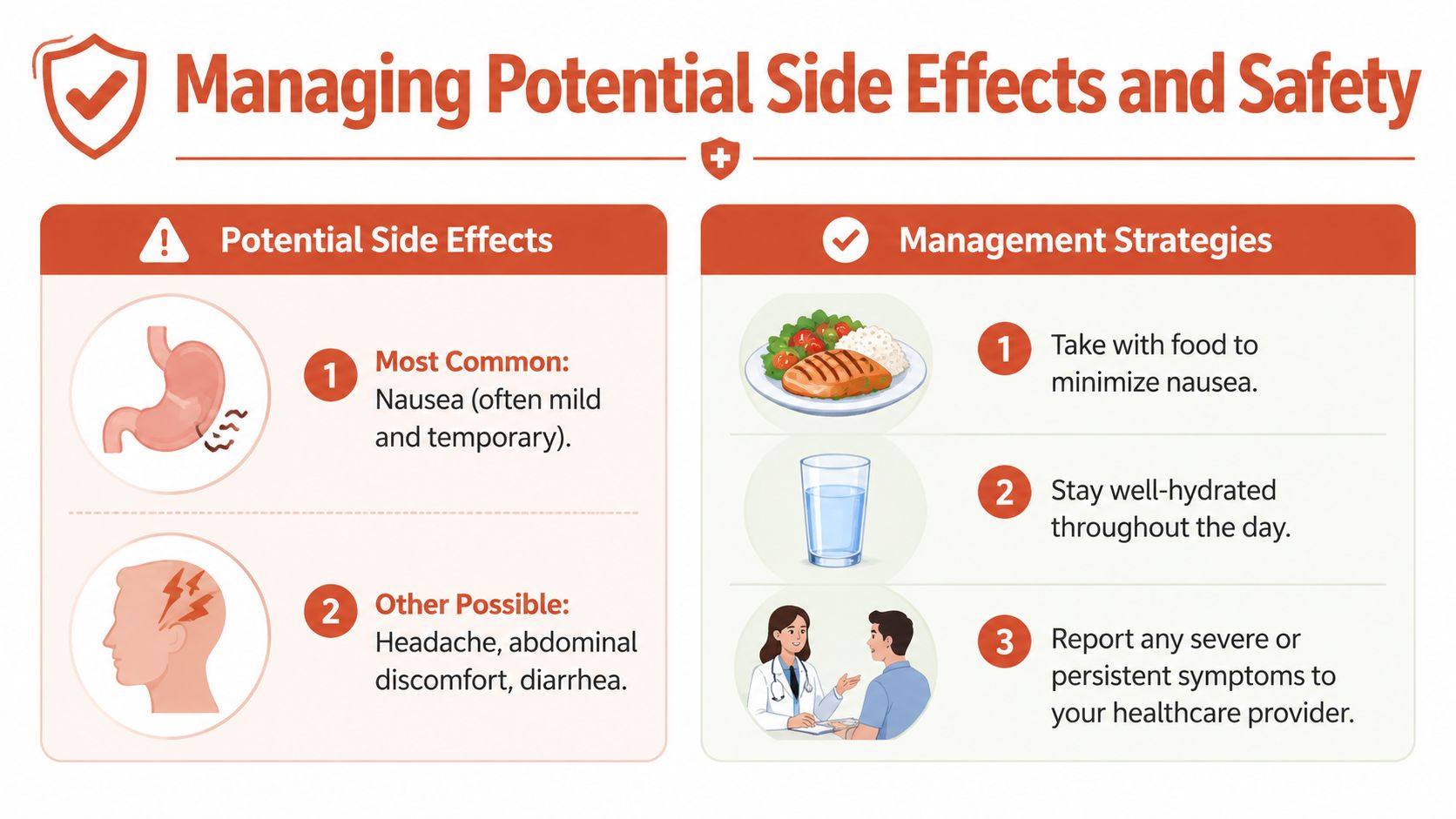
The side effect patients notice most often is nausea. The practical fix is simple. Take each capsule with a real meal and water, not on an empty stomach. A full stomach acts like a buffer while your body adjusts.
Common and manageable effects
Lubiprostone works by pulling more fluid into the intestines so stool moves through with less strain. That same shift can cause temporary symptoms while your gut gets used to the change.
Common side effects include:
- Nausea: Usually easier to manage when the capsule is taken with food.
- Diarrhea: Your bowels may respond a little too well at first.
- Headache: This can happen during early treatment.
- Abdominal pressure, bloating, or cramping: Some people describe a full or gassy feeling.
- Flatulence: Extra gas can show up as motility changes.
These effects are often manageable, but they still matter. If side effects are making it hard to keep taking the medication, that is a follow-up issue, not a reason to struggle alone. A telehealth clinician can often help you adjust timing, review whether the medication fits your symptoms, and decide if you should continue. If you are trying to figure out the process, Bummed explains how online prescription evaluation works.
Rare but serious problems
Some symptoms need prompt medical attention. Contact a provider quickly if you develop:
- Severe diarrhea
- Signs of dehydration, such as marked thirst, dizziness, or very dark urine
- Difficulty breathing
- Fainting or feeling lightheaded, especially if your blood pressure seems low
Shortness of breath has been reported rarely. Severe diarrhea can also become a safety issue if it leads to dehydration.
Take the first dose with a full meal. That one step can make the start much easier.
When safety matters more than symptom relief
Tell your provider if you have liver disease, especially moderate or severe disease, because dosing may need to be adjusted. Also bring up pregnancy plans. Bummed does not prescribe lubiprostone to pregnant patients.
Lubiprostone should also be avoided if there is concern for a bowel obstruction until that has been evaluated. In plain terms, if the intestine may be blocked, adding a medication that changes intestinal fluid flow is not the right next step.
Follow-up matters here. Constipation care is not only about getting a prescription. It is also about having a clear way to report side effects, ask questions privately, and know when a symptom has crossed the line from bothersome to urgent.
How to Get a Lubiprostone Prescription
Bummed starts with a short online intake about your symptoms, health history, and medications. A board-certified provider reviews it and, if lubiprostone is a good fit, sends your prescription to your local pharmacy for pickup. Your provider is also available for follow-up if you have side effects or questions about your dose. Get a lubiprostone prescription online.
Frequently Asked Questions About Lubiprostone
How long does lubiprostone take to start working
Many people have a bowel movement within a day of the first dose, but it can take up to a week of twice-daily use to see the full effect.
Is lubiprostone habit-forming
Lubiprostone is not known for causing dependence. It works locally in the intestines by helping more fluid move into the stool, which can make bowel movements easier to pass.
What should I do if my symptoms don’t improve
Contact your provider instead of increasing doses on your own. Constipation that does not improve can mean the diagnosis needs another look, the plan needs to change, or another problem is getting in the way.
This matters even more if you develop belly swelling, severe pain, vomiting, blood in the stool, or you stop passing gas. Those are not routine constipation symptoms. They need prompt medical attention.
What if I miss a dose
Skip it and take your next dose at the usual time. Don’t double up.
Can I take lubiprostone if I’m pregnant or postpartum
If you are pregnant, Bummed does not prescribe lubiprostone. If you are postpartum, the answer depends on your symptoms, delivery history, current medications, and overall health review.
For pregnant patients dealing with constipation, Lactulose is generally considered a pregnancy-safe option worth discussing with a provider instead.
Postpartum constipation can have more than one cause. Pain medicine, iron, pelvic floor strain, dehydration, and schedule changes can all play a role. That is why a quick online prescription should still include careful screening and a clear follow-up plan.
Should I stop the medicine if I feel nauseated
Start by checking how you take it. Lubiprostone is usually easier on the stomach when taken with food and water.
Mild nausea can improve with that adjustment. Ongoing nausea, vomiting, dizziness, or trouble keeping fluids down is a reason to contact your provider. In telehealth care, side effect management should be part of the treatment plan from the beginning, not something you are left to figure out alone.
If chronic constipation is disrupting your routine, Bummed offers online evaluation and follow-up care to help determine whether a prescription like lubiprostone is appropriate for you.
Bummed content is for general education and should never replace professional medical advice that considers your individual health. If you think you’re experiencing a medical emergency, call 911 or head to the nearest emergency department.
Prescription products require an online consultation with a physician who will determine if a prescription is appropriate.