


That deep, distracting itch around the anus can take over your attention fast. It can flare after a bowel movement, show up at night, and make sitting, working, or sleeping feel harder than it should. A lot of adults assume it means they aren’t clean enough. In practice, that’s often the wrong takeaway.
Anal itching, or pruritus ani, usually gets better when you match the treatment to the reason it’s happening. Sometimes the problem is trapped moisture. Sometimes it’s irritation from wipes or soap. Sometimes it’s a stool pattern issue, hemorrhoids, or another condition that needs more than better hygiene.
Your Guide to Soothing Anal Itchiness
The most helpful way to think about how to treat itchy anus symptoms is simple. Stop making the skin angrier, protect it while it heals, and look for the reason the itch keeps returning.
That matters because many people do the opposite at first. They scrub harder, use scented wipes, switch products every few days, and keep checking the area. That can turn mild irritation into a stubborn cycle.
Start with the skin, not assumptions
The skin around the anus is sensitive. It reacts to friction, dampness, residue, and scratching much more than is commonly expected. If you keep irritating it, even a small trigger can stay active.
Practical rule: If the area feels raw, burning, or itchier after cleaning, your routine is probably too harsh.
A good treatment plan has three parts:
-
Calm the irritation: Remove likely triggers such as soaps, scented wipes, and rough toilet paper.
-
Control moisture: Dry the area thoroughly after bowel movements, exercise, or sweating.
-
Check for a driver: Notice whether symptoms line up with loose stool, constipation, hemorrhoids, diet changes, or a rash.
Relief usually comes from being gentler
People often want a strong cream right away. Sometimes that helps. But if the routine around the cream is still irritating the skin, the itch often comes back.
The more reliable approach is to build a short, boring, consistent routine and stick with it. That means less scrubbing, less experimenting, and more protection. When symptoms improve, prevention matters just as much as treatment.
Understanding the Common Causes of Anal Itching
Most persistent anal itching isn’t just a hygiene problem. Reputable sources including Mayo Clinic and Cleveland Clinic note that ongoing pruritus ani can be driven by moisture, irritants, diarrhea, constipation, and hemorrhoids, and they caution that repeated or aggressive cleansing can make irritation worse, which is why the underlying cause matters so much for treatment (Cleveland Clinic on anal itching causes and care). Common triggers span everyday habits like over-cleaning or scented products, moisture and stool-related irritation, and underlying conditions such as eczema, fungal infections, or hemorrhoids. For a full breakdown of each cause and how to tell them apart, see our guide to pruritus ani causes.
Symptoms are also often worse at night, when warmth, moisture, and reduced daytime distraction make itching feel more intense, see our guide on itchy anus at night if that’s your pattern.
Immediate Relief with Home Remedies and Hygiene Habits
When the itch is active, the fastest way to settle it is usually not a “stronger” product. It’s a stricter routine. Harvard Health recommends a first-line approach built around irritant avoidance and moisture control, including cleansing only with water, avoiding soaps and rough wiping, drying thoroughly, and using a barrier cream such as zinc oxide or petroleum jelly (Harvard Health on pruritus ani care).
The reset routine that works
For many adults, this is the most effective starting point:
-
After a bowel movement, clean gently. Use plain water or an unscented cleanser if needed.
-
Skip soap on the anal skin. Soap often dries and irritates the area.
-
Pat dry fully. Don’t rub. A soft towel works, and a hair dryer on a cool setting can help.
-
Apply an ointment: Bummed’s anti-itch prescription cream heals at the source.
-
Leave it alone. Scratching resets the irritation.
If you want more nonprescription strategies, Bummed also has a practical guide to rectal itching home remedies.
What to avoid while the skin heals
A few habits keep pruritus ani going longer than it should:
-
Don’t chase “squeaky clean.” The goal is low irritation, not aggressive cleansing.
-
Don’t use scented wipes or perfumed products. They often sting more than they soothe.
-
Don’t keep switching creams every day. Too many ingredients can make it hard to tell what’s helping.
-
Don’t scratch, especially at night. The temporary relief is misleading. Scratching injures the skin and makes the next wave of itching stronger.
The area heals faster when you treat it like inflamed skin, not like a stain that needs to be scrubbed off.
Anal Hygiene Do’s and Don’ts
| Do | Don’t |
|---|---|
| Clean with water after bowel movements | Use soap directly on irritated anal skin |
| Pat dry gently with a soft towel | Rub or scrub with dry toilet paper |
| Use a cool hair dryer if moisture lingers | Stay damp after washing or sweating |
| Apply petroleum jelly as a barrier | Use hemorrhoid creams hoping for relief |
| Wear breathable underwear and looser clothing when possible | Stay in sweaty or tight clothing for long periods |
| Notice patterns with loose stool or constipation | Assume hygiene is the only cause |
The itch-scratch cycle is real
One reason anal itching becomes stubborn is that scratching briefly feels helpful. Then the skin becomes more inflamed, more sensitive, and easier to re-trigger. That’s the cycle you want to break.
If nighttime scratching is a problem, trim nails short and apply your barrier ointment before bed. Keep the routine boring and consistent for several days before deciding it isn’t working.
How to choose without overdoing it
Pick one lane first.
-
If the area feels wet, chafed, or irritated after bowel movements: start with a barrier product.
-
If the area is inflamed and itchy despite good hygiene changes: a short course of hydrocortisone may help.
For readers comparing topical options more broadly, Bummed has a breakdown of what the best hemorrhoid cream may help with, including when itching overlaps with hemorrhoidal symptoms.
Worth remembering: An OTC cream can quiet symptoms, but it won’t solve a trigger you keep feeding with friction, moisture, or stool irritation.
When to Seek Professional Medical Care
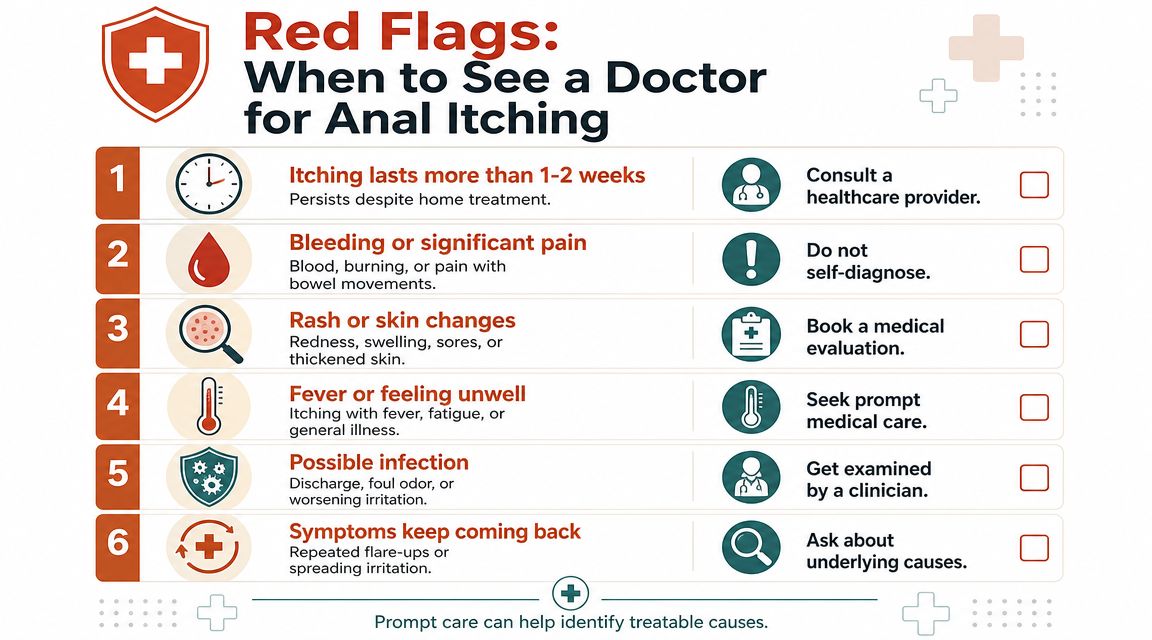
Most anal itching improves with a careful home routine and the right support. Some cases don’t. That’s when it’s time to stop self-diagnosing and get examined.
Signs you shouldn’t ignore
Arrange medical care if you have any of the following:
-
Bleeding: Blood on the toilet paper, in the bowl, or mixed with stool needs evaluation.
-
Pain that’s significant or getting worse: Itching alone is one thing. Pain changes the picture.
-
A lump or swelling: Especially if it’s new, tender, or firm.
-
Discharge or drainage: Moisture from irritation is different from pus or ongoing discharge.
-
Visible rash or skin changes: Thickening, open areas, or unusual discoloration deserve a closer look.
-
No improvement after a solid trial of self-care: If you’ve been consistent and the itch keeps returning, there may be an underlying cause.
Why a provider visit matters
Persistent pruritus ani can come from hemorrhoids, fissures, dermatitis, fungal irritation, or other anorectal and skin conditions. Those problems don’t all look or respond the same. Treating the wrong thing can drag symptoms out.
A provider may review your bowel habits, products you use, diet, medications, and whether the area seems more inflamed, infected, or affected by another condition. Sometimes the most useful part of the visit is ruling out what it isn’t.
Where to start
Primary care, dermatology, gastroenterology, and colorectal specialists can all play a role depending on the symptoms. Telehealth can also be a practical first step if you want a same-day review, especially when the main question is whether you need a prescription, a different diagnosis, or an in-person exam.
If you also have severe pain, heavy bleeding, or symptoms that feel urgent, don’t wait on a routine visit.
Prescription Treatments and Lifestyle Changes for Prevention
Recurring anal itching usually means the trigger is still present. The prescription is only part of the answer. Long-term relief depends on identifying what keeps the skin irritated, whether that is inflammation, moisture, stool seepage, friction, hemorrhoids, or an untreated skin condition.
When prescriptions make sense
Prescription treatment is reasonable when over-the-counter care helps only briefly, the itch keeps returning, or the skin looks inflamed enough that the diagnosis needs to be more specific. In practice, the right treatment depends on the cause. A provider may use a prescription topical anti-inflammatory, treatment for hemorrhoidal irritation, or another targeted option if the exam suggests dermatitis, fissure-related irritation, or another anorectal problem. For a closer look at how prescription treatment compares to over-the-counter options and what to expect from the process, see our guide to anal itch cream.
Bummed is the only telehealth platform that focuses on anorectal care. Adults can complete an online intake for symptom review by a board-certified provider, who may prescribe treatment if appropriate.
Prevention usually depends on bowel habits
For prevention, start with the factors that keep the area irritated between flare-ups. Bowel pattern is a major one. Loose stool, constipation, straining, and small amounts of leakage can all leave the skin inflamed even when hygiene is good.
A practical approach looks like this:
-
Aim for predictable, formed stools: Stool that is too loose or too hard creates cleaning problems and more friction.
-
Hydrate steadily: Large day-to-day swings in fluid intake often show up as changes in stool consistency.
-
Test food triggers one at a time: Caffeine, alcohol, spicy foods, citrus, tomatoes, and dairy can aggravate symptoms in some adults. Changing everything at once makes it hard to tell what matters.
-
Keep a short symptom log: Note itching, bowel movements, and possible triggers for a couple of weeks. Patterns are often easier to spot on paper than in memory.
Habits that lower recurrence
Daily habits matter because this is a skin barrier problem as much as a hygiene problem. Skin heals better when it stays dry, has less rubbing, and is not exposed to repeated irritants.
These changes tend to help:
-
Wear breathable underwear: Less heat and sweat usually means less irritation.
-
Change out of damp clothes promptly: Wet workout clothes and sweaty underwear can keep symptoms going.
-
Keep cleaning simple: Water, gentle drying, and a barrier ointment when needed is often enough.
-
Watch for hidden moisture: Sweat, mucus, and minor stool leakage are common reasons itching returns.
-
Stop chasing the itch with more wiping: Repeated scrubbing often damages already sensitive skin.
The trade-off is simple. Very aggressive cleaning may feel better for a few minutes, but it often keeps the itch-scratch cycle going. A gentler routine can feel less satisfying at first, yet it usually gives the skin a better chance to recover.
If medications, pregnancy, constipation, or recurring hemorrhoids seem to be part of the pattern, individualized guidance is more useful than trial and error. That is especially true when symptoms improve during treatment, then return right after it stops.
Frequently Asked Questions About Itchy Anus
Can stress cause an itchy anus
Yes, stress can make an itchy anus worse. It can increase skin sensitivity, make you more aware of bodily discomfort, and feed subconscious scratching. Stress doesn’t explain every case, but it can keep the itch-scratch cycle active even when the original trigger was something else.
How long does it take for an itchy anus to go away
A mild case may start improving within a few days once you remove irritants and keep the area dry and protected. If hemorrhoids, a skin condition, stool leakage, or another medical issue is driving the symptoms, it usually won’t fully settle until that cause is addressed. If your self-care routine has been consistent and the itch isn’t improving, get evaluated.
Is anal itching always caused by poor hygiene
No. That’s one of the biggest misconceptions. In many adults, the issue is over-cleaning, retained moisture, irritation from products, stool pattern problems, or hemorrhoids. More washing isn’t always better, and sometimes it’s the reason symptoms continue.
What’s the best first step if I’m not sure what’s causing it
Strip the routine down. Use water only, dry thoroughly, avoid scratching, and use a simple barrier ointment. If symptoms calm down, irritation and moisture were probably major drivers. If they don’t, or if anything feels off, get medical guidance rather than layering on more products.
If anal itching keeps coming back or isn’t responding to home care, Bummed offers adults a discreet way to have symptoms reviewed by a board-certified provider online and get a prescription if appropriate. Bummed content is for general education and should never replace professional medical advice that considers your individual health. If you think you’re experiencing a medical emergency, call 911 or head to the nearest emergency department. Prescription products require an online consultation with a physician who will determine if a prescription is appropriate.