

A hemorrhoid flare has a way of taking over your day. Sitting feels different. Bowel movements become something you dread. Then the same question starts running in the background: hemorrhoids how long can they last, and when will this calm down?
The frustrating answer is that there isn’t one fixed timeline. Some hemorrhoids settle quickly. Others linger because the tissue stays irritated, pressure keeps building, or the hemorrhoid is more severe than it first seemed. What helps most is knowing which type you’re dealing with, what tends to prolong healing, and when home care is enough versus when it’s time to involve a provider.
The Lingering Question How Long Do Hemorrhoids Last
Inquiries into hemorrhoid timelines aren’t made out of curiosity. They are prompted because something already hurts, itches, burns, or bleeds, and there’s a need to know whether this is a short detour or the start of a longer stretch of discomfort.
That uncertainty matters. A small internal hemorrhoid can fade in days, while a thrombosed external hemorrhoid can keep hurting for much longer. The gap between those two experiences is why broad advice often feels useless. “Give it time” only helps if you know what “time” usually means.
A helpful way to think about it is this: hemorrhoids heal on a sliding scale, not a stopwatch. The more swelling, pressure, prolapse, clotting, or repeat irritation involved, the longer the tissue tends to stay angry. That’s one reason hemorrhoids are so common. The same day-to-day habits that trigger them can also keep them from settling down.
Practical rule: If symptoms are improving week by week, that’s reassuring. If they’re unchanged, getting worse, or repeatedly flaring, don’t keep guessing.
Patients often want one clean answer. The more useful answer is a range, plus the reason behind it. Once you understand the pattern, the situation feels less random and much more manageable.
Your Hemorrhoid Healing Timeline Explained
A common telehealth question goes like this: “It started a few days ago. Should it be gone by now?” The answer depends less on the calendar and more on what type of hemorrhoid is causing the symptoms.
Some flares are brief. Others last because the swollen vein keeps getting stressed with every bowel movement, long stretch of sitting, or round of constipation. That difference is why recovery can range from days to months.
According to USA Hemorrhoid Centers on how long hemorrhoids last, mild cases may resolve in a few days to 1 week, moderate cases often take 1 to 2 weeks, severe or thrombosed cases can last 2 to 3 weeks or longer, and chronic cases can persist beyond 3 months.
A quick way to think about the timeline
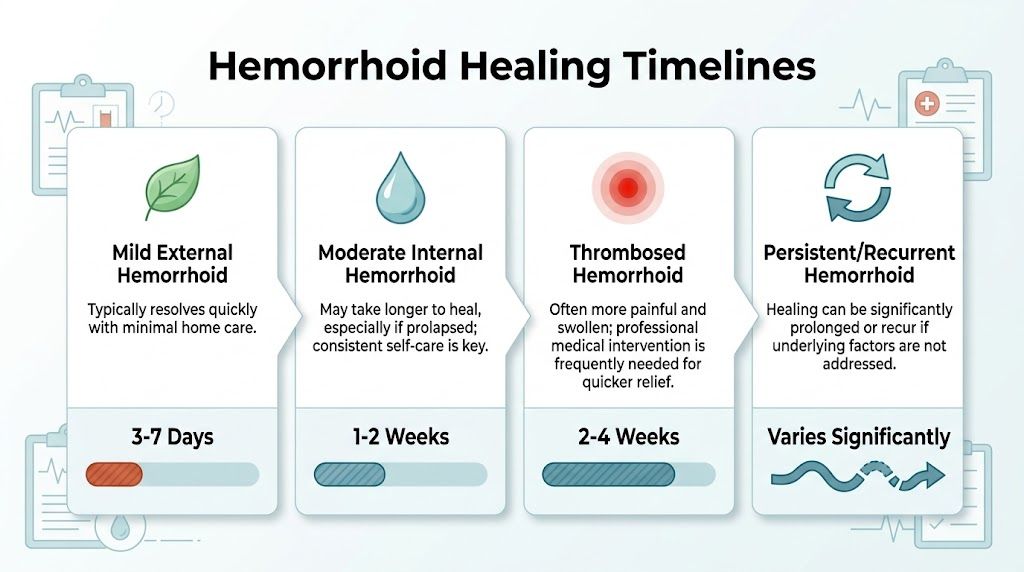
A mild external hemorrhoid often settles fastest. Symptoms usually include itching, soreness, or a small tender bump near the anus. If the main trigger was a short period of straining and bowel movements improve, many of these calm down within several days.
A moderate internal hemorrhoid usually takes longer because the irritated tissue sits inside the rectum and can swell again during bowel movements. Bleeding, pressure, or tissue that briefly slips out and then goes back in are common patterns. Recovery is often measured in one to two weeks, not one to two days.
A thrombosed external hemorrhoid follows a different timeline. A clot forms inside the swollen vein, which is why the pain tends to be sharper and the lump feels firm. Even when the worst pain eases after a few days, the lump and tenderness can hang around while the body slowly breaks down the clot.
Pregnancy can stretch these timelines. Increased pelvic pressure and constipation are common reasons hemorrhoids flare during the third trimester and shortly after delivery. GLP-1 medications can do something similar in a different way. If nausea, lower appetite, dehydration, or constipation lead to harder stools, the hemorrhoid often lasts longer because the tissue keeps getting irritated before it can settle.
Hemorrhoid Healing Timelines at a Glance
| Hemorrhoid Type | Common Symptoms | Typical Duration with Home Care |
|---|---|---|
| Mild external hemorrhoid | Itching, mild pain, small tender lump | 3 to 7 days |
| Moderate internal hemorrhoid | Bleeding, fullness, prolapse with bowel movements | 1 to 2 weeks |
| Thrombosed hemorrhoid | Sudden pain, swelling, firm painful lump | 2 to 4 weeks |
| Persistent or recurrent hemorrhoid | Repeat flares, ongoing irritation, intermittent bleeding or itching | Varies significantly |
How grade and location change the timeline
For internal hemorrhoids, grade often predicts how long recovery will take. The more the tissue prolapses, the harder it is for the area to stay calm between bowel movements.
-
Grade 1 internal hemorrhoids stay inside and may improve within days.
-
Grade 2 hemorrhoids come out with bowel movements but go back in on their own. These often take 1 to 2 weeks if stool stays soft and straining stops.
-
Grade 3 hemorrhoids need to be pushed back in manually and often last 2 to 4 weeks or longer.
-
Grade 4 hemorrhoids stay prolapsed and can continue for weeks to months, especially without treatment.
External hemorrhoids are not graded the same way, but the pattern is familiar. Small, mildly inflamed ones usually improve faster. Larger ones, especially thrombosed hemorrhoids, take longer because they sit under very sensitive skin.
The practical question is not just “What kind is it?” It is also “What keeps feeding it?” If constipation is part of the picture, treatment usually works better when bowel habits improve at the same time. This guide to chronic constipation treatment options that can reduce repeat straining can help if hard stools are stretching out the timeline.
Two people can both say they have hemorrhoids and have completely different recoveries. The type, location, degree of prolapse, and triggers such as pregnancy, constipation, or GLP-1 related bowel changes all shape how long symptoms last.
Why Some Hemorrhoids Linger Factors That Delay Healing
A hemorrhoid that is still bothering you after the first few days usually has an ongoing trigger. The tissue can start to settle, then get swollen again with the next bowel movement, the next stretch of constipation, or the next long stretch of pelvic pressure. That stop-start pattern is why one person improves in a week while another is still dealing with pain or bulging several weeks later.

Ongoing pressure is the main reason healing drags out
According to Walgreens’ overview of hemorrhoid duration, approximately 50% of adults in the U.S. experience hemorrhoids by age 50, and longer-lasting cases are more common when pregnancy, obesity, or chronic constipation are part of the picture.
The mechanism is straightforward. Veins in the rectal area swell when pressure keeps building. Hard stool, repeated pushing, and long toilet sitting all act like leaning on a bruise before it has healed. Creams may calm the surface, but they do not remove the pressure that keeps re-irritating the tissue.
Constipation is the delay factor I would look at first because it changes the timeline for both internal and external hemorrhoids. A mild flare can keep recurring for weeks if every bowel movement is dry, hard, or incomplete. If that pattern sounds familiar, this guide to chronic constipation treatment options can help address the bowel habit that is stretching out recovery.
Pregnancy and postpartum often extend the timeline
Pregnancy raises pressure in the pelvis and often slows bowel movements at the same time. That combination can turn a short-lived flare into one that lasts through the third trimester or returns repeatedly. Internal hemorrhoids may prolapse more easily. External hemorrhoids may stay tender longer because the surrounding tissue is already under strain.
Postpartum recovery can be slow for a different reason. The veins may have been swollen for weeks before delivery, then get stressed again during labor and the first constipated bowel movements afterward. In practice, that means some postpartum hemorrhoids improve over 2 to 6 weeks, while others linger longer if pain leads to stool-holding and more straining.
GLP-1 medications can quietly prolong symptoms
GLP-1 medications do not cause every hemorrhoid flare, but they can set up the bowel changes that keep one going. Slower digestion, less frequent bowel movements, and drier stool can all increase rectal pressure. I see this most often in adults who were doing well until constipation started after a dose increase.
The pattern matters more than the medication name. If symptoms started or got worse after bowel habits changed, recovery usually depends on fixing stool consistency and bathroom habits at the same time.
Other reasons a flare sticks around
A few problems repeatedly delay healing, regardless of hemorrhoid type:
-
Repeated straining: each bowel movement reopens irritation before swelling can fully settle.
-
Long toilet sessions: sitting there for 10 to 20 minutes increases downward pressure on the veins.
-
Aggressive wiping or fragranced products: irritated skin heals more slowly when it is rubbed or exposed to harsh ingredients.
-
Heavy lifting or breath-holding during exercise: both can spike pressure in the same area.
-
Partial improvement without fixing the trigger: symptoms fade, then return with the next hard stool or pressure surge.
If a hemorrhoid seems to improve and then flares again, that usually means the tissue is not failing to heal. It is being asked to heal under the same stress that caused the problem in the first place.
How to Speed Up Your Recovery At Home and With a Provider
A lot of people reach this stage after several days of doing a little of everything. More water. A cream from the pharmacy. A warm soak once or twice. Then the hemorrhoid still hurts, still swells after a bowel movement, or keeps slipping out. At that point, the goal is not to add random treatments. It is to match the treatment to the type of hemorrhoid and the reason it is being kept irritated.
What helps at home
Home care works best when it lowers pressure every single day. The tissue can calm down only if bowel movements stop scraping, stretching, or congesting the area.
Start with the basics:
-
Make stools easier to pass: Fiber, fluids, and stool-softening strategies reduce the friction that keeps a flare active.
-
Use warm water after bowel movements: A sitz bath or warm rinse can relax the muscles around the anus and ease soreness.
-
Keep toilet time short: Sitting there too long increases pressure in the same veins that are already swollen.
-
Clean the area gently: Rinsing or patting is easier on irritated skin than repeated wiping.
For people whose flares track closely with constipation, broader education on optimizing gut health can help because recovery often depends on fixing the stool pattern, not just treating the hemorrhoid itself.
One practical point matters here. An external hemorrhoid irritated by one hard stool may settle with steady home care, while an internal hemorrhoid that prolapses with each bowel movement often needs more than home measures to shorten the timeline.
If you want a practical starting point, this guide on how to treat hemorrhoids at home lays out the basics clearly.
When a provider can shorten the course
Provider care helps most when symptoms are moderate, painful, recurrent, or hard to classify. That includes cases where people are not sure whether they have a hemorrhoid, a fissure, skin irritation, or a thrombosed lump. The treatment can look very different depending on which one it is.
For internal hemorrhoids that swell or prolapse, prescription treatment, like those offered through Bummed, may calm inflammation faster than home care alone. That does not mean every flare needs medication. It means the expected timeline changes with the type of hemorrhoid. A mild flare may improve with stool changes and time. A stubborn grade 2 or grade 3 internal hemorrhoid often improves faster when a clinician steps in early.
One telehealth option is Bummed, which offers online intake and provider review for anorectal symptoms, including prescription creams when appropriate.
The trade-off is simple. Home care is often enough for small, short-lived flares. If pain, bleeding, swelling, or prolapse keeps interrupting daily life, getting assessed sooner can save you a week or two of guessing and help the tissue heal under better conditions.
Red Flags When to Stop Waiting and See a Provider
You start with what seems like a routine flare. A few days later, the pain is sharper, the lump feels harder, or the bleeding keeps showing up every time you use the bathroom. That is the point to stop guessing.
Symptoms that need prompt attention
Hemorrhoids often improve with time, but the timeline matters. A painful external lump can signal a thrombosed hemorrhoid, which tends to hurt most in the first few days and may need a different plan than an itchy mild internal flare. Ongoing rectal bleeding, stool that looks dark or tarry, or pain that feels out of proportion should not be filed under “probably hemorrhoids.”
Get medical care promptly if you have:
-
Bleeding that is heavy or keeps happening: Small bright red streaks can happen with hemorrhoids. Repeated or heavier bleeding needs assessment.
-
Dark, maroon, or black stool: That points away from a simple hemorrhoid flare.
-
Severe pain with a firm lump near the anus: This can fit a thrombosed external hemorrhoid.
-
Tissue protruding that will not go back in: A prolapsed hemorrhoid can swell further and become harder to manage.
-
Fever, chills, abdominal pain, or drainage: Those symptoms raise concern for something other than a routine hemorrhoid.
When telehealth makes sense and when in-person care matters
A provider review is also the right move when symptoms are lasting longer than the timeline fits. For example, a mild flare should usually start settling within days, while postpartum hemorrhoids may hang on longer because the tissue has been under heavy strain. Manhattan Gastroenterology’s discussion of when to see a doctor notes that in postpartum women, hemorrhoids can persist for 6+ weeks because of tissue trauma and hormonal changes.
Pregnancy, the postpartum period, and GLP-1 medicines can all stretch recovery because they keep pressure, constipation, or stool changes in the picture. That does not always mean something dangerous is happening. It does mean a longer course deserves a clearer diagnosis.
If you are unsure whether you need urgent evaluation, this guide on when it’s time to seek in-person care and what doctor treats hemorrhoids lays out the symptoms that should not be managed at home.
One practical rule we use is simple. If the pain is escalating, the bleeding is recurring, or the timeline no longer matches a typical flare, get checked.
For prevention after the flare settles, bowel habits still matter.
Your Path to Lasting Relief
The question isn’t only hemorrhoids how long can they last. The better question is what determines whether yours is a short flare or a stubborn one.
The answer usually comes down to type, severity, and whether the pressure behind the flare has changed. A mild hemorrhoid may pass quickly. A prolapsed or thrombosed one may need more time and more help. Constipation, pregnancy, postpartum recovery, and GLP-1-related bowel changes can all stretch the timeline.
The reassuring part is that you’re not stuck with guesswork. The right combination of stool-softening habits, gentle local care, and timely provider input can shorten the course and lower the chance of another flare taking over your week.
Frequently Asked Questions About Hemorrhoid Duration
Can a hemorrhoid last for years
An individual flare usually settles, but the pattern can keep repeating for years if the trigger stays in place. We see this with chronic constipation, frequent straining, pregnancy and postpartum pressure, heavy lifting, and the slowed bowel habits some people develop on GLP-1 medications. In that situation, it often feels like one hemorrhoid that never left, even though the tissue is flaring, calming down, and flaring again.
The practical takeaway is simple. Long-lasting symptoms call for more than short-term cream.
Will my hemorrhoids go away completely after treatment
Current symptoms often clear with the right treatment, especially if the hemorrhoid is mild and the pressure on the area improves. External irritation may settle faster than a prolapsing internal hemorrhoid. A thrombosed external hemorrhoid can improve, but the leftover skin may stay more noticeable even after the pain fades.
Treatment addresses the flare you have now. Prevention lowers the chance of the next one, especially if you correct the factor stretching out your timeline, such as constipation, pregnancy-related pressure, or medication-related bowel changes.
How quickly do prescription creams work compared to OTC options
Over-the-counter products can reduce itching or burning for a short period, but they do not fix every cause of rectal pain or bleeding. Prescription treatment tends to help more when symptoms are lasting longer than expected, the swelling is more significant, or you have already tried OTC products.
The difference is fit. A targeted, prescription treatment plan works better than trying several shelf products while hoping one sticks.
If you want an answer sooner than “keep waiting,” Bummed offers discreet online evaluation for hemorrhoids and related anorectal symptoms. A board-certified provider reviews your intake the same day and can prescribe treatment when appropriate, which is useful when symptoms are lingering, recurring, or hard to sort out on your own.
Bummed content is for general education and should never replace professional medical advice that considers your individual health. If you think you’re experiencing a medical emergency, call 911 or head to the nearest emergency department.
Prescription products require an online consultation with a physician who will determine if a prescription is appropriate.