


You’re standing in front of a pharmacy shelf, scanning box after box that all promise relief. Some say they cool. Others numb. A few claim to shrink tissue, and still others target itching specifically. If you’re dealing with pain, bleeding, swelling, or the constant urge to wipe again because something still feels irritated, that wall of options can feel less helpful than it should.
That’s why the phrase best hemorrhoid cream often sends people in the wrong direction. There usually isn’t one cream that’s best for everyone. The more useful question is which ingredient, strength, and formulation fit the symptoms you have. And you’re far from alone in asking it. About 10 million people in the U.S. deal with hemorrhoids every year — but only around a third ever see a provider about it, even though roughly 1.5 million hemorrhoid-related prescriptions get written annually. Most people just grab a tube off the shelf and hope for the best.
Why Hemorrhoids Rarely Show Up Alone
Hemorrhoids also rarely show up in a vacuum. Constipation, long periods of sitting, pregnancy and postpartum changes, hard stools, and newer issues like bowel slowing on GLP-1 medications can all shape what kind of treatment makes sense. In many cases, cream helps. In others, cream only partly helps because the underlying problem is ongoing strain. Diet changes can matter as much as the tube in your medicine cabinet, especially if constipation is part of the cycle. A practical starting point is improving stool consistency with high-fiber foods for constipation.
Privacy matters too. Many adults don’t want to ask a pharmacist a detailed question while other people wait nearby. If you’re trying to avoid multiple pharmacy trips, these ways to check pharmacy stock online can save time before you leave home.
Finding Relief in an Aisle of Confusion
A lot of hemorrhoid care starts with a rushed decision. You’re uncomfortable, you want relief fast, and every product on the shelf seems to claim it can do the job. The problem is that these products often do different things.
One cream may mainly reduce inflammation. Another may mainly numb pain. A wipe may soothe surface irritation but do little for deeper swelling. A product with a steroid may help itching, but it isn’t something to keep using indefinitely. A numbing cream may make sitting more tolerable, but it won’t necessarily calm tissue that’s staying swollen because bowel movements are still hard.
Why brand names don’t tell you enough
Most shoppers compare labels by brand recognition. That’s understandable, but it’s not the best way to choose treatment. Two products sold in the same aisle can target completely different symptoms.
The right hemorrhoid cream is usually the one that matches your dominant symptom, not the one with the loudest packaging.
If your main issue is burning pain after bowel movements, you may need a different active ingredient than someone whose main issue is itching. If bleeding is the symptom that worries you most, that points you toward a different level of evaluation altogether. And if the hemorrhoid is internal rather than external, a cream may not reach the area that’s causing trouble.
A better way to choose
We find it more useful to sort options into three treatment tiers:
| Treatment tier | Best fit | Main advantage | Main limitation |
|---|---|---|---|
| OTC creams and wipes | Mild, early, or occasional symptoms | Easy access and fast symptom-focused relief | Often temporary and limited by ingredient strength |
| Prescription treatments | Symptoms that persist or don’t respond to OTC care | Stronger, more targeted active ingredients | Requires provider review |
| Compounded prescriptions | Mixed symptoms or cases needing a tailored approach | Multiple ingredients in one personalized formula | Requires provider review |
That framework keeps you focused on function. It also helps you avoid spending money on products that don’t match the problem you’re trying to solve.
The Three Tiers of Hemorrhoid Creams
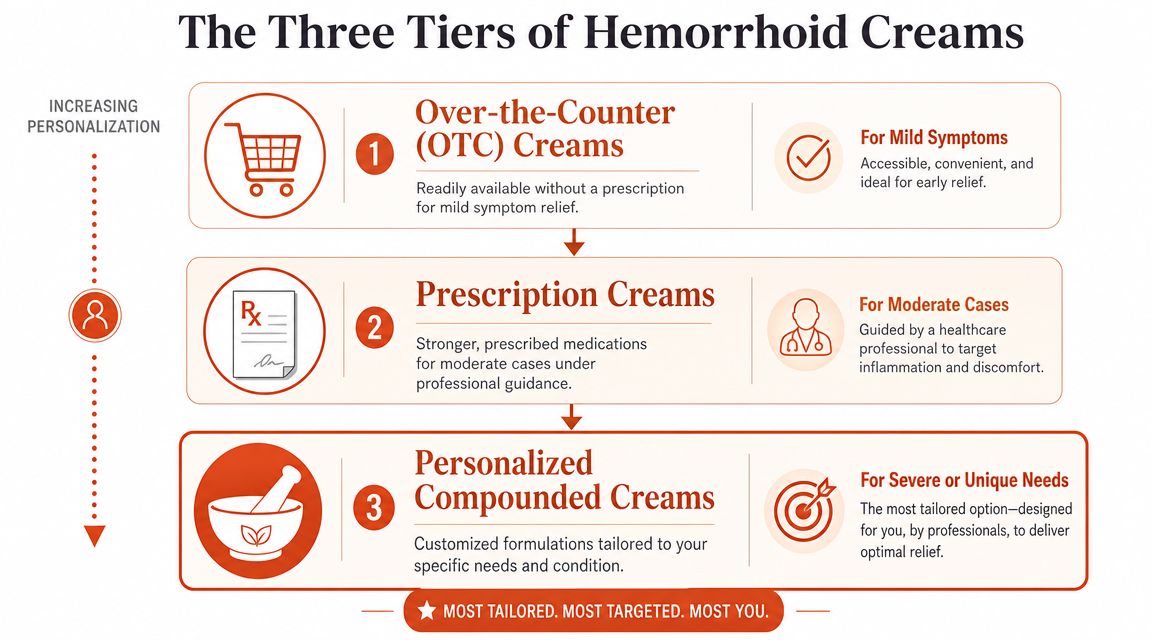
Comparing hemorrhoid treatment by tier is more helpful than asking for one universal winner. That’s because hemorrhoids don’t present the same way in every adult. Some people have a tender external lump. Others mainly have itching. Some have internal hemorrhoids with bleeding but very little pain.
Care guides often flatten all of that into one shopping list. A more practical view is to match the formulation to the scenario. As noted in Carewell’s discussion of choosing the best hemorrhoid cream, people usually want help with their specific pattern, such as external versus internal hemorrhoids, pain-dominant versus itch-dominant symptoms, pregnancy or postpartum needs, and constipation-related flareups.
Over-the-counter options
OTC products are the first stop for many people. They’re meant for temporary symptom relief and work best when symptoms are mild or occasional.
That doesn’t mean they’re weak or pointless. It means they are usually built to target a narrower set of symptoms. You choose them based on whether you need numbing, anti-itch relief, or help with swelling.
Prescription options
Prescription hemorrhoid treatments come into play when symptoms keep coming back, haven’t improved with OTC care, or are intense enough that a stronger approach makes sense from the start.
A prescription also helps when the diagnosis is less straightforward. Some adults think they have hemorrhoids when they also have an anal fissure, skin irritation, or overlapping inflammation. In those situations, a more targeted prescription can make treatment more efficient.
Personalized compounded options
Compounded prescriptions sit at the most customized tier. A compounding pharmacy prepares a formula based on the symptom pattern and the provider’s plan.
That matters when one single active ingredient isn’t enough. Someone with swelling, pain, and itch at the same time may benefit more from a formula designed to address multiple problems at once than from rotating through separate OTC products and hoping one sticks.
Practical rule: If you’ve tried several shelf products and each one only solves part of the problem, you may not need a different brand. You may need a different tier.
We recommend taking Bummed’s quiz to determine what personalized prescription cream is best for your symptoms.
Decoding Over-the-Counter Hemorrhoid Cream Ingredients

If you read only one part of the box, read the active ingredients. For OTC hemorrhoid creams, ingredient class is usually the most useful comparison point. According to Curist’s ingredient-based comparison, hydrocortisone products reduce inflammation, redness, and itching; rectal phenylephrine acts as a vasoconstrictor to shrink swollen hemorrhoidal tissue; and local anesthetics such as lidocaine or pramoxine mainly numb pain and itching rather than treating the underlying hemorrhoid.
Cream, Ointment, or Suppository?
Ingredient is only half the decision. Format matters too, and it’s tied to where your symptoms actually are.
Creams spread easily and absorb relatively quickly, which makes them a good fit for external irritation — itching, burning, or soreness around the outside of the anus.
Ointments are thicker and more occlusive. That makes them more protective for skin that’s raw or chafed, at the cost of feeling a bit heavier or greasier on application.
Suppositories are built for internal use, dissolving in the lower rectum. If your main symptoms are internal — bleeding without much external discomfort, for instance — a cream sitting on the outside of the skin may not reach the tissue that’s actually causing trouble.
The practical rule: match the format to the location, not just the ingredient to the symptom.
Hydrocortisone for itch and inflammation
Hydrocortisone is the ingredient many people need when the dominant symptom is itching, irritation, or inflamed tissue. It calms inflammation, which can make the area feel less raw and less reactive after bowel movements.
Its limitation is just as important as its benefit. Steroid creams aren’t meant for casual long-term use. They can become a problem if someone keeps applying them week after week without rethinking the diagnosis or the treatment plan.
If itching is a recurring pattern rather than a one-off flare, that’s usually the signal to move past repeated short courses of OTC hydrocortisone and toward a formula built specifically for chronic itch, like Bummed’s Anti-Itch Pruritus Ani Rx Cream.
Lidocaine or pramoxine for pain relief
Lidocaine and pramoxine are local anesthetics. Their job is to numb discomfort.
That can be very helpful when external hemorrhoids hurt during sitting, walking, or wiping. But numbing ingredients are symptom relievers, not structural fixes. If swelling, hard stools, or repeated irritation continue, the pain often returns after the medication wears off. If you want a deeper look at how these ingredients compare, this guide to lidocaine hydrocortisone cream can help you think through which symptom you’re treating.
Timing is worth knowing before you reach for it. Lidocaine-based creams typically take 30 to 60 minutes to numb pain and last around 1 to 3 hours per application — useful to know if you’re timing it around a commute, a workday, or a specific trigger rather than applying reactively. Phenylephrine tends to act faster but doesn’t last as long, which is part of why matching the ingredient to when you need relief, not just what you need relief from, is worth thinking through.
Phenylephrine for swelling
Phenylephrine is used to constrict blood vessels, which may help shrink swollen hemorrhoidal tissue. It’s often the ingredient people want when they describe fullness, burning, or puffiness.
Label-reading matters. A product that reduces swelling won’t necessarily be the best one for severe itching. A pain-focused cream won’t necessarily help tissue that feels enlarged or protruding.
Witch hazel and zinc oxide for soothing and protection
These ingredients tend to play a more supportive role. Witch hazel is commonly used for soothing and as an astringent. Zinc oxide works more like a protective barrier.
For adults with a lot of wiping-related irritation, moisture, or friction, barrier-style support can be useful even if it isn’t the main treatment. Some people already know zinc oxide from skin-protectant products rather than hemorrhoid-specific products. For example, Medline Remedy at DME Superstore shows the kind of barrier ingredient many people recognize from skin protection care.
A quick label-based checklist helps:
-
Hydrocortisone is the pick if itching and inflammation are the main issue.
-
Lidocaine or pramoxine make more sense if pain or burning is what’s bothering you most.
-
Phenylephrine is worth reaching for if swelling or a sense of fullness is the bigger problem.
-
Witch hazel or zinc oxide support helps if the skin feels irritated, damp, or rubbed raw.
Why You Might Need a Prescription Treatment
Sometimes the problem isn’t choosing the wrong OTC cream. It’s expecting an OTC product to handle symptoms that have moved beyond that tier.
Mayo Clinic notes that OTC hemorrhoid products may contain witch hazel or hydrocortisone plus lidocaine, and it warns that hydrocortisone shouldn’t generally be used for more than a week. GoodRx also notes that prescription hemorrhoid creams are stronger than OTC versions because they contain higher concentrations of active ingredients. Both points are summarized in the Canadian Digestive Health Foundation overview of hemorrhoid treatment ingredients.
Signs OTC care may not be enough
You should think about prescription treatment when the pattern looks like this:
-
Symptoms keep returning: relief is partial, short-lived, or dependent on constant reapplication.
-
Pain is out of proportion: severe pain can suggest a thrombosed external hemorrhoid, fissure, or another issue that deserves proper evaluation.
-
Bleeding keeps happening: hemorrhoids can bleed, but ongoing rectal bleeding shouldn’t be self-diagnosed indefinitely.
-
Steroid use is drifting too long: if hydrocortisone is becoming a habit, that’s a signal to reassess — and to consider a prescription anti-itch option built for longer-term use instead of repeating OTC courses.
A cream that only works while you’re using it, then stops helping the moment you stop, may be treating symptoms without addressing the underlying pattern.
What prescription treatment changes
Prescription treatment changes two things. First, it can increase the strength and specificity of active ingredients. Second, it creates a chance for a provider to consider whether the diagnosis is hemorrhoids alone.
That matters because persistent anorectal symptoms are often mixed. A person may have hemorrhoids plus a fissure, or hemorrhoid irritation plus significant constipation-related trauma from repeated straining. In that setting, stronger or more targeted treatment isn’t overkill. It’s more appropriate.
This is where an ingredient like diltiazem stands out, especially for fissures. Diltiazem is a calcium channel blocker that relaxes the anal sphincter and improves blood flow to the area, and the data on it is hard to ignore. In a head-to-head double-blind trial, diltiazem healed 91.66% of patients within 6 weeks. In a randomized comparison against surgery (lateral internal sphincterotomy), diltiazem healed 82% of patients at 3 months, actually outperforming surgery’s 68% healing rate, with far fewer side effects.
It’s also held its own against more invasive options: at the 3-month mark, diltiazem matched Botox injections for healing rate (43% each) — without needles. And in a large prospective study of 600 patients, 75% were completely pain-free by 3 months of diltiazem use. It’s one of the active ingredients in Bummed’s Long-Acting Hemorrhoid & Fissure Rx Cream, for exactly this kind of case. For patients who need a similarly targeted approach but with more sensitive tissue, nifedipine works through a comparable mechanism and is the active ingredient in Bummed’s Sensitive Care Hemorrhoid & Fissure Rx Cream
Prescription Options at a Glance
Once you’re past the OTC tier, ingredient choice gets more specific — and so does the formula that makes sense for you.
- Fissure-related pain, especially recurring or severe: diltiazem relaxes the sphincter and improves blood flow to support healing. This is the active ingredient in Bummed’s Long-Acting Hemorrhoid & Fissure Rx Cream.
- Fast-acting relief for acute flares: nitroglycerin is another vasodilating option that some patients tolerate well for quicker symptom relief. It’s the active ingredient in Bummed’s Rapid Relief Hemorrhoid & Fissure Rx Cream. It’s important to note that headaches can be a common side effect, and this treatment is not safe for pregnant or breastfeeding women.
- Sensitive tissue or patients who need a gentler option: nifedipine works through a similar mechanism to diltiazem with a formulation profile that can suit more sensitive skin. It’s featured in Bummed’s Sensitive Care Hemorrhoid & Fissure Rx Cream.
- Itching that keeps coming back after OTC hydrocortisone: when a 7-day OTC steroid course isn’t cutting it, a prescription option built specifically for chronic itch may make more sense than repeating short courses indefinitely. That’s the focus of Bummed’s Anti-Itch Pruritus Ani Rx Cream featuring clotrimazole and hydrocortisone.
The best hemorrhoid cream at this tier isn’t the strongest one across the board — it’s the one whose mechanism matches your specific symptom pattern.
Why stepping up care isn’t a failure
People often wait too long because they think needing a prescription means they did something wrong. It doesn’t. It usually means the symptom burden, tissue response, or recurrence pattern needs a higher level of treatment.
We’d rather see adults escalate care at the right time than keep buying one more tube that doesn’t match the problem. That’s especially true when symptoms are interfering with work, sleep, exercise, or bowel habits.
The Power of Personalized Compounded Creams
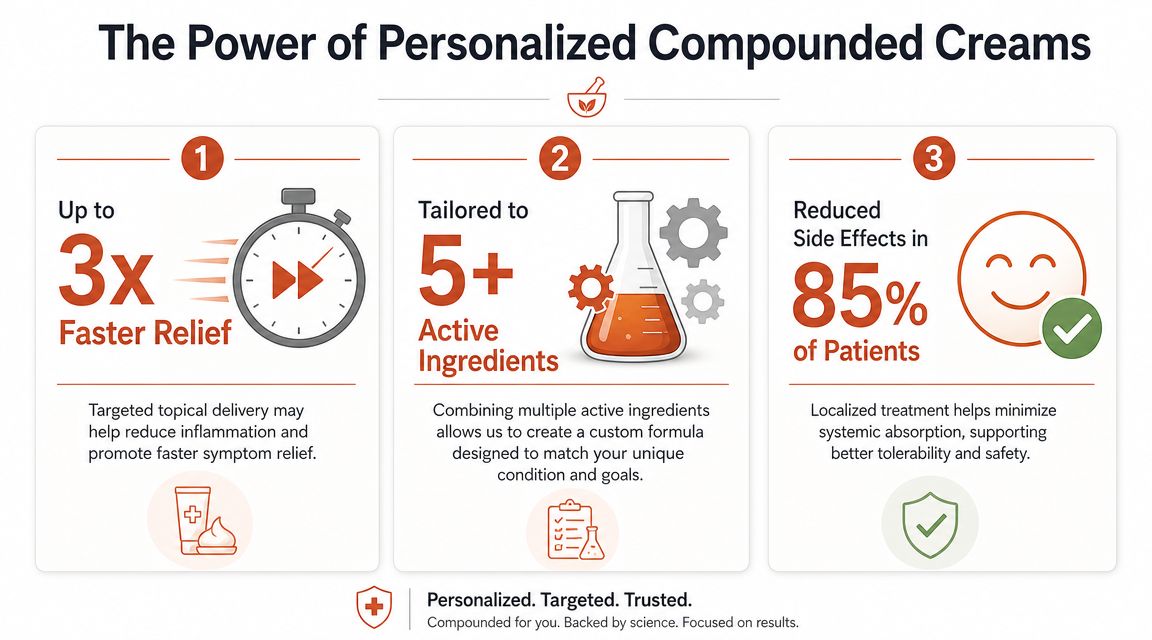
A common office scenario goes like this. Someone has tried an itch cream, then a numbing cream, then wipes, and still feels burning after bowel movements, swelling by evening, and irritation from frequent cleaning. At that point, a compounded cream can make more sense than buying another single-purpose product.
Compounded creams differ from standard shelf products because a prescriber can combine selected active ingredients into one prescription formula and choose a base that suits the tissue. That matters when symptoms overlap. Many adults are not dealing with just one problem. They may have inflammation, pain, irritation from wiping, and skin sensitivity all at once. Bummed’s prescription creams contain as many as 5 active ingredients targeting these symptoms and actually healing inflamed tissue.
This category also matters for newer patterns we are seeing in practice. Patients using GLP-1 medications sometimes develop constipation, harder stools, or irregular bowel habits, which can aggravate hemorrhoids and surrounding tissue. In that setting, the right formula is not only about reducing itching. It may also need to account for pain, swelling, and how sensitive the skin has become after repeated straining or cleanup.
Why formulation can matter as much as ingredients
The base of a cream or gel affects how well medication stays where it is needed and how comfortable it feels on irritated tissue. Some patients do better with a lighter gel. Others need a more protective cream or ointment because friction is part of the problem.
A useful example comes from a randomized clinical trial comparing hemorrhoid products. In the published article on PMC, researchers reported better bleeding reduction, pain relief, and itch control with PP110 Gel than with Preparation H, and they described the product’s once-daily, film-based slow-release design. The practical takeaway is simple. Delivery can change results.
Where compounded care fits
Compounded treatment is often worth discussing when the symptom pattern does not fit neatly into one over-the-counter ingredient category or one standard prescription product. It can also help when a patient needs a different strength, wants to avoid a specific inactive ingredient, or finds that common formulas sting, dry out the area, or feel too messy to use consistently.
Privacy matters here too. Many patients delay care because anorectal symptoms feel embarrassing, even when they are affecting work, sleep, exercise, or intimacy. A prescribed compounded option can reduce the trial-and-error cycle and give a clearer plan.
If you want a plain-language overview of how custom formulations are made, this explainer on what a compounding pharmacy is and why its meds aren’t FDA approved explains the process clearly.
One caution is important. Personalized does not automatically mean better for everyone. Compounded creams still need a sound diagnosis, appropriate ingredients, and a prescriber who is adjusting the formula to the symptoms, exam findings, and tolerance of the tissue. Done well, they can fill the gap between broad over-the-counter relief and a one-size-fits-all prescription.
Safe Application and Important Considerations
Even the best hemorrhoid cream won’t help much if it’s used incorrectly. Application technique affects comfort, tissue irritation, and how much benefit you get.
How to apply cream safely
Start with clean hands and a gently cleansed area. Harsh scrubbing usually makes symptoms worse, especially if the skin is already inflamed.
A few practical rules help:
-
Use a thin layer: more product doesn’t usually mean better relief.
-
Treat the right area: external creams are for external tissue unless the product specifically says otherwise.
-
Be gentle after bowel movements: wiping aggressively can cancel out the soothing effect of treatment.
-
Follow product limits: if a steroid product has a short recommended duration, respect it.
For a simple walkthrough, this guide on how to put hemorrhoid cream exactly where you need it covers practical application tips.
Clean, dry, and gentle beats frequent, forceful application almost every time.
Pregnancy and postpartum use
Pregnancy and postpartum hemorrhoids are common, but treatment still needs a safety lens. The main issue isn’t just what relieves symptoms. It’s choosing an option that fits the pregnancy or postpartum context and discussing persistent symptoms with a provider.
That’s one reason symptom-matching matters so much. Someone who mainly has swelling may not need the same product as someone with severe itch or significant pain after delivery. Barrier support, stool-softening habits, hydration, and reducing strain often matter just as much as the cream itself. Warm sitz baths are one of the most underused tools here — a few minutes of warm water can ease irritation and make bowel movements noticeably less miserable in the days after delivery, alongside whatever cream you’re using.
GLP-1 use and constipation-related flareups
GLP-1 medications can slow digestion and contribute to constipation in some adults. When stools become harder or less frequent, hemorrhoids often flare because bowel movements require more straining or produce more friction.
In that situation, cream can help the tissue, but it won’t solve the whole problem by itself. The durable strategy is to reduce constipation pressure while treating the irritated area. That means looking closely at hydration, fiber tolerance, stool consistency, and bathroom habits. If every flare follows hard stools, your treatment plan should reflect that pattern rather than relying on repeated rescue use of topical products.
When to be more cautious
Extra caution is warranted if pain is severe, if there’s persistent bleeding, or if symptoms don’t fit the usual hemorrhoid pattern. That includes black or tarry stool — which isn’t a typical hemorrhoid symptom and can point to bleeding higher up in the digestive tract. That’s a signal to get checked out, not a signal to try a stronger cream.
Frequently Asked Questions About Hemorrhoid Creams
Quick Decision Guide: OTC or Prescription?
If the three-tier framework above still leaves you unsure where to start, this narrows it down by situation:
| Situation | OTC may be reasonable | Prescription worth discussing |
|---|---|---|
| Mild itching after a short flare | Yes | Not usually the first step |
| Brief discomfort without bleeding | Yes | If symptoms persist |
| Ongoing pain despite OTC use | Often not enough | Yes |
| Bleeding or more advanced symptoms | Often limited | Yes |
| Multiple symptoms at once (pain + swelling + itch) | Sometimes | Often more useful |
Which hemorrhoid cream is best
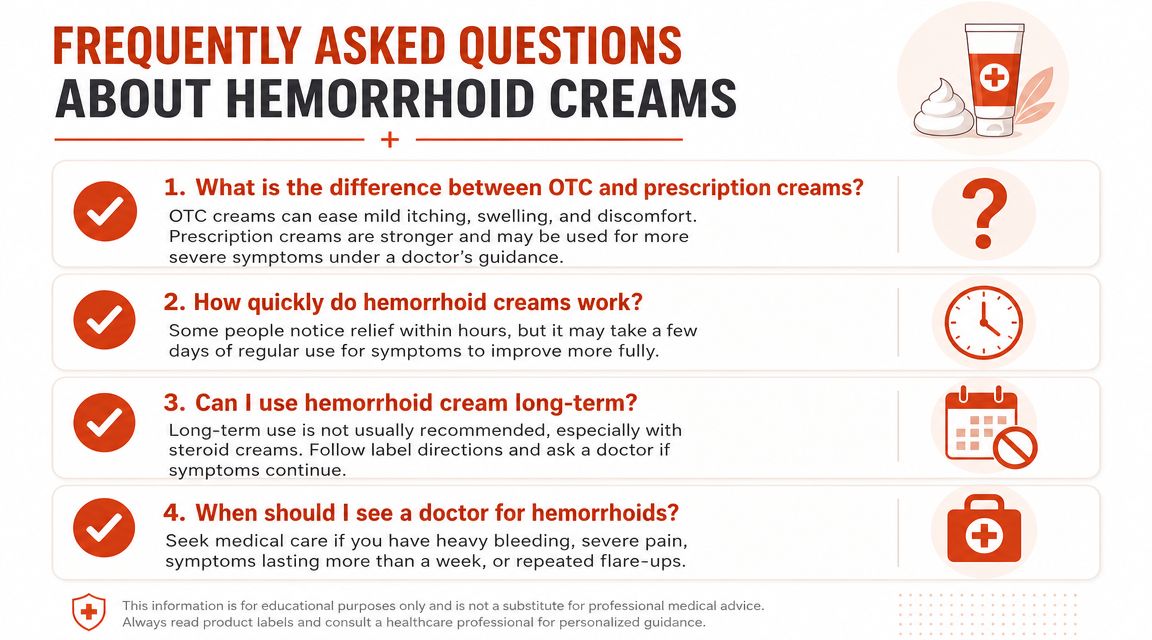
The best hemorrhoid cream is the one that matches the symptom pattern you have. Itching and inflammation usually call for hydrocortisone. Pain responds better to a local anesthetic like lidocaine or pramoxine. Swelling is where phenylephrine tends to be the better-matched ingredient.
If your symptoms are mixed or keep coming back, the best answer may not be another OTC purchase. It may be a prescription or a compounded formula suited to your situation.
How quickly should hemorrhoid cream help
Topical treatments are meant to relieve symptoms, not create mystery. You should feel that the product is moving things in the right direction. That may mean less burning after bowel movements, less itching at night, or less irritation with sitting.
If relief is minimal, brief, or inconsistent, don’t keep switching brands blindly. Reassess the ingredient choice, the diagnosis, and whether constipation or another trigger is keeping the tissue inflamed.
Can I use hemorrhoid cream long term
That depends on the ingredient. Mayo Clinic warns that hydrocortisone should not generally be used for more than a week, which is why repeated or prolonged use should prompt a treatment review rather than autopilot refills from the pharmacy aisle. Because Bummed’s creams are made with multiple active ingredients, and less hydrocortisone than standard prescription creams, their medications are generally safe for longer-term use.
Long-term self-treatment can also delay recognition of a different issue. Ongoing anorectal symptoms deserve a fresh look if they aren’t settling down.
When should I stop self-treating
If creams and lifestyle changes aren’t enough, escalation matters. For adults with large, recurrent, or significantly painful hemorrhoids, minimally invasive procedures such as hemorrhoid embolization can provide long-lasting relief by blocking blood flow so the veins shrink and resolve.
That doesn’t mean every persistent hemorrhoid needs a procedure. It means there is a point where cycling through topical products stops being the right strategy.
Can GLP-1 medications make hemorrhoids worse
They can contribute indirectly if they lead to constipation or harder stools. In that setting, hemorrhoids may flare more often because bowel movements create more strain and irritation.
The practical response is to treat both pieces of the problem. Calm the hemorrhoid symptoms, but also address stool consistency and bowel routine.
Do I need an in-person visit for hemorrhoids
Not always. Many adults start with self-care or telehealth evaluation, especially when symptoms are familiar and straightforward. But severe pain, recurrent bleeding, or symptoms that don’t improve deserve direct medical assessment.
Bummed content is for general education and should never replace professional medical advice that considers your individual health. If you think you’re experiencing a medical emergency, call 911 or head to the nearest emergency department.
Prescription products require an online consultation with a physician who will determine if a prescription is appropriate.
If you want a more personalized next step, Bummed offers online evaluation for hemorrhoid symptoms and related anorectal concerns, with provider review and prescription treatment when appropriate.