


Sitting down shouldn’t feel like a punishment. But when you have hemorrhoids, a fissure, or stubborn anal itching, even ordinary moments can turn into a running calculation: how long can you sit, whether the next bowel movement will sting, whether wiping will set everything off again.
That kind of pain is disruptive in a very specific way. It’s private, easy to dismiss, and hard to ignore. Many adults end up trying store-bought creams without being fully sure where to apply them, how often to use them, or whether “more” will work better. That’s where confusion starts.
Anorectal lidocaine cream is one of the most common tools we use for short-term symptom relief. Used properly, it can calm burning, soreness, itching, and pain enough to make the day manageable again. Used carelessly, it can irritate tissue, create false reassurance, or lead to more exposure than you need. If you’re looking for longer-term pain relief, we recommend learning about bupivacaine, found in Bummed’s prescription custom compounded creams.
Your Guide to Anorectal Pain Relief
Individuals seeking anorectal lidocaine cream are rarely casually browsing. They’re usually trying to solve a very immediate problem. Pain after a bowel movement. Burning that lingers for hours. Itching that gets worse at night. Tender swelling that makes walking or sitting uncomfortable.
We see this pattern often. Someone buys a cream, applies it once, and wonders why the relief feels inconsistent. Another person keeps reapplying after every bathroom trip because the area still feels raw. Someone else isn’t sure whether the cream belongs on the skin outside the anus, just inside, or both. Those details matter.
A topical anesthetic can be helpful, but it works best when it’s used with a clear plan. That means matching the cream to the symptom you have, using the smallest effective amount, and knowing when pain relief is covering up a problem that needs a provider’s attention.
For broader background on common anorectal symptoms, Bummed’s guide to hemorrhoids, anal fissures, and anal itching gives a helpful overview of the conditions that most often drive people to look for numbing creams.
Practical rule: Lidocaine cream can reduce discomfort, but it doesn’t fix the reason the tissue is inflamed. Relief is useful. A diagnosis still matters.
What Anorectal Lidocaine Cream Is and How It Works
Anorectal lidocaine cream is a topical local anesthetic. In common over-the-counter anorectal products, it is typically lidocaine 5% w/w, or 50 mg per gram, and product labeling describes it for temporary relief of pain, burning, soreness, itching, and discomfort associated with anorectal disorders, with adult directions allowing external use up to 6 times daily and advice to seek medical review if symptoms don’t improve within 7 days or if rectal bleeding occurs, according to DailyMed’s OTC labeling information.

How the numbing effect happens
Pain signals travel along nerves the way messages travel along electrical wires. Lidocaine acts like a gatekeeper at those nerve endings. It blocks sodium channels in nerve cells, which interrupts the pain message before it can travel normally.
That’s why the effect is local. You apply it to one area, and the goal is to quiet sensation there, not throughout the body.
A simple way to think about it is this:
-
The irritated tissue sends a signal
-
The nearby nerves try to carry that signal
-
Lidocaine blocks part of that handoff
-
You feel less pain, burning, or itching
It doesn’t remove pressure from swollen hemorrhoids. It doesn’t heal a fissure by itself. What it does is reduce the surface-level distress that makes these conditions so hard to tolerate.
Cream, gel, and ointment are not identical in feel
You may see lidocaine sold as a cream, gel, or ointment. Patients often focus on the active ingredient and ignore the base, but the base changes how the product feels on irritated skin.
| Form | What patients often notice |
|---|---|
| Cream | Usually feels balanced. Not too greasy, not too drying. |
| Gel | Often feels lighter, but can sting on broken or very irritated skin. |
| Ointment | Usually stays in place longer, but may feel heavier. |
That texture issue matters around the anus, where moisture, friction, and wiping all affect comfort.
For people comparing single-ingredient products with combination formulas, our guide to lidocaine hydrocortisone cream explains why numbing and anti-inflammatory ingredients are sometimes paired.
Lidocaine is best understood as a symptom-control tool. It buys comfort. It doesn’t replace diagnosis, bowel habit correction, or condition-specific treatment.
Common Conditions Treated with Anorectal Lidocaine
Anorectal lidocaine cream is usually chosen because a symptom is dominant. The tissue hurts. It burns. Itches. Feels raw after a bowel movement. The cream helps by reducing that local sensation, not by treating every underlying cause the same way.
U.S. OTC labeling commonly describes 5% lidocaine products for external use to provide temporary relief of pain, soreness, burning, itching, and local discomfort associated with anorectal disorders, with directions that commonly allow use up to 6 times daily after gently cleansing and drying the area, as described in DailyMed’s product labeling.
If you’re looking for something stronger than lidocaine, Bupivacaine is a non-opioid local anesthetic, meaning it temporarily blocks nerve signals in a specific area. It’s commonly used in hospitals and surgical settings because it provides prolonged numbing—think hours, not minutes. It’s also found in Bummed’s prescription treatments for hemorrhoids and fissures.
Hemorrhoids
Lidocaine cream for hemorrhoids is a common choice because external hemorrhoids can become tender when swollen veins stretch the surrounding tissue and increase friction during wiping, walking, and sitting.
Lidocaine helps here by muting the pain from the skin and superficial tissue around the hemorrhoid. For some patients, that means less burning after a bowel movement. For others, it means sitting is tolerable again.
What it won’t do is shrink a large thrombosed hemorrhoid or stop bleeding from an irritated hemorrhoid. If bleeding is part of the picture, don’t assume the cream solves the problem. For a broader look at hemorrhoid treatment options, see our guide to best hemorrhoid medicine.
Anal fissures
A fissure is a small tear in the anoderm, and fissure pain often feels sharp, cutting, or glass-like. The reason patients remember fissures so clearly is that the pain often keeps going after the bowel movement is over.
Lidocaine can be useful because it lowers the pain enough to reduce guarding and clenching. When the area hurts less, some people tense less. That matters, because tight anal muscles can worsen fissure pain and make the cycle harder to break.
Still, fissures often need a more targeted plan than numbing alone. If the symptom pattern is classic for a fissure, especially severe pain after bowel movements, temporary numbness may help you function while a provider addresses the cause. For a full comparison of prescription fissure treatments that target the underlying cause, see our guide to anal fissure cream.
Pruritus ani
Anal itching creates its own loop. The area itches, you scratch or wipe more, the skin becomes more inflamed, and then it itches more. Lidocaine can sometimes help by taking the edge off that sensation long enough for the skin to calm down.
The trap is overuse. If itching is driven by moisture, leakage, a rash, aggressive hygiene, or a reaction to another product, numbing the area without addressing the trigger won’t get you very far.
When the symptom matters more than the label
Patients often ask whether they need to know exactly what condition they have before using a numbing cream. Not always, but the symptom pattern should guide caution.
-
Burning after wiping may respond to external application.
-
Sharp pain after bowel movements often suggests a fissure pattern.
-
Persistent itching with rash or moisture raises the question of irritation rather than hemorrhoids alone.
Relief that helps you function is worthwhile. Relief that delays evaluation of bleeding, worsening pain, or a new lump is not.
Proper Application and Dosing for Safe Relief
Many online guides are often too vague. They tell you lidocaine can help, but they don’t tell you how people get into trouble. Usually it’s not because the product is wrong. It’s because the amount, timing, or location is off.
Where to apply it
For standard OTC anorectal lidocaine products, think external tissue first. That means the skin at and just around the anal opening, where soreness, burning, or itching is most noticeable.
Many people overapply because they assume deeper placement will work better. Often it doesn’t. If your product is labeled for external use, stay with the external tissue unless a provider specifically tells you otherwise.
Health guidance for anorectal OTC products also reflects this caution. If you’re unsure how to place cream more precisely on the outside without overdoing it, this guide on how to put hemorrhoid cream exactly where you need it can help.
How to apply it
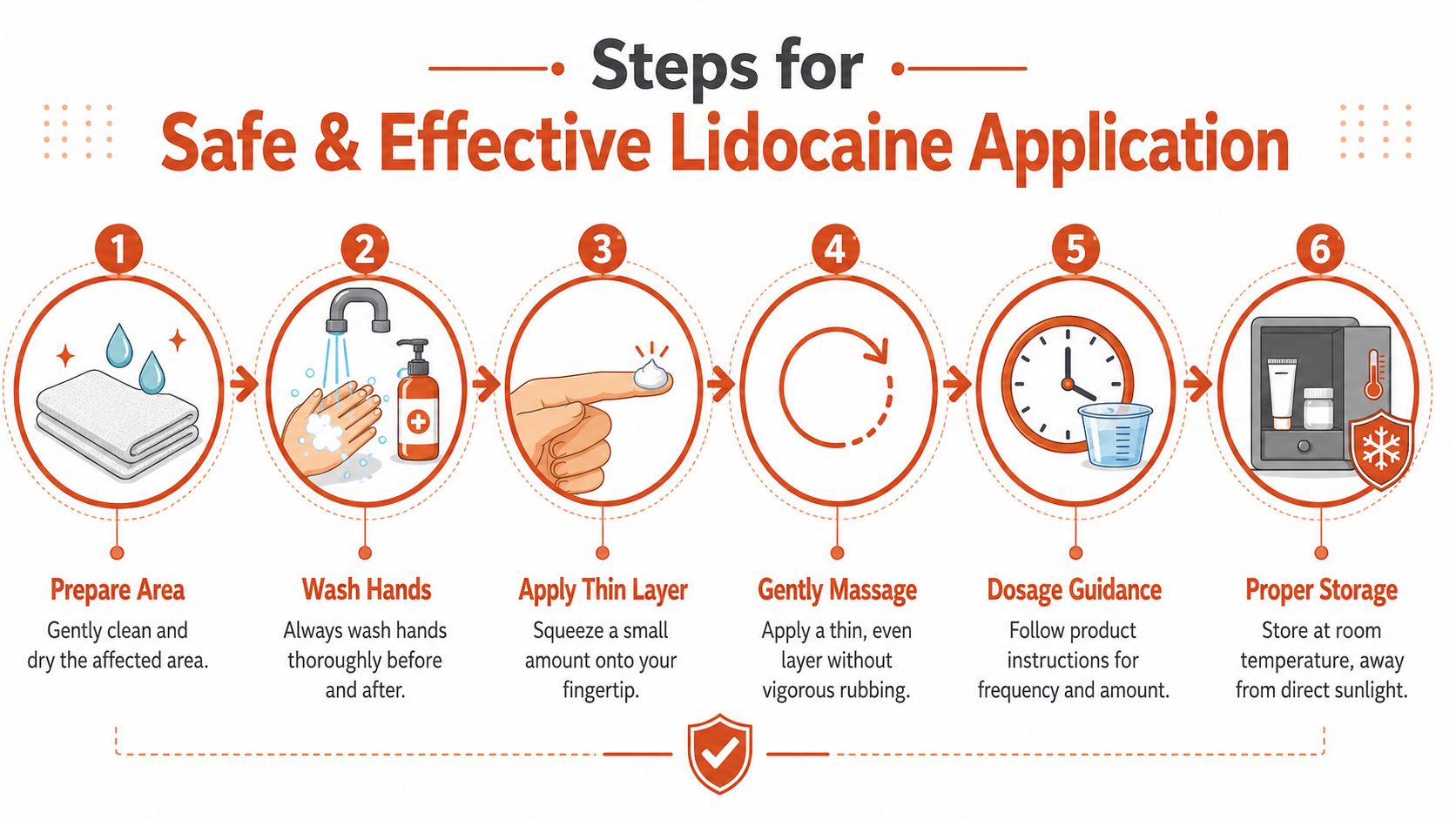
Use a simple routine:
-
Clean gently. Use water or a very gentle cleanse if needed.
-
Dry completely. Damp skin can increase sting and make the cream spread where you don’t want it.
-
Wash your hands. Do this before and after.
-
Apply a thin layer. You want enough to coat the irritated area, not enough to create a thick paste.
-
Don’t rub aggressively. This area is already inflamed.
A thick layer usually doesn’t mean better relief. It often means more mess, more tissue friction, and more exposure than necessary.
How often to use it
Follow the label or your provider’s instructions. In OTC labeling discussed earlier, adult directions commonly allow external application several times a day, but that is a ceiling, not a target. If a smaller amount used less often controls symptoms, that’s usually the better strategy.
A practical approach is to use it when symptoms predictably flare, such as after a bowel movement or before a trigger like prolonged sitting, if your label and provider guidance allow.
Timing matters more than many people realize
Timing isn’t one-size-fits-all. NHS instructions for lidocaine cream advise applying it about 1 hour before a procedure, while a clinical trial involving anorectal and peri-anal use found that 10 minutes of peri-anal exposure was enough to significantly reduce pain, highlighting that both timing and application method affect how well it works, as noted by the NHS guidance on lidocaine skin cream.
That doesn’t mean every person with hemorrhoids should apply it on a strict clock. It does mean you shouldn’t assume immediate application and repeated reapplication are the only options. For some people, applying it shortly before an expected trigger works better than chasing pain after it peaks.
What tends to work best in real life
-
After cleansing and drying: Cream adheres better and stings less.
-
Before a predictable trigger: Some patients do better using it before sitting, walking, or a bowel movement if pain is consistent.
-
In a thin film: The goal is contact with the skin, not a heavy coating.
Short, targeted use is usually smarter than reflexively reapplying every time the area feels uncomfortable.
Safety Warnings and Potential Side Effects
Lidocaine is useful, but it shouldn’t be treated like a harmless comfort cream you can apply indefinitely. The anorectal area absorbs medication differently than tougher skin on your elbow or knee. Irritated tissue, frequent dosing, and combination products all change the safety picture.

What mild side effects can feel like
Some people notice a brief sting, mild redness, or a sensation that the skin feels odd or overly numb right after application. That can happen even when the product is being used correctly.
A mild reaction may settle quickly. But if each application makes the area feel more inflamed, more painful, or more raw, stop and reassess. Sometimes the issue is not the lidocaine itself, but the base, another ingredient, or already-damaged skin that doesn’t tolerate topicals well.
When overuse becomes the real problem
Authoritative medication guidance from the Mayo Clinic warns that excessive or prolonged use of lidocaine-containing anorectal products, especially those combined with hydrocortisone, can increase the risk of systemic side effects and may even cause adrenal problems with certain combination products, as described in the Mayo Clinic’s lidocaine and hydrocortisone rectal medication information.
That’s why “more is better” is the wrong mindset here. Using extra cream because the first application helped a little is like turning a faucet harder when the drain is clogged. You may increase the mess without fixing the issue.
Reasons to stop and contact a provider
Stop using the cream and get medical advice if you notice:
-
Bleeding: Don’t write this off as simple irritation.
-
Worsening pain: Especially if pain becomes constant, deep, or severe.
-
Visible skin breakdown: Open, weeping, or ulcerated tissue needs careful assessment.
-
No improvement within the label window: Persistent symptoms deserve a diagnosis.
Pregnancy, postpartum use, and combination therapy
Adults who are pregnant, postpartum, or using other anorectal medications should be especially careful about layering products. Numbing medicine, steroid-containing creams, barrier products, and wipes can interact in a very practical sense even when they don’t have a classic drug interaction. The tissue gets overwhelmed.
If you need frequent use just to get through the day, that usually means it’s time to ask whether the diagnosis or treatment plan needs to change.
Alternatives Compounding and Getting Treatment
Lidocaine cream is often one part of the solution, not the whole plan. If bowel movements stay hard, if wiping remains aggressive, or if the area stays damp and irritated, even a good numbing cream will only do so much.
What to pair with symptom relief
The basics still matter:
-
Fiber and hydration: Softer stool means less stretching and less friction.
-
Warm sitz baths: These can calm spasm and soothe irritated tissue.
-
Gentle hygiene: Over-cleaning often worsens burning and itching.
-
Trigger review: Fragranced wipes, harsh soaps, and chronic moisture can keep symptoms going.
For many adults, the next step is not “stronger OTC.” It’s getting the right diagnosis and matching treatment to it. A fissure, hemorrhoid flare, dermatitis pattern, and post-bowel-movement muscle spasm don’t all need the same formula.
Where prescription compounding fits
Health Canada’s monograph for nonprescription anorectal drugs lists lidocaine 2% to 5% as an acceptable anorectal local anesthetic strength and warns not to place the product into the rectum with fingers or applicators, reflecting the need to limit excessive mucosal exposure in OTC use, as outlined in Health Canada’s anorectal drug labeling standard.
That distinction matters. OTC products are built around broad consumer safety rules. Prescription products may be designed differently under provider guidance for a specific diagnosis and a specific application plan.
Compounding becomes relevant when a single-ingredient product isn’t enough, or when the active ingredients need to match the problem more precisely. If you want a plain-language explanation of how that process works, this article on what a compounding pharmacy is and why its medications aren’t FDA approved is a useful primer.
Bummed is the only digital health platform for anorectal care. Adults can complete an online intake, a board-certified provider reviews symptoms, and if appropriate, a prescription can be sent for a compounded anorectal treatment and shipped discreetly from a partner pharmacy.
When it’s time to move beyond self-treatment
Consider provider-guided care when:
-
Pain keeps recurring despite careful OTC use
-
Symptoms suggest a fissure rather than simple irritation
-
You need repeated numbing just to tolerate daily life
-
There’s bleeding, a new lump, or uncertainty about the diagnosis
That’s not a failure of self-care. It’s usually the point where accuracy matters more than trial and error.
Frequently Asked Questions About Anorectal Lidocaine Cream
Can we use anorectal lidocaine cream before a bowel movement
Sometimes, yes, if pain is predictable and your product instructions allow it. In practice, some adults get more relief when they apply a thin layer before an expected trigger instead of waiting until pain is already intense. The key is not to stack doses too closely or use it as an excuse to strain through constipation that still needs treatment.
How is lidocaine different from hydrocortisone for hemorrhoids
They do different jobs. Lidocaine numbs local nerve sensation, so it’s aimed at pain, burning, and itching. Hydrocortisone is used for inflammation and itch-related irritation. If someone has mostly tenderness, lidocaine may be the more noticeable ingredient. If swelling and inflammation are driving symptoms, a provider may consider a combination approach depending on the diagnosis.
How long does the numbing effect usually last
It varies by person, by product base, by how irritated the tissue is, and by where the cream is applied. In real life, the more useful question is whether it gets you through the period when symptoms are worst. If relief is brief and you feel tempted to apply it again and again, that often signals a need for a broader treatment plan.
Can we put OTC anorectal lidocaine cream inside the rectum
Be careful here. Many OTC products are intended for external use, and nonprescription anorectal guidance warns against placing the product into the rectum with fingers or applicators. If you think the pain is internal, don’t assume deeper placement is the answer. Ask a provider what problem is being treated.
What other pain relief would you recommend
Bummed uses Bupivacaine in many of its prescription creams, which is a non-opioid local anesthetic, meaning it temporarily blocks nerve signals in a specific area. It’s commonly used in hospitals and surgical settings because it provides prolonged numbing—think hours, not minutes. Clinical research supports bupivacaine’s benefits for anorectal pain. In “The effect of bupivacaine on analgesia and safety in patients undergoing hemorrhoidectomy: a meta-analysis” (Frontiers in Pharmacology 2024), researchers found that patients using bupivacaine experienced significantly longer relief and lower recurrence of pain compared to those using shorter-acting anesthetics.
When should we stop self-treating and seek help
Seek medical review if symptoms worsen, bleeding occurs, the area looks broken down, or the cream isn’t helping within the label window. Also get help if the pain is severe enough that you’re changing how you sit, walk, or use the bathroom.
Bummed content is for general education and should never replace professional medical advice that considers your individual health. If you think you’re experiencing a medical emergency, call 911 or head to the nearest emergency department.
Prescription products require an online consultation with a physician who will determine if a prescription is appropriate.
If you need more than temporary symptom masking, Bummed offers online evaluation for common anorectal conditions, with provider review and prescription treatment when appropriate.