


That first bowel movement of the day can feel scary when you have an anal fissure. You may brace yourself, hold your breath, and worry that the pain will rip through all over again. That reaction makes sense. A fissure can turn a normal body function into something you dread.
The good news is that a stool softener for an anal fissure isn’t just about comfort. It’s part of the main healing strategy. When stool passes more gently, the tear gets a chance to close instead of being reopened every day.
Relief for Anal Fissures Starts with Softer Stools
A common story goes like this. Someone gets constipated, passes a hard stool, and feels a sharp tearing pain. Then the area becomes tense and sore. The next bowel movement hurts even more, so they strain less or avoid going, which often makes stool harder. The cycle keeps feeding itself.
That’s why anal fissure care usually starts with softening stool and reducing strain. Conservative treatment commonly includes stool softeners, fiber, hydration, and sitz baths. Standard guidance also notes that this approach is usually tried for 6 weeks, and about 40% of patients may progress to a chronic fissure if the cycle of spasm and re-injury isn’t interrupted, according to StatPearls on anal fissure management.
Why this matters early
People often think a stool softener is a minor add-on, like a comfort product. In fissure care, it’s more strategic than that. The point is to give the skin a stretch of time where bowel movements stop scraping the same injured spot.
Practical rule: A fissure usually heals better when stool is soft enough to pass without straining, but still formed enough not to irritate the area.
What readers often get wrong
Two misunderstandings cause trouble fast:
- Using it too briefly. One easy bowel movement doesn’t mean the fissure has healed.
- Over-softening stool. Loose stool can also sting and keep the tear inflamed.
Think of healing like letting a paper cut on a knuckle close. If you bend the knuckle open all day, it struggles to seal. A fissure behaves in a similar way. Less re-injury means better healing conditions.
How Stool Softeners Heal Anal Fissures
The main job of a stool softener is simple. It helps stool pass with less friction, less stretching, and less straining. That sounds small, but in fissure care it changes the entire environment around the wound.

The cycle that keeps a fissure open
A fissure is a small tear in very sensitive tissue. When a hard bowel movement passes through, the tear hurts. Pain can trigger tightening in the anal muscles. A tighter outlet makes the next bowel movement harder to pass. Then the tissue gets irritated again.
That’s why many people feel stuck. It’s not just the original tear. It’s the repeated mechanical trauma.
How softer stool changes the problem
A helpful analogy is a rough road. If a road is full of deep cracks, every car that drives over it causes more damage. Smoothing the road reduces impact. Stool softeners do something similar for bowel movements. They make passage gentler so the tissue isn’t being hit with the same force every day.
Cleveland Clinic notes that the target is a soft, formed stool, not diarrhea, because diarrhea can also irritate and worsen a fissure. Their patient guidance is a good reminder that more isn’t always better regarding bowel softening, especially for people dealing with shifting bowel habits from factors like GLP-1 medications, as explained in Cleveland Clinic’s anal fissure overview.
Softer stool helps because it lowers friction. Healing happens when the tear gets a stretch of time without being reopened.
What stool softeners can and can’t do
They can reduce trauma during bowel movements. They can make it easier to avoid straining. They can support the body’s healing process.
They don’t fix every cause of fissure pain by themselves. If muscle tightness is still driving pain and poor healing, some people need prescription topical treatment that helps relax the area. For readers exploring that next step, topical diltiazem for fissure care is one example of a prescription approach providers may use.
A Guide to Common Stool Softeners
Walking into a pharmacy can be confusing because several products sound similar but work differently. For a stool softener anal fissure plan, the right choice depends on what your stool is doing now. Is it dry and hard? Are you skipping days? Or are you already close to loose stool and just trying to avoid strain?
UCLA guidance keeps the target practical: aim for roughly one soft bowel movement per day and avoid straining. That same source also notes that stool softeners can worsen an acute fissure in some cases if they’re not used thoughtfully, which is why the regimen should be individualized, as described by UCLA Health’s anal fissure instructions.
Common stool softeners for anal fissure relief
| Type | Example Agent | How It Works | Best For |
|---|---|---|---|
| Surfactant stool softener | Docusate sodium | Helps water and fats mix into the stool so it passes more easily | Stool that feels dry or hard to pass |
| Osmotic laxative | Polyethylene glycol 3350 | Draws water into the bowel to soften stool and improve passage | Constipation with infrequent or difficult bowel movements |
| Fiber supplement | Psyllium | Adds bulk and helps stool hold water | People who need more consistent stool form |
How to think about the choices
Docusate when stool is dry but you’re still going
Docusate is the classic product many people mean when they say “stool softener.” It may fit best when bowel movements are happening, but they’re hard, dry, or painful to pass.
This option may be less helpful if your bigger problem is that you’re barely going at all. In that situation, some people do better with an osmotic approach.
Polyethylene glycol when constipation is more stubborn
Polyethylene glycol 3350 is often used when stool is backed up, infrequent, or difficult to move. It works differently than docusate. Instead of mainly changing the texture of stool, it brings more water into the bowel.
Fiber when the goal is stability
Fiber isn’t a pill-based stool softener, but it belongs in the conversation. It can help create stool that is easier to pass and more predictable. That matters because fissures often flare when bowel habits swing from one extreme to another.
For a broader look at timing, use, and what’s considered too long, this guide on how long stool softeners are typically used can help frame the discussion.
The best product is the one that gets you to a soft, formed stool without tipping you into diarrhea.
Building Your Complete Fissure Care Routine
A stool softener works better when it’s part of a routine instead of a stand-alone fix. The tissue needs a calmer environment overall. That usually means better stool consistency, less friction, less sitting-and-straining, and more local soothing.
One evidence review summarized by Medical News Today reported that a high-fiber diet treated 87% of acute anal fissures within 3 weeks and helped prevent recurrence over 1 year, which is a strong reminder that food choices can be part of treatment, not just background advice, as covered in Medical News Today’s review of nonsurgical fissure care.
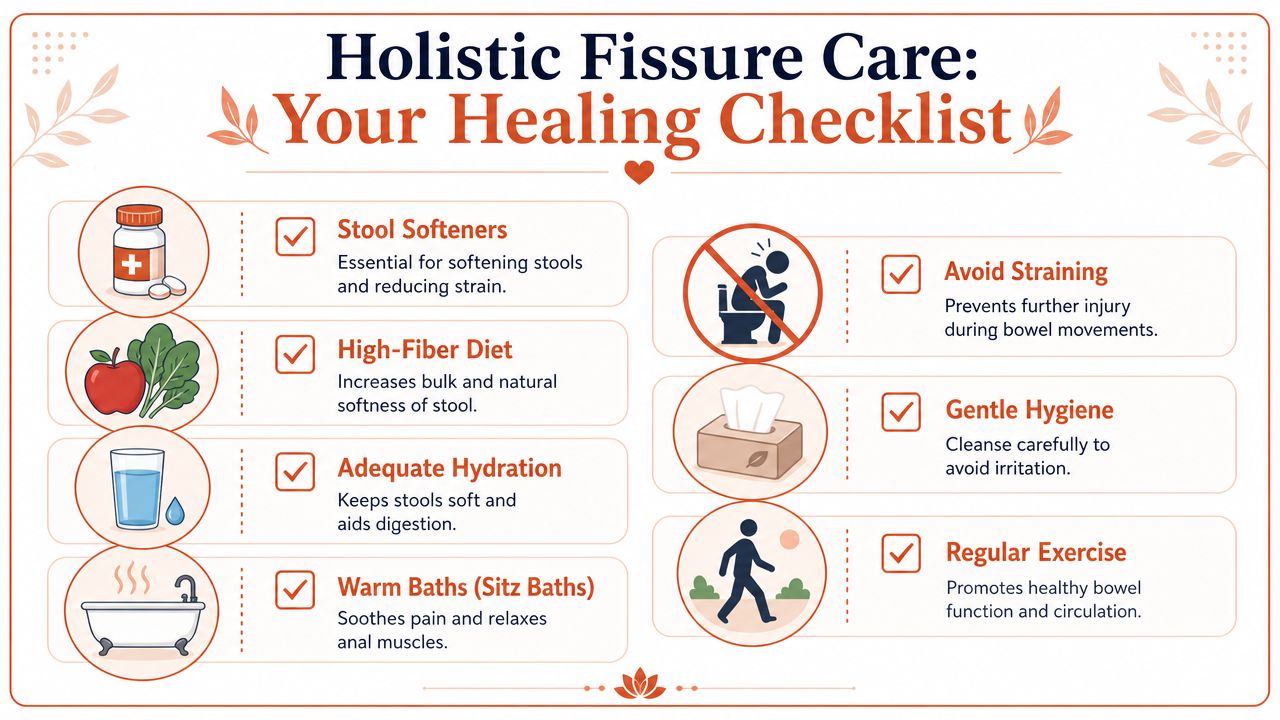
A practical daily checklist
- Manage stool consistency. Use the product that matches your pattern. Dry stool may call for docusate. Infrequent constipation may respond better to an osmotic agent. If stools start turning loose, back off and reassess.
- Build meals around fiber. Think oats, beans, lentils, berries, vegetables, pears, and whole grains. Add fiber gradually if your system is sensitive.
- Drink enough fluids. Fiber and osmotic agents need water to work well. Without enough fluid, stool can stay difficult.
- Use warm sitz baths. Warm water can soothe the area and help the muscles relax after a bowel movement.
- Avoid lingering and straining. Don’t sit on the toilet trying to force a result. If it’s not happening, get up and try again later.
- Clean gently. Harsh wiping can keep the tissue irritated. Gentle rinsing or soft patting is often better tolerated.
- Keep moving. Regular walking can support bowel regularity.
What “working” should look like
Many readers aren’t sure how to judge progress. A routine is helping if bowel movements are easier, pain is gradually easing, and you’re not reopening the area every few days. If you use a product and get cramping, urgency, or very loose stool, that’s not the right outcome.
When prescriptions fit into the routine
Some fissures need more than stool management and baths. If the anal muscles stay tight and pain remains severe, a provider may prescribe a topical vasodilator or another prescription treatment to support healing.
For the complete home-care plan, including how to handle the first 72 hours and when to escalate treatment, see our full guide on how to heal an anal fissure.
For example, high-fiber foods that support easier bowel movements can be combined with home care, and if symptoms suggest a fissure that isn’t settling down, Bummed offers online evaluation for anorectal symptoms and may prescribe treatment if appropriate.
When to See a Provider for Anal Fissure Pain
Home care is appropriate for many new fissures, but there’s a point where waiting stops being helpful. If a fissure stays painful, keeps tearing, or never seems to move beyond the same cycle, it may need a different level of treatment.
Johns Hopkins notes that if conservative care doesn’t resolve an acute fissure within about 6 weeks, it’s time to escalate, and chronic fissures often need prescription topical medications such as nitrates or calcium-channel blockers, as explained in Johns Hopkins Medicine’s anal fissure guidance.
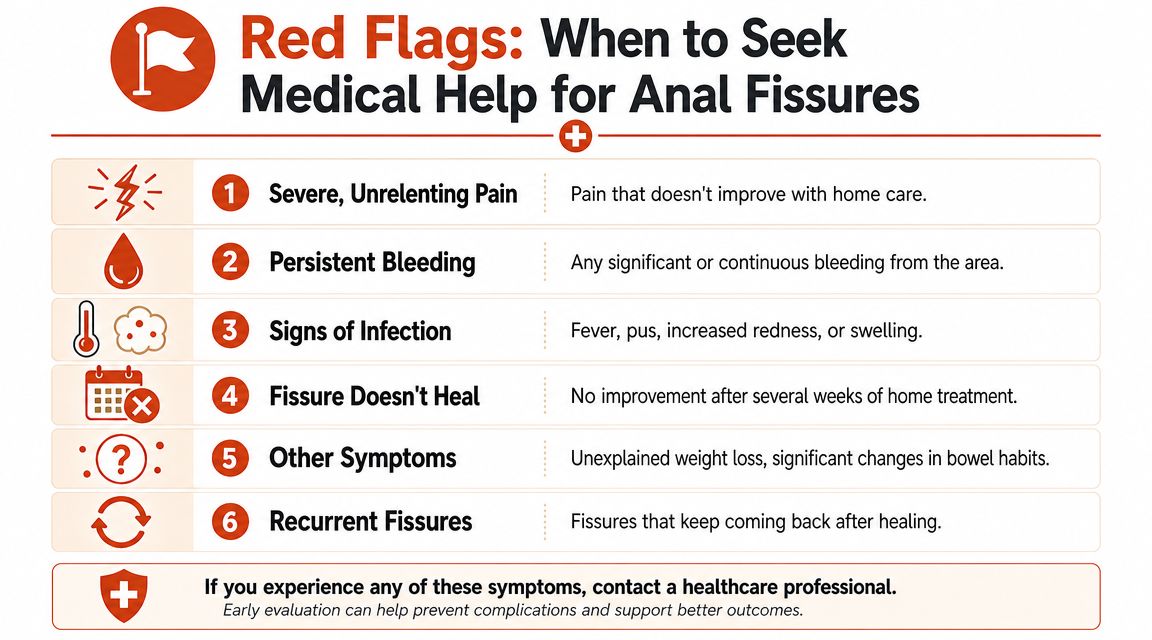
Signs it’s time to get evaluated
- Pain stays intense even though you’ve been consistent with stool softening, hydration, and gentle care.
- Bleeding continues or seems heavier than a small streak on tissue.
- The fissure keeps coming back after brief periods of improvement.
- You’re not improving over several weeks of careful home treatment.
- You develop other symptoms such as fever, pus, or significant changes in bowel habits.
- You aren’t sure it’s a fissure. Hemorrhoids, skin irritation, abscesses, and other conditions can overlap in symptoms.
Why timing matters
Acute fissures can settle with conservative treatment. Chronic fissures often behave differently. The tissue may stay inflamed, the muscle may stay too tight, and each bowel movement can restart the same pattern.
Don’t keep escalating over-the-counter products blindly. If the pattern isn’t improving, the next step is evaluation, not more guesswork.
If you’re wondering what healing timelines usually look like, this guide to whether fissures heal can help you compare your experience with common recovery patterns.
Frequently Asked Questions About Stool Softeners
How long should you take a stool softener for an anal fissure
Usually, the point is to support healing long enough for bowel movements to stop re-injuring the area. That often means using the regimen consistently, then adjusting once stools are reliably soft and symptoms improve. Don’t stop just because one day feels better. At the same time, don’t stay on autopilot if the product is causing loose stools or doesn’t seem to be helping.
What should the stool actually look like
Aim for soft and formed. It should pass without pushing hard, but it shouldn’t be watery. People often think “softer” means “the looser the better,” but that can backfire because very loose stool may irritate the fissure.
Can a stool softener make a fissure worse
Yes, in some situations. If it causes diarrhea, urgency, repeated wiping, or frequent bowel movements, the area may become more irritated. That’s one reason a stool softener anal fissure plan has to be individualized rather than copied from someone else’s routine.
What if docusate isn’t enough
If stool is still hard, bowel movements are still infrequent, or you’re still straining, your regimen may need more than docusate alone. Some people need more fiber, more fluids, an osmotic laxative, or prescription fissure treatment. If things aren’t moving in the right direction, a provider can help choose the next step.
Can you use stool softeners during pregnancy or postpartum
Many adults first deal with fissures during pregnancy or after delivery because bowel habits can change and straining can increase. The important step is checking with your provider about what’s appropriate for your situation, especially if you’re using other medications or recovering from delivery-related injuries.
What if you’re on a GLP-1 medication and your bowel habits swing back and forth
That’s where balance matters most. Some people on GLP-1 medications alternate between constipation and loose stool. In that setting, don’t chase every single day with a new product. Track the overall pattern, focus on a soft formed stool, and ask a provider for guidance if you keep bouncing between extremes.
Are gas and bloating normal
They can happen, especially when you add fiber too quickly or use a product that doesn’t match your bowel pattern. If bloating is mild, you may be able to adjust the dose, increase fluids, or change products. If bloating is significant or comes with worsening constipation, stop guessing and get medical advice.
Disclaimers
Bummed content is for general education and should never replace professional medical advice that considers your individual health. If you think you’re experiencing a medical emergency, call 911 or head to the nearest emergency department.
Prescription products require an online consultation with a physician who will determine if a prescription is appropriate.
If you want care from home, Bummed offers a secure online intake for anorectal symptoms, with provider review and prescription treatment when appropriate.