

Most acute anal fissures heal within a few weeks with home care, and about 85% heal on their own within about one month with conservative measures. If a fissure becomes chronic, healing often takes 6 to 8 weeks or longer and may need medical treatment to relax the muscle and improve blood flow.
That matters when you’re sitting on the toilet, dreading the next bowel movement, and wondering whether this pain is going to keep happening every day. A fissure can feel alarming because the pain is sharp, the area is sensitive, and even a small streak of blood can make people fear the worst. In reality, this is a common problem, and in many adults, it does get better with the right plan.
The key is knowing which kind of fissure you’re dealing with and why some heal quickly while others seem to stall. Some are like a fresh paper cut that needs protection and time. Others get stuck in a cycle of pain, muscle tightening, and poor blood flow that keeps reopening the tear.
A lot of people recognize the moment a fissure starts. There’s a sudden cutting or tearing pain during a bowel movement, followed by burning, throbbing, or lingering soreness. Then comes the worry. Is it a hemorrhoid? Is it serious? Why does something so small hurt so much?
An anal fissure is a small tear in the lining of the anus. Small doesn’t mean mild. This area has a lot of nerve endings, so even a tiny tear can feel intense.
The healing timeline most people want to know
For many adults, the short answer is reassuring. A newer fissure often improves with home care, especially when stools stay soft and the area gets a chance to stop re-injuring itself. A fissure that has been there longer may need a prescription treatment or another intervention to help the muscle relax and let blood flow back to the wound.
Practical rule: If the pain is still repeating with bowel movements after several weeks, or if symptoms seem stuck instead of gradually easing, it’s time to talk with a provider.
The phrase fissures heal can sound too simple when you’re in pain. What matters is how they heal. The body needs a clean chance to close the tear. That means less straining, less muscle spasm, and less friction from hard stool.
Why a plan matters
People often get confused because they focus only on the tear itself. But the surrounding muscle is part of the story. When that muscle tightens, the fissure stays irritated. That’s why healing usually works best as a package, not a single trick.
A good plan usually includes:
-
Softer stools so the tear isn’t reopened
-
Warm water to help the area relax
-
Less straining during bowel movements
-
Medical treatment if symptoms don’t settle down
That combination is what moves a fissure from “still hurting every day” toward actual healing.
What Is an Anal Fissure and How Does It Heal
An anal fissure is a small tear in the thin lining of the anus. Small does not mean minor here. This tissue has many nerve endings, so even a short tear can cause sharp pain during or after a bowel movement, a streak of bright red blood, and a strong urge to tighten up.
A simple way to picture healing is to think about what happens when irritated skin keeps getting stretched before it can close. The tear starts to repair, then a hard stool, straining, or diarrhea pulls on it again. That is why fissures can feel confusing. People often say the pain seems to improve for a day or two, then suddenly returns.
Acute anal fissures, meaning fissures that have lasted six weeks or less, often heal with conservative care. Research found that approximately 85% heal on their own within about one month with conservative measures in adults with acute fissures, according to this review of acute anal fissure healing.
For a broader explanation of symptoms that can overlap, including hemorrhoids, fissures, and anal itching, this guide to hemorrhoids, anal fissures, and anal itching can help you sort out what you may be feeling.
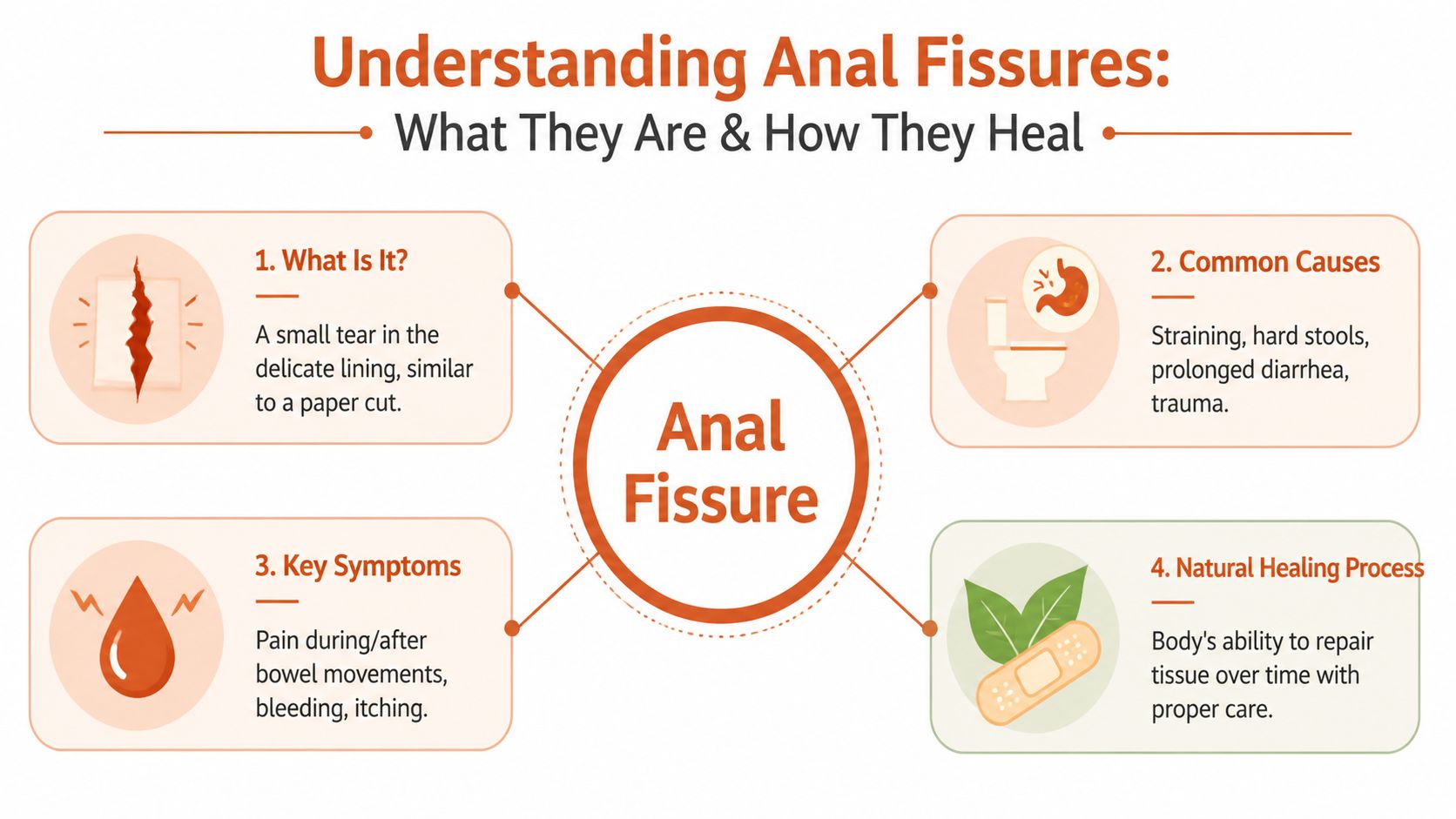
Why some fissures don’t close easily
Healing depends on more than the tear itself. The ring of muscle just inside the anus, called the internal anal sphincter, often goes into spasm after a painful bowel movement. That muscle tightening acts like a clenched fist around an irritated spot. Blood flow drops, the area stays tense, and the wound has a harder time sealing over.
A fissure that lasts more than 6 to 8 weeks is usually considered chronic. At that stage, the body is often stuck in a repeat cycle:
| Step | What happens |
|---|---|
| Pain | A bowel movement hurts, so the body reacts protectively. |
| Spasm | The internal anal sphincter tightens. |
| Lower blood flow | Tight muscle limits blood supply to the tear. |
| Delayed healing | The tissue repairs more slowly and is easier to reopen. |
This cycle helps explain why a fissure can linger even when the tear looks small.
Common triggers include constipation, hard or bulky stools, straining, repeated diarrhea, and anything else that keeps rubbing or stretching the area. Modern causes matter too. Some people develop fissures after constipation linked to GLP-1 weight-loss medications, because slower digestion and harder stools can make bowel movements more difficult to pass. If that sounds familiar, it is a medical issue, not a personal failure.
The good news is that healing usually follows a clear logic. Reduce trauma to the area, keep stool easy to pass, and calm the muscle spasm so normal blood flow can return. If symptoms are dragging on, a telehealth visit can be a fast, private way to confirm that you are dealing with a fissure and get treatment started without delaying care.
First Steps to Healing Conservative and At-Home Care
The first phase of care is practical, not fancy. Individuals generally don’t need to do ten different things. They need a few basics done consistently enough for the area to stop getting injured.
What helps right away
A home plan usually starts with stool-softening habits and local comfort measures.
-
Fiber intake: Fiber helps hold water in the stool, which makes bowel movements easier to pass. If you need food ideas, these high-fiber foods for constipation are a practical place to start.
-
Hydration: Fiber works better when you’re drinking enough fluids. Without enough fluid, stool can stay dry and difficult to pass.
-
Warm sitz baths: Warm water can help the area relax and can make bowel movements less painful afterward.
-
Stool softeners when appropriate: Some adults need short-term help breaking the cycle of hard stool and fear-driven straining.
-
Gentle bathroom habits: Go when you feel the urge. Don’t push hard. Don’t sit there waiting and straining.
People often ask which step matters most. Usually, it’s the one that keeps the next bowel movement from re-tearing the area.
What prevention looks like after healing
Often, people make a mistake here: the pain goes away, so they stop the habits that got them better in the first place. Then constipation returns, the muscle tightens again, and symptoms come back.
One review discussing recurrence noted that content rarely addresses why 40-50% of fissures recur due to unaddressed high resting anal sphincter pressure, and it cited a 2025 meta-analysis that found 47% recurrence in conservative-only treatments in the context of long-term prevention planning, as summarized in this discussion of fissure recurrence and healing.
A simple long-term routine often includes:
-
Keep stool soft most days. Healing isn’t just about the bad days.
-
Avoid delaying bowel movements. Waiting can make stool drier and harder.
-
Stay aware of triggers. Travel, dehydration, changes in diet, and constipation-causing medications can all restart symptoms.
The goal isn’t perfect bowel movements forever. The goal is fewer hard, painful ones that reopen the same spot.
Medical Treatments for Faster Fissure Healing
When home care helps but doesn’t fully get you there, medical treatment becomes the next logical step. This doesn’t mean you’ve failed. It usually means the muscle is staying too tight for the fissure to close.
When home care isn’t enough
A provider may recommend a topical prescription that helps relax the internal anal sphincter. This is important because the issue isn’t only surface irritation. In persistent fissures, the tight muscle reduces blood flow and keeps the wound from repairing.
One of the best-studied options is topical diltiazem cream, found in Bummed’s Long-Acting Rx cream. Evidence shows it reduces maximum resting pressure by approximately 28% for 3 to 5 hours after application and yields healing rates of 67-73% in chronic cases, as described in this review of topical diltiazem for chronic fissures.
Why prescription creams can help
Think of a prescription cream as helping the area “unclench.” Once the muscle relaxes, blood flow improves, and the body has a better chance to close the tear.
Some adults want a private, faster way to access treatment without waiting for an in-person specialty visit. One option is diltiazem for hemorrhoid and anal fissure relief, which explains how this type of prescription is used in anorectal care.
This matters even more for people taking weight-loss medications that slow digestion. If you’re trying to understand why those drugs can change bowel habits, this overview of understanding GLP-1 and GIP weight loss pathways gives useful context on how these medicines affect the body. Slower gut movement can mean harder stool, more straining, and a longer healing course for fissures.
For some adults, Bummed offers telehealth access to prescription anorectal creams, including options that use diltiazem-based therapy when appropriate after a provider review. The point isn’t convenience alone. It’s matching treatment to the reason the fissure isn’t healing.
Don’t think of topical prescriptions as covering up symptoms. Their job is to heal the local conditions so the tear can actually repair.
When a Fissure Becomes Chronic
A fissure becomes more concerning when the same pattern keeps repeating. Pain continues, bowel movements still trigger sharp symptoms, and the area never seems to fully settle down. At that point, providers start thinking less about a fresh tear and more about a wound that’s become established.
Signs a fissure may be chronic
A chronic fissure usually means symptoms have lasted beyond 6 to 8 weeks or have failed to improve with consistent conservative care. Some people also describe a cycle where they feel almost normal for a short time, then one hard bowel movement brings the pain right back.
That doesn’t mean you’re out of options. It means the treatment plan may need to get more targeted.
How providers treat stubborn fissures
For chronic fissures, providers may consider treatments such as botulinum toxin injections or surgery. These aren’t “extreme” choices. They’re tools used when the muscle spasm and low blood flow are too persistent for home care alone.
A long-term study of chronic fissures treated with botulinum toxin reported 73.8% complete healing at 5-year follow-up, while lateral internal sphincterotomy had 96.8% short-term healing in that same discussion of treatment outcomes in chronic fissure care, according to this review of chronic anal fissure management.
For surgery specifically, lateral internal sphincterotomy, often shortened to LIS, is widely considered the gold-standard operation for chronic fissures that don’t respond to medical treatment. It achieves 96% complete healing within 3 weeks by relieving sphincter hypertonia and restoring blood flow, as described in this overview of fissure treatment options and LIS.
A simple way to think about escalation is this:
| Treatment level | What it aims to do |
|---|---|
| Home care | Prevent re-injury and reduce irritation |
| Prescription topical therapy | Relax the muscle and improve blood flow |
| Botulinum toxin | Temporarily relax the sphincter when topical treatment isn’t enough |
| LIS surgery | Permanently reduce the tightness causing the cycle |
The goal stays the same at every stage. Break the pain-spasm-poor-blood-flow loop and let the tissue heal.
Special Considerations Pregnancy, Postpartum, and GLP-1 Medications
Some fissures happen in situations where the bowel has already become harder to manage. Pregnancy and the postpartum period can bring constipation, pressure, and hesitation around bowel movements. GLP-1 medications can create a different version of the same problem by slowing gut movement and making stool harder to pass.
Why these situations need extra care
In pregnancy or after delivery, people often try to “just tough it out” because they’re already dealing with so much physically. That can backfire. Fear of pain leads to stool holding, stool holding leads to harder bowel movements, and the fissure gets another insult.
Medication decisions in pregnancy should always go through a provider. If you’re sorting through broader questions about these medicines and pregnancy, Weight Method’s GLP-1 pregnancy guide may help frame the conversation you want to have with your own provider.
What to do if constipation is part of the problem
GLP-1 medicines deserve special attention because many adults don’t connect their new constipation with their fissure symptoms. A report summarized by Medical News Today stated that a 2025 study in Gastroenterology found 28% of GLP-1 users developed new or worsened anorectal issues, including fissures, and healing times were extended by 4 to 6 weeks compared with non-users in that discussion of how GLP-1-related constipation can affect fissure healing.
If you’re taking one of these medications, it helps to be proactive rather than reactive. Our article on why GLP-1 medications slow your gut and what you can do about it walks through the constipation side in plain language.
When stool changes because of hormones, postpartum recovery, or GLP-1 medication, the fissure often won’t improve until the constipation piece is addressed directly.
Frequently Asked Questions About Fissure Healing
How can telehealth help with anal fissures
Telehealth can help when you want prompt guidance without the delay or embarrassment that sometimes comes with in-person care. A provider can review your symptoms, ask about bleeding, pain timing, bowel habits, and medication use, then decide whether home care is enough or whether a prescription makes sense.
It can also be useful for adults who need ongoing follow-up, especially if constipation, pregnancy, postpartum recovery, or GLP-1 medication use is part of the picture. The main benefit is speed and privacy, not guessing on your own.
Is it normal to see blood when I have a fissure
It can be. Many fissures cause a small amount of bright red blood, often seen on toilet paper or on the outside of the stool. The tear is superficial, so even a small injury can bleed a little.
Still, bleeding shouldn’t be ignored if it’s heavy, persistent, or accompanied by other symptoms that concern you. A provider can help determine whether it fits with a fissure or whether something else needs evaluation.
Can a fissure heal and then come back
Yes. That’s one of the most frustrating parts of this condition. The skin may close, but if hard stool, straining, or ongoing sphincter tightness returns, the same area can reopen.
That’s why prevention matters even after the pain improves. Soft stool, less straining, and early treatment when symptoms start again can make a real difference.
Bummed content is for general education and should never replace professional medical advice that considers your individual health. If you think you’re experiencing a medical emergency, call 911 or head to the nearest emergency department.
Prescription products require an online consultation with a physician who will determine if a prescription is appropriate.
If you’re dealing with fissure pain and want a private, straightforward next step, Bummed offers online evaluation for anorectal concerns with provider review, discreet treatment options when appropriate, and education designed for adults who’d rather not keep guessing.