

Rectiv ointment is a nitroglycerin ointment used by prescription for adults with moderate to severe pain from chronic anal fissure. It works by relaxing the anal sphincter muscle so blood flow can improve, which helps the area heal, but it isn’t the only prescription option people consider.
A lot of people looking up Rectiv are in the same spot. They have sharp pain with bowel movements, lingering burning afterward, and a fear that the next trip to the bathroom will hurt just as much. They want something that does more than coat the area. They want a treatment that targets the muscle spasm that keeps a fissure from settling down.
That’s where Rectiv fits in. It became the standard branded nitroglycerin rectal therapy for chronic anal fissure pain in major markets, and it helped define a medical approach focused on lowering sphincter pressure rather than treating the fissure mechanically (RECTIV prescribing information). For many adults, that was an important shift toward outpatient treatment.
At the same time, some people struggle with side effects, especially headaches. Others want to know whether there are prescription options that take a more layered approach to fissure symptoms. That’s an important question, and it’s one we should answer clearly.
What Is Rectiv and How Does It Heal Fissures
Rectiv is a prescription rectal ointment. Its active ingredient is nitroglycerin. It’s approved for adults with moderate to severe pain from chronic anal fissure.
An anal fissure is a small tear in the lining of the anal canal. The tear hurts, but the bigger problem is often the muscle underneath it. That muscle can tighten and stay tight. When that happens, blood flow is reduced and the fissure has a harder time healing.
The simple way to think about it
Think of the anal sphincter like a fist that won’t unclench. A fissure caught in that tight muscle keeps getting squeezed. Rectiv helps that fist relax.
When the muscle relaxes, blood can move through the area more easily. Better blood flow supports healing. That’s why nitroglycerin isn’t just covering the tear. It’s trying to change the environment around it.
Practical rule: Rectiv treats the pain and the muscle spasm linked with a chronic fissure. It isn’t a numbing cream and it isn’t a stool softener.
Why a prescription matters
Rectiv ointment has a very specific medical role. It’s intended for rectal use only, and not for oral, ophthalmic, or intravaginal use. The labeled regimen is also standardized, which helps providers balance benefit with side effects.
Because nitroglycerin can affect blood vessels beyond the fissure area, your provider needs to review your medications and symptoms before prescribing it. That matters if you’re deciding between nitroglycerin and other approaches for fissure care.
If you want a deeper explainer on how nitroglycerin is used for anorectal pain, Bummed has a helpful guide on nitroglycerin for fissure and hemorrhoid pain.
How to Use Rectiv Ointment Correctly
Correct use matters with Rectiv. Using too little may not help enough. Using more than prescribed can increase side effects.
The labeled dose is 1 inch of ointment, equal to 375 mg of ointment containing 1.5 mg nitroglycerin, applied intra-anally every 12 hours for up to 3 weeks according to the official RECTIV label.
The basic routine
Individuals do best when they make the process simple and repeatable.
-
Measure the dose carefully. Use the prescribed 1-inch strip. Rectiv is one of those medications where precision matters.
-
Apply it intra-anally. That means the ointment is placed just inside the anal canal, where it can reach the muscle involved in fissure pain.
-
Use it every 12 hours. A steady schedule helps keep the treatment consistent.
-
Stop at the recommended treatment limit. The prescribing information says to use it for no longer than 3 weeks.
-
Discard the tube after opening once it reaches the 8-week mark. An opened tube shouldn’t be kept indefinitely.
Tips that make application easier
Many people feel anxious the first time they use a rectal medication. That’s normal. A few habits can make it less stressful.
-
Wash your hands before and after. This keeps the process cleaner and reduces accidental spread of the medication.
-
Go slowly. Gentle application is usually more comfortable than trying to hurry.
-
Try a regular schedule. Using it around the same times each day can help you remember the dosing interval.
-
Don’t improvise the amount. More ointment doesn’t mean faster healing.
A common point of confusion is where the ointment goes. For Rectiv to work as intended, it needs to be applied inside the anal canal, not only on the outside.
If you want a practical walkthrough of placement, this guide on how to put hemorrhoid cream exactly where you need it can help.
Understanding Rectiv Side Effects and Precautions
You apply Rectiv for a fissure, then an hour later your head starts pounding. That experience surprises a lot of people. The treatment is used in the rectal area, but some of the medication can still affect the rest of the body.
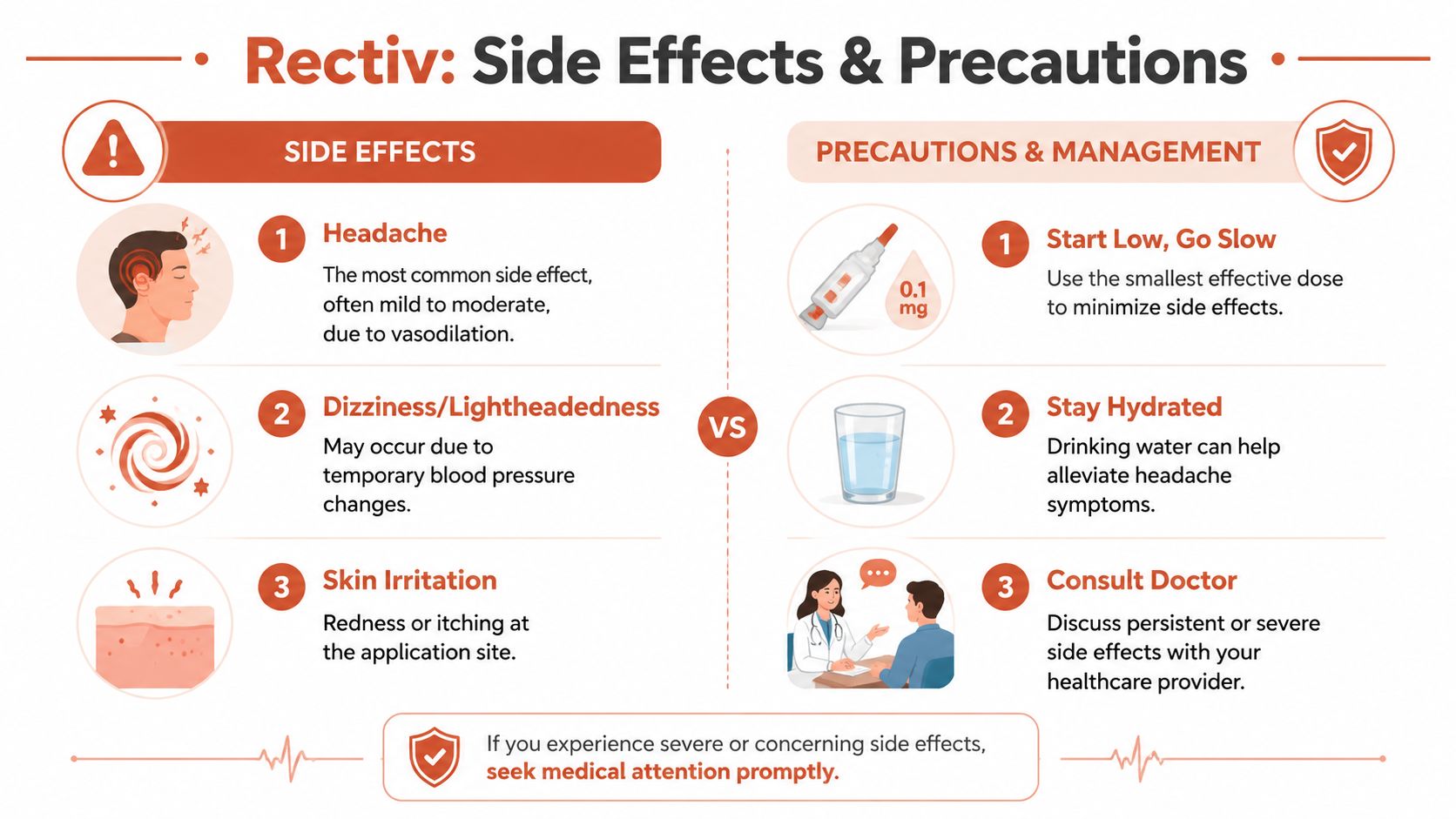
Rectiv contains nitroglycerin. Its job is to relax the tight internal anal sphincter so the fissure has a better chance to settle down. That same blood vessel relaxing effect can also trigger side effects, especially headache, lightheadedness, or dizziness.
Why headaches are so common
A fissure often behaves like a cut that keeps getting squeezed. Rectiv helps by loosening that squeeze. The catch is that nitroglycerin does not always stay limited to one tiny area, so some people feel the same kind of headache nitrates can cause elsewhere in the body.
That does not automatically mean something dangerous is happening. It does mean the medication may be hard to tolerate.
Some people also notice flushing, a sense of pressure in the head, or feeling a little unsteady when they stand up. Those symptoms fit the same basic pattern. Blood vessels relax, blood pressure can dip, and you feel it.
Precautions that matter before and during treatment
Medication interactions are a big one. Rectiv should not be combined with drugs that can sharply increase the blood pressure lowering effect, especially erectile dysfunction medications such as sildenafil, tadalafil, or vardenafil. Tell your prescriber about all prescription drugs, over the counter products, and supplements you use.
Alcohol can also make dizziness worse in some people.
If you already tend to have low blood pressure, frequent migraines, or episodes of fainting, bring that up before starting treatment. It does not always rule Rectiv out, but it changes how carefully a clinician may want to use it.
A few practical steps can make treatment safer and easier to tolerate:
-
Sit or stand up slowly if you feel dizzy.
-
Use only the prescribed amount.
-
Avoid taking extra doses because the pain is flaring.
-
Get medical advice promptly if you faint, feel severely weak, or develop symptoms that feel intense or unusual.
When side effects mean it may be time for a different prescription
Some patients do well with Rectiv. Others stop because the headaches interfere with work, sleep, or daily routines. That is one reason Rectiv is a standard prescription option, but not the only one.
If the medicine seems to help the fissure but the side effects are wearing you down, the next step is not to force yourself through it. It is to ask about another approach.
Many clinicians now use telehealth to evaluate fissure symptoms and prescribe alternatives, including compounded options such as Bummed’s, for patients who want a different balance between symptom relief and tolerability. That can be especially helpful for people who are good candidates for prescription treatment but do not do well with standard nitroglycerin-only therapy.
How Effective Is Rectiv for Anal Fissure Pain
Rectiv is used for a specific job. It’s approved for moderate to severe pain from chronic anal fissure. That wording matters because it helps set expectations.
A chronic fissure usually isn’t just a surface tear that needs time alone. The muscle tension around it often keeps the cycle going. Rectiv aims to reduce that tension so the body has a better chance to heal.
What “effective” really means here
Many people hear “effective” and expect instant relief or a complete cure. That’s not the right framework for fissure treatment.
With Rectiv, success usually means the medication is helping reduce the spasm and pain pattern that keeps the fissure active. The body still has to repair the tear. Bowel habits still matter. Constipation still needs attention. Straining can still set you back.
A useful way to think about it is that Rectiv improves the conditions for healing. It doesn’t replace healing itself.
Why it became a standard option
Rectiv helped define a clear medical strategy for fissures. Instead of moving straight to a procedure, providers could prescribe a topical therapy that targeted sphincter pressure in an outpatient setting.
That shift mattered because many adults want to try conservative treatment first. They want something more targeted than over the counter soothing products, but less invasive than procedural care.
Setting reasonable expectations
People often do best when they track a few practical signs of progress:
-
Pain during bowel movements may start to feel less intense
-
Burning afterward may become shorter or less disruptive
-
The area may become less reactive over time
-
Bowel movements may feel less guarded and tense
Relief can be gradual. A fissure that developed through repeated trauma and muscle spasm usually doesn’t calm down all at once.
If pain isn’t improving, or if treatment is hard to tolerate, your provider may recommend a different prescription approach.
Modern Rectiv Alternatives You Can Get Online
Rectiv is established. It’s also not the only prescription path for chronic fissure symptoms.
In practice, many providers also use compounded medications that relax the anal sphincter through a different mechanism or offer a broader symptom-relief strategy. Two common examples are diltiazem and nifedipine. Another option some patients ask about is a compounded nitroglycerin-based cream that combines vasodilation with other supportive ingredients.
Why some people look beyond Rectiv
The issue usually isn’t whether relaxing the sphincter makes sense. It does. The issue is tolerability and treatment goals.
Rectiv is a single-ingredient prescription centered on nitroglycerin. For some people, that straightforward approach is exactly what they need. For others, the question is whether a compounded cream can address the fissure with a more holistic formula that also supports comfort, irritation, and local symptom control.
That’s one reason Bummed offers Rapid Relief cream, a compounded prescription option that includes nitroglycerin along with additional ingredients commonly used to support numbing, calming, and skin comfort in the anorectal area. In other words, Rectiv focuses on nitroglycerin alone, while Rapid Relief is designed as a more multi-pronged approach.
How Rapid Relief differs from Rectiv
A simple way to compare them is this:
-
Rectiv: a branded nitroglycerin ointment with one main active prescription mechanism
-
Rapid Relief cream: a compounded nitroglycerin-based formula that also includes additional ingredients intended to support broader symptom relief and local comfort
That doesn’t automatically make one better for every person. It means the choice can depend on what symptoms are driving the problem, how well a person tolerates nitroglycerin alone, and whether a prescriber thinks a compounded approach is appropriate.
What online treatment changes
Telehealth has made fissure care more accessible for adults who don’t want to wait weeks for an in-person appointment. It can also feel more private, which matters for anorectal symptoms.
Long-Acting Hemorrhoid & Fissure Rx Cream
If your provider thinks a non-Rectiv option makes sense, one example is diltiazem treatment for fissures. Bummed also offers Rapid Relief Cream as a prescription option for patients who want a nitroglycerin-based treatment that goes beyond a single-ingredient formula.
That doesn’t make Rectiv obsolete. It just puts it in context. Rectiv remains a standard therapy, while compounded alternatives give providers more flexibility when headaches, medication history, or patient preference point in a different direction.
A practical way to compare options
| Option | Main idea | Common reason someone chooses it |
|---|---|---|
| Rectiv | Nitroglycerin ointment for chronic fissure pain | A standard branded prescription approach |
| Rapid Relief cream | Compounded nitroglycerin-based cream with added supportive ingredients | Someone wants a more holistic prescription formula |
| Diltiazem or nifedipine compounds | Alternative muscle-relaxing prescriptions | A provider wants a different tolerability profile |
| Telehealth prescribing | Online evaluation and treatment planning | Privacy, convenience, and follow-up access |
When to See a Doctor About Your Anal Fissure
Some fissures can be managed with conservative care and telehealth follow-up. Others need an in-person exam.
A good rule is to look at the pattern, not just the pain. If symptoms are clearly easing, that’s one thing. If they’re escalating or not making sense, get evaluated.
Signs you shouldn’t ignore
-
Pain that keeps getting worse. A fissure usually hurts, but escalating pain can mean something else is going on.
-
Heavy bleeding or bleeding that won’t settle down. Small amounts of blood can happen with fissures. Larger or persistent bleeding deserves attention.
-
Fever, swelling, or feeling sick overall. Those symptoms raise concern for a problem beyond a simple fissure.
-
No meaningful improvement after a reasonable treatment attempt. A persistent fissure may need a different prescription or a procedural evaluation.
Persistent anorectal pain isn’t something you should just “push through.” It’s a reason to get a proper diagnosis.
When telehealth fits and when it doesn’t
Telehealth works well for many adults with likely fissures, especially when the symptoms are typical and there are no red flags. It can also help if you’re trying to understand whether a treatment plan is working.
But some problems need hands-on assessment. If you’re unsure whether your fissure is healing, this guide on how fissures heal can help you think through the signs. If your symptoms feel severe, unusual, or alarming, an in-person visit is the safer move.
Frequently Asked Questions About Rectiv Ointment
Can you buy Rectiv ointment over the counter
No. Rectiv is prescription-only. A provider has to decide whether it’s appropriate for your symptoms and medication history.
How long are you supposed to use Rectiv
The prescribing information says treatment should be used for no longer than 3 weeks. It’s meant to be a short-course therapy, not an open-ended cream you keep using indefinitely.
How often do you apply Rectiv
The labeled regimen is every 12 hours. That’s a twice-daily schedule with a measured 1-inch strip.
What if I open the tube and don’t finish it
An opened tube should be discarded after 8 weeks. Even if there’s ointment left, it isn’t something to keep around for future self-treatment without guidance.
Is Rectiv the only prescription for chronic anal fissures
No. It’s a standard option, but not the only one. Providers may also use compounded prescriptions such as diltiazem, nifedipine, or nitroglycerin-based multi-ingredient creams when a patient needs a different approach.
What should you do if Rectiv doesn’t work for you
Talk with your provider. “Doesn’t work” can mean a few different things. The fissure may not be responding enough, the diagnosis may need to be reassessed, or the side effects may be too disruptive to continue. In those cases, a different prescription plan or an in-person evaluation may make more sense.
Does a headache mean something is wrong
Not necessarily. Headache is the most common adverse reaction with Rectiv. It happens because nitroglycerin widens blood vessels. But if the headache is severe, persistent, or makes the treatment unusable, contact your provider.
How is Rapid Relief different from Rectiv
Rectiv is a branded nitroglycerin ointment. Rapid Relief is a compounded cream that also uses nitroglycerin, but combines it with other supportive ingredients aimed at broader symptom relief and local comfort. Which one makes more sense depends on your symptoms, medication history, and what your prescriber recommends.
Bummed content is for general education and should never replace professional medical advice that considers your individual health. If you think you’re experiencing a medical emergency, call 911 or head to the nearest emergency department.
Prescription products require an online consultation with a physician who will determine if a prescription is appropriate.
If you’re dealing with fissure pain and want to explore prescription options online, Bummed offers telehealth care focused on anorectal conditions, including treatment plans for fissures, hemorrhoids, and related symptoms.