

You’ve got the tube in hand, and the instructions probably sound much simpler than the actual experience. Applying cream to a painful anal fissure can feel awkward, messy, and intimidating. The primary concern isn’t whether they can squeeze out a pea-sized amount. You’re wondering how to do it without flinching, how far “just inside” really is, and whether they’re making things worse.
That hesitation is common. So is the fear of touching a spot that already hurts. The good news is that diltiazem cream is a standard non-surgical treatment for chronic anal fissures, and the application method is usually straightforward once you know exactly what to do and what to avoid.
Diltiazem cream is the key ingredient found in Bummed’s Long-Acting Hemorrhoid & Fissure Rx Cream.
What Is Diltiazem Cream and Why Was It Prescribed
Diltiazem cream is a topical treatment commonly prescribed for chronic anal fissures. It is used locally, not for its usual oral blood pressure or heart effects. The goal is to relax the internal anal sphincter a bit, reduce spasm, improve blood flow to the tear, and give the tissue a better chance to heal.
Topical diltiazem for anal fissures is commonly prescribed off-label as a 2% cream or ointment, as described in NICE guidance on topical diltiazem hydrochloride. Off-label does not mean unusual or unsafe. It means the medicine is being used for a purpose that is well known in practice but not specifically listed on the product license.
That distinction matters because people often worry they were given the wrong medication. They were not. For the right patient, this is a standard non-surgical option.
Why this prescription feels different from a typical cream
Applying diltiazem cream is different from using a standard OTC cream because the target is specific internal tissue. The medicine needs to reach the area just inside the anus, where the muscle spasm that keeps the fissure from healing tends to happen.
That is also why this treatment can feel more intimidating than it sounds on paper. Pain makes people brace. Bracing tightens the sphincter. Then a small, gentle application feels harder than it should. We address that by using a calmer routine, less force, and tools that reduce friction, such as a finger cot or glove, rather than trying to tough it out.
A simple practical rule helps. Use a small amount, place it gently where it was prescribed, and avoid rubbing the area like ordinary cream on irritated skin.
If your symptoms overlap with hemorrhoid irritation, it helps to understand how clinicians sort out which cream fits which problem. This guide to prescription creams for hemorrhoids explains why anorectal pain is not one-size-fits-all. For a deep dive on how diltiazem works compared to other standard OTC treatments, read this article on the best pregnancy and postpartum hemorrhoid treatments.
Why providers choose it
Providers prescribe topical diltiazem because it can help a fissure heal without jumping straight to procedures or surgery. The trade-off is that it usually takes consistent use and a careful application method, especially during the first week when people are still anxious about touching a painful area.
Studies have shown meaningful symptom improvement for many patients using topical diltiazem, with some local irritation reported in a small number of cases. In practice, the bigger barrier is often not the medicine itself. It is fear of pain, stopping too early, or using it so hesitantly that the dose never reaches the intended tissue.
Used consistently, this cream is meant to break the cycle of pain, spasm, and re-tearing. That is why it was prescribed.
Your Foolproof Diltiazem Cream Application Method
Most application problems come down to three things: applying at the wrong time, using too much, or rubbing an already tender area. A simpler routine usually works better.
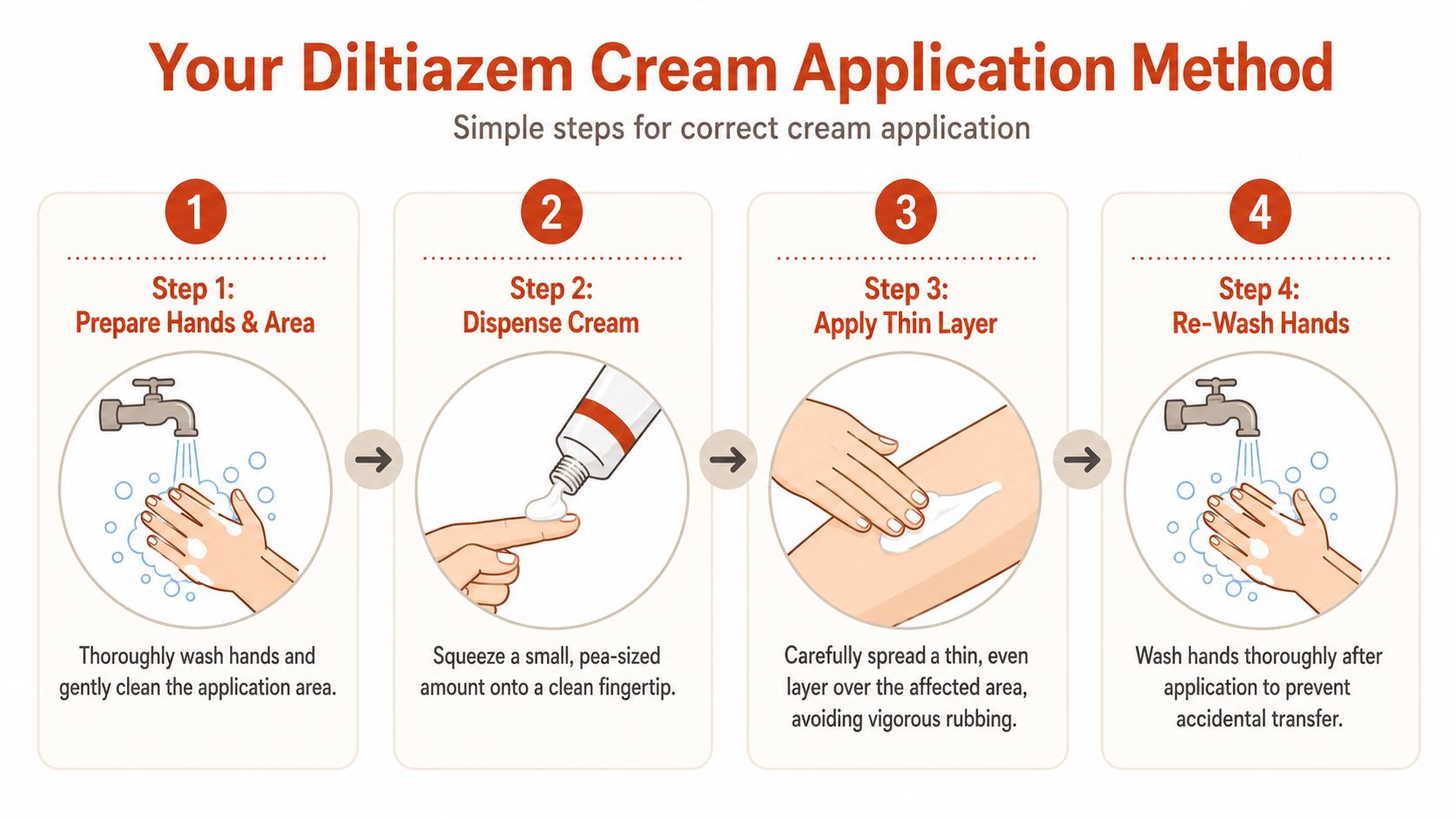
Apply, empty, rinse, dry
We recommend applying a bit before a bowel movement.
Then rinse the area gently with warm water. A peri bottle works well. Pat fully dry with a soft towel or tissue. If the skin is still damp, cream can slide rather than stay where you want it.
Prep and position
Wash your hands. If you’re using a tube, squeeze out a pea-sized amount onto a clean fingertip or finger cot. Bummed’s creams come with finger cots included in every package. More cream doesn’t make it heal faster, and it often makes the process messier.
Pick a position that lets you reach without straining:
- Side-lying with knees bent
- Standing with one foot on a low stool
- Standing at the tub with one foot supported
The best position is the one you can repeat twice a day without feeling like you’re wrestling your own body.
Dab, don’t rub
For chronic anal fissures, the standard protocol is to place the cream about 1 cm inside the anal canal and along the fissure margin, but not rub it directly into the open wound tissue. It should be left to soak in naturally. Stopping treatment as soon as pain improves, often before 6 weeks, is linked with a recurrence rate exceeding 40%, based on the verified clinical guidance provided.
That means your goal is gentle placement, not forceful massage.
Use a washed finger or finger cot. Gently place the cream just inside the anus and around the affected margin. A light pat or swipe is enough. Don’t scrub. Don’t dig for the fissure. Don’t try to coat every millimeter.
Wait before moving on
After application:
- Throw away the finger cot if you used one.
- Wash your hands well.
- Try not to have another bowel movement right away.
- Skip tight clothing or sweaty exercise immediately afterward if friction tends to bother you.
If you need more visual detail for getting cream exactly where it needs to go without an applicator, this step-by-step guide on how to put hemorrhoid cream exactly where you need it can make the mechanics feel less awkward.
How Much to Use and How Often
The short version is simple. For chronic anal fissures, major UK guidance recommends 2% diltiazem cream applied twice daily for 6 to 8 weeks, and the NHS specifies a 2.5 cm length of cream, or a pea-sized amount, applied just inside the anus in its guidance on how and when to use diltiazem.

The amount that usually works
Optimal results are achieved by keeping the dose modest and repeatable. A pea-sized amount is enough for the area being treated. If you use a long ribbon because it feels like “more medicine,” you usually just create more residue and more cleanup.
Think thin layer, not heavy coating.
The schedule that matters
We recommend applying a pea-sized amount to the inside of the anus, 3 to 4 times a day.
This is one of those prescriptions where skipping days tends to matter. The treatment works through repeated local effect, not one perfect application.
Why people get tripped up
The most common mistake isn’t laziness. It’s relief. Once bowel movements hurt less, many people assume the fissure is healed. Pain often improves before the tissue fully recovers.
That’s why the full 6 to 8 week course is standard in guidance. If your provider gave you a different timeline, follow their instructions. If you’re near the end of treatment and still having pain or bleeding, it’s worth checking back in rather than guessing.
How to Make Application Easier and More Effective
The hardest part of diltiazem cream how to apply isn’t usually the cream. It’s the spasm, the fear of pain, and the instinct to avoid the area entirely. That’s where a few small adjustments can make the whole routine much easier.
If the area is too painful to touch
A warm water soak right before application can reduce spasm, and a finger cot with Vaseline can reduce friction pain.
A simple pre-application routine often helps:
- Warm first: Sit in warm water for a few minutes before applying.
- Use a finger cot: It can make contact feel cleaner and less intimidating.
- Add a little Vaseline or Aquaphor to the cot: This can reduce drag during insertion.
- Pause if you tense up: Slow breathing and a brief reset usually work better than forcing it.
If you’re dealing with dryness or irritation
Some irritation happens because the area is already inflamed. Some happens because people over-clean, over-wipe, or over-apply. If the surrounding skin feels dry or raw, a plain barrier ointment such as Vaseline or Aquaphor can help protect the skin. Use it separately from your medicated application unless your provider tells you otherwise.
What usually helps:
- Pat dry instead of rubbing
- Use soft toilet tissue or water cleansing
- Wear loose, breathable clothing after application
The cream works better when stools stay soft
Healing doesn’t depend on the prescription alone. If each bowel movement re-injures the tissue, progress stalls.
The practical goal is easier stool passage with less straining. Daily fiber, steady hydration, and habits that reduce constipation can make a major difference in whether the fissure keeps getting reopened. If warm water is already helping your symptoms, these sitz bath benefits are worth reviewing because the soak itself often becomes part of a very workable routine.
Understanding Side Effects and Important Warnings
The moment many people worry they are doing something wrong is when the cream stings a little, feels messy, or seems to make an already sensitive area more noticeable. That concern is common. Mild local irritation can happen with topical diltiazem, especially in tissue that is already inflamed, irritated from wiping, or tense from pain.
In practice, the first question is usually whether this is a normal adjustment or a sign to stop and check in. Mild itching, slight redness, or brief burning can fall into the expected range. Ongoing discomfort that is clearly building, or a reaction that makes you dread the next dose, deserves attention.
Common and usually mild
Local skin irritation can occur with topical diltiazem. That usually means mild redness, itching, or a stinging sensation around the anal opening rather than a whole-body reaction.
Technique matters here. A lot. Cream placed gently just inside the opening is often tolerated better than rubbing it into sore tissue, using too much, or forcing application when the pelvic floor is tightening in anticipation of pain.
If symptoms are mild, we usually look at the basics first:
- Use less, not more. Extra cream does not make it work faster and can make the area feel wetter and more irritated.
- Keep the surrounding skin protected. If the outer skin is dry or raw, a separate barrier ointment on the external skin may help, as long as your prescriber has not told you otherwise.
- Watch for pattern changes. Mild brief stinging is different from irritation that gets worse after every dose.
When to contact your provider
Please reach out if any of the following happens:
- Pain is getting worse. Especially if application starts to feel impossible.
- Burning, rash, or swelling feels more than mild. That can signal irritation from the medication, the base it was compounded in, or another skin issue.
- You finish the treatment course and symptoms are not improving. At that point we may need to confirm the diagnosis or adjust the plan.
- You develop symptoms outside the treatment area. Dizziness, faintness, or feeling unwell should not be ignored.
- You are pregnant, recently postpartum, or managing constipation related to another medication. Those details can change the safest and most realistic plan. Generally speaking, Bummed’s Long-Acting Hemorrhoid & Fissure Rx Cream, which includes diltiazem, is safe for pregnancy and postpartum, but always check with your medical provider before beginning a new prescription.
Severe pain should not be something you try to push through alone.
One important safety point
Use diltiazem exactly as prescribed. Do not share it. Do not combine it with other medicated hemorrhoid or fissure products unless your clinician says to do that, because layered treatments can increase irritation and make it harder to tell what is helping.
If diltiazem is not a good fit because of irritation, incomplete relief, or another medical reason, another option may be considered. This overview of nifedipine for anal fissures explains how that approach differs.
Frequently Asked Questions About Diltiazem Cream
How should I store my diltiazem cream
Store it according to the pharmacy label. In general, keep it at room temperature and away from excess heat, moisture, and direct sunlight. If your compounded prescription came with special handling instructions, follow those rather than general advice.
What should I do if I miss a dose
Apply it when you remember, unless it’s close to the next scheduled dose. If that happens, skip the missed dose and go back to your normal routine. Don’t apply extra to catch up.
Can I use other treatments at the same time
Sometimes yes, sometimes no. Supportive care like warm water cleansing and bowel-softening strategies is often compatible with fissure care. But if you want to add another medicated cream, ask your provider first. Layering treatments in the same area can increase irritation or make it harder to tell what’s helping.
What if diltiazem doesn’t work for me
That can happen. Some fissures need a different medication strategy or a more in-depth evaluation. In some cases, providers consider alternatives such as nifedipine-based treatment. If you want to understand that option, this overview of nifedipine for anal fissures is a useful starting point.
How can I get a prescription for diltiazem cream
Bummed provides telehealth care for anorectal health, including custom compounded prescription creams with diltiazem. Through Bummed’s online intake, you will be able to give your provider a clear picture of pain, bleeding, bowel habits, prior treatments, etc. That helps determine whether a prescription is appropriate or whether you need in-person evaluation.
If you’re dealing with fissure pain and want a discreet way to get care, Bummed offers online access to a board-certified provider who can review your symptoms and decide whether a prescription is appropriate. The process is designed for sensitive anorectal issues, with private intake, ongoing support, and treatment shipped discreetly if prescribed.
Bummed content is for general education and should never replace professional medical advice that considers your individual health. If you think you’re experiencing a medical emergency, call 911 or head to the nearest emergency department.
Prescription products require an online consultation with a physician who will determine if a prescription is appropriate.