
Colorectal cancer isn’t just an older adult problem anymore. Epidemiologists predict that, without continued screening and prevention efforts, colorectal cancer could become the leading cause of cancer deaths in people ages 20 to 49 by 2030, according to The ASCO Post’s coverage of two ACS studies.
That prediction gets attention for a reason. Many adults still assume rectal bleeding, constipation, or a shift in bowel habits must be “just hemorrhoids” or stress. Sometimes that’s true. Sometimes it isn’t. The problem is that colorectal cancer symptoms can overlap with very common anorectal complaints, and self-diagnosis can delay the right workup.
Screening changes that equation. It gives people a way to look for cancer before symptoms become severe, and it helps providers sort out when a common complaint needs a more serious evaluation. If you want more context on related conditions, Bummed also has educational resources on colorectal cancer.
Understanding Colorectal Cancer Screening in 2026
The biggest shift in the current colorectal cancer screening age conversation is simple. Average-risk adults are now advised to start screening at 45, not 50. That change reflects a real rise in younger-onset disease, not a passing trend or a convenience update.
For many adults, the confusing part isn’t the number itself. It’s knowing whether that number applies to them, whether symptoms matter more than age, and whether a hemorrhoid history changes what should happen next. In practice, those questions matter more than generally acknowledged.
Why this topic feels urgent now
The old mental model was straightforward. Colon cancer screening was something you worried about later. That’s no longer a safe assumption.
Adults in their 40s now fall into a screening window that used to start later, and younger adults with concerning symptoms or risk factors often need a more individualized conversation. That doesn’t mean every episode of constipation or bright red blood is cancer. It does mean those symptoms deserve context, not guesswork.
Some symptoms are common and still deserve a proper evaluation.
What screening is meant to do
Screening is for people who may feel well, or who have symptoms that haven’t yet been fully explained. It’s designed to detect cancer early or identify warning signs that need follow-up.
That distinction matters. Many people wait until symptoms become disruptive before they ask for help. With colorectal cancer, waiting can work against you, especially when symptoms are easy to dismiss as hemorrhoids, fissures, medication-related constipation, or routine digestive changes.
A practical way to think about it is this:
-
If you’re age 45 or older and average risk, screening belongs on your preventive care list.
-
If you’re younger than 45 with symptoms or risk factors, don’t assume you’re “too young” to bring it up.
-
If you already have anorectal symptoms, don’t let embarrassment keep you from getting a provider’s opinion.
The New Standard Why Screening Now Starts at 45
About 90% of new colorectal cancer cases occur in people age 45 and older, which is one reason the American Cancer Society recommends that average-risk adults start screening at 45 instead of 50, as explained on the ACS screening guidelines page.
That age change reflects what many clinicians have seen in practice. Waiting until 50 leaves a longer window for polyps to grow or for a cancer to stay hidden until it causes trouble. Starting at 45 gives average-risk adults five more years to catch problems early, often before they cause weight loss, anemia, bowel changes, or pain.
Why 45 matters in practice
A screening age is not just an administrative cutoff. It is a prompt to act before symptoms force the issue.
This matters even more because common anorectal complaints can blur the picture. Bright red blood on toilet paper may come from hemorrhoids. Constipation may be related to diet, medication, pelvic floor problems, or stress. But bleeding that keeps happening, a change in bowel habits that does not settle, or a feeling that something is amiss should not be written off without a proper evaluation, especially once you are 45 or older.
I often tell patients this plainly. A symptom can be common and still deserve a closer look.
What helps, and what gets in the way
The most useful next step is simple. If you are 45 or older, bring up screening at a routine visit and pick a test you can realistically complete. If you are younger and have persistent rectal bleeding, ongoing constipation, unexplained iron deficiency, narrower stools, or a strong family history, ask whether you need diagnostic evaluation or earlier screening instead of assuming you are too young.
The common delays are predictable. People get used to intermittent bleeding. They blame constipation on travel, low fiber, or a new medication. They postpone the discussion because they feel embarrassed, or because they assume screening only matters if they feel sick.
That is where patients lose time.
There is also a real trade-off to acknowledge. Colonoscopy gives the most complete look and allows polyp removal during the same procedure, but it requires bowel prep, time off, and sedation planning for many people. Stool-based tests are easier to do at home, but they need to be repeated on schedule and an abnormal result still leads to colonoscopy. The best screening test is the one that fits your situation and gets done.
If your family history raises concern for an inherited syndrome, this Cleveland Clinic’s guide to Lynch syndrome can help you understand why earlier and more specific follow-up may be needed.
Are You Average Risk or High Risk
Most screening recommendations start with one question. Are you average risk or high risk?
That split matters because the standard colorectal cancer screening age of 45 applies to average-risk adults. It does not automatically fit everyone. And there’s an important gap for younger adults who have symptoms or clear risk factors. As Massey Cancer Center notes in its discussion of the age change, guidelines focus on average-risk adults starting at 45, yet colorectal cancer is now the number one cancer killer in men under 50 and number two in women, leaving younger symptomatic or higher-risk adults in a gray zone.
What average risk usually means
Average risk generally means you do not have a personal history that already puts you on a more customized surveillance plan. In plain terms, this often means:
-
No strong family history of colorectal cancer or certain colon polyps
-
No personal history of inflammatory bowel disease such as ulcerative colitis or Crohn’s disease
-
No known inherited syndrome linked to colorectal cancer
-
No prior findings that already require earlier or more frequent follow-up
If that sounds like you, the age-45 screening recommendation is usually the starting point for discussion.
Signs you may need a personalized timeline
High risk is less about one universal rule and more about details that change the schedule. Bring these up early with a provider:
-
Family history matters. A first-degree relative with colorectal cancer or certain advanced polyps can change when screening should begin.
-
Inflammatory bowel disease changes the conversation. Long-term ulcerative colitis or Crohn’s involving the colon can require a different surveillance approach.
-
Inherited syndromes need specific planning. Lynch syndrome is a major example. If this is part of your family history or genetic testing, a general screening article isn’t enough. A more focused resource like Cleveland Clinic’s guide to Lynch syndrome can help you prepare for a more detailed provider conversation.
-
Prior polyps or prior colorectal cancer usually mean you’re no longer on a basic average-risk schedule.
-
Ongoing symptoms count. Even if you’re under 45, persistent bleeding, unexplained bowel changes, abdominal pain, black stools, or unexplained weight loss should not be dismissed because of age alone.
Age is one screening signal. Symptoms and history can outweigh it.
The anorectal symptom trap
Many individuals encounter a common pitfall. Hemorrhoids, fissures, constipation, and irritation are common. They’re also real diagnoses that can explain bleeding or pain. But they can also create false reassurance.
If you’ve had hemorrhoids before, it’s easy to label any new rectal bleeding the same way. If you’re using a GLP-1 medication and you develop constipation, it’s easy to stop there. Sometimes that explanation is correct. Sometimes it covers a second issue that still needs evaluation.
A provider’s job isn’t to alarm you. It’s to sort common from concerning, and to decide whether your colorectal cancer screening age applies as routine prevention or whether your history calls for something sooner or more targeted.
Your Colorectal Cancer Screening Options Explained
Different screening tests suit different patients. Some people want the most complete visual exam upfront. Others are more likely to follow through with a home-based option first. The best test is the one that matches risk, symptoms, and the realistic chance that it gets done.
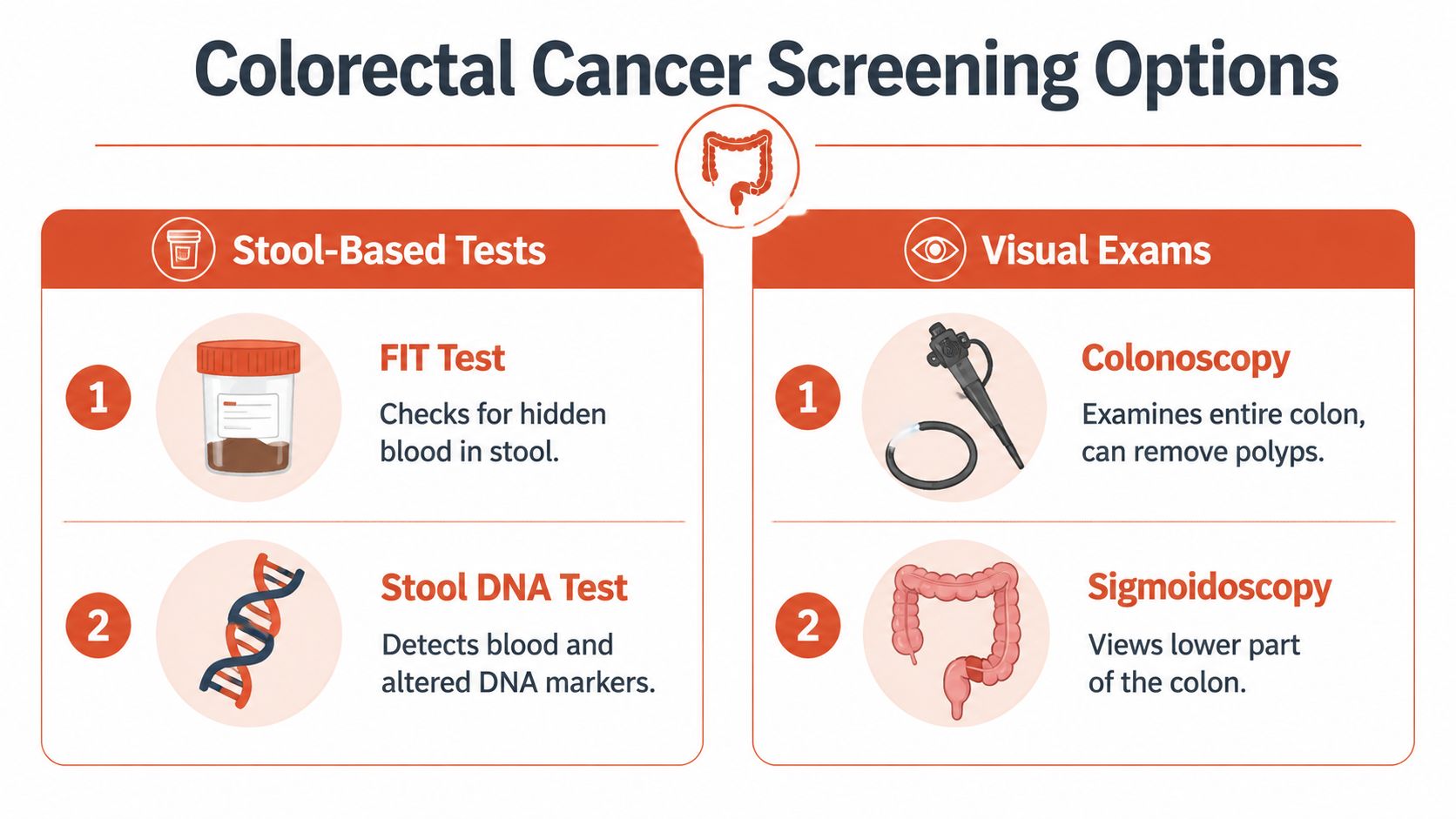
Stool-based tests
For average-risk adults, noninvasive screening can be a very practical starting point. The USPSTF recommendation on colorectal cancer screening includes high-sensitivity FIT every year and stool DNA-FIT every 1 to 3 years as screening options.
These tests are appealing for obvious reasons. They’re done at home, they don’t require an invasive scope as the first step, and they may be especially useful for people who are hesitant about colonoscopy or who already have symptomatic anorectal conditions.
That last point matters. If someone is dealing with hemorrhoidal bleeding, fissure pain, or constipation-related strain, a noninvasive route may be a reasonable way to begin the screening conversation while reducing concerns tied to invasive procedures.
Visual exams
Visual screening looks directly at the colon rather than analyzing stool. Options recognized in current guidance include:
| Test | Typical interval | Main advantage | Main trade-off |
|---|---|---|---|
| Colonoscopy | Every 10 years | Examines the entire colon and can remove polyps | Invasive, requires bowel prep |
| CT colonography | Every 5 years | Imaging-based option without a traditional scope exam | If abnormal, follow-up often still leads to colonoscopy |
Colonoscopy remains a key option because it can both detect and treat by removing polyps during the procedure. For many patients, that one-step capability is the main reason to choose it upfront.
Still, not every person needs the same entry point. For someone anxious about prep, worried about discomfort, or trying to sort out whether rectal bleeding is from hemorrhoids or something else, a stool-based test may be more realistic as a first move. If you’re trying to reduce colonoscopy anxiety, this Bummed article on how to finally get your colonoscopy done with a one-week plan offers a practical, nonjudgmental approach.
Choosing the right first step
A simple comparison can help:
-
Choose FIT or stool DNA-FIT if you want a home-based, noninvasive option and you’re at average risk.
-
Choose colonoscopy if you want a direct visual exam or your provider thinks your symptoms or history make that the better next step.
-
Ask about CT colonography if you want a structural exam but need to discuss alternatives to standard colonoscopy.
A less intimidating test that gets completed is often better than a “perfect” test that gets postponed for years.
One important caveat applies across the board. If a stool-based screening test comes back positive, that result usually leads to colonoscopy for follow-up. A home test can open the door, but it doesn’t replace the need for diagnostic evaluation when something abnormal shows up.
Symptoms That Warrant an Immediate Provider Visit
The most common mistake we see around colorectal symptoms is delay. People wait because they’re embarrassed, busy, or convinced they already know the answer. Bright red blood becomes “just hemorrhoids.” Constipation becomes “just my diet” or “just my medication.” That kind of self-reassurance can be expensive.
This matters even more because screening still isn’t reaching enough newly eligible adults. According to UCLA Health’s report on screening in adults ages 45 to 49, about 2 in 3 adults in this age group have never been screened. That’s one reason symptoms should never be shrugged off while waiting for the “right age” or the “right time.”
Symptoms you shouldn’t monitor on your own for too long
Some symptoms deserve prompt review by a provider, even if you’ve had hemorrhoids or fissures before:
-
Rectal bleeding that keeps happening. One brief episode may still need discussion, but repeated bleeding should not be self-labeled.
-
A lasting change in bowel habits. New constipation, new diarrhea, narrower stools, or a sense that you can’t fully empty can all matter when they persist.
-
Black or tarry stools. That can signal bleeding higher up in the digestive tract and needs prompt medical attention.
-
Unexplained weight loss or unusual fatigue. These are easy to rationalize and important not to ignore.
-
Abdominal pain that doesn’t settle. Especially when it comes with bowel changes or bleeding.
If you want a plain-language guide to one of the most common warning signs, this Bummed resource on blood when you wipe and what doctors need you to know is a useful starting point.
Why hemorrhoids can confuse the picture
Hemorrhoids are common. They can bleed. They can absolutely cause symptoms that look dramatic and still turn out to be benign. The problem is that a person can have hemorrhoids and another condition at the same time.
That’s why providers don’t rely on assumptions. We use symptom pattern, duration, age, personal risk, family history, and screening status to decide what’s appropriate next. Sometimes the answer is hemorrhoid care and monitoring. Sometimes the answer is colorectal cancer screening. Sometimes it’s a diagnostic workup because the pattern doesn’t fit a routine anorectal explanation.
Don’t ask whether a symptom could be hemorrhoids. Ask whether hemorrhoids have actually been confirmed as the full explanation.
How to Access Screening and Navigate Costs
Cost worries and uncertainty about next steps stop many adults from getting screened on time. I see this often, especially in people who are also trying to decide whether bleeding, constipation, or a change in bowel habits sounds minor enough to wait out. That uncertainty is exactly why a quick conversation with a medical provider matters. Screening decisions are based on age, risk, symptoms, and insurance rules, not on guesswork.
Start with the right type of appointment. If you feel well and you are due based on age or family history, ask for a preventive screening visit. If you have rectal bleeding, persistent constipation, a new bowel habit change, or abdominal pain, say that clearly when you call. Symptoms can change both the urgency and the type of testing that makes sense.
What to say when you contact a provider
You do not need a perfect script. Plain, direct language usually gets you where you need to go faster.
-
For routine screening. “I’m 45 or older and want to schedule colorectal cancer screening. Which test is appropriate for me?”
-
For symptoms. “I’ve had rectal bleeding or bowel changes, and I want to make sure this is not being dismissed as hemorrhoids without an evaluation.”
-
For family history. “A close relative had colon cancer or advanced polyps. Should I be screened earlier?”
-
For medication-related concerns. “I’ve developed constipation on medication, but I also want to know whether I need testing for something more.”
That wording helps the office sort out whether you need screening, a diagnostic visit, or both.
Cost questions to ask before you schedule
Coverage often depends on whether the visit is coded as preventive screening or diagnostic evaluation. That distinction matters. A screening colonoscopy may be covered differently than a colonoscopy done because you have bleeding or other symptoms. A practical overview like the Pounds Health Insurance preventive care guide can help you prepare for that conversation.
Ask these questions early:
-
Is this being billed as preventive screening or diagnostic evaluation?
-
Which screening tests are covered under my plan?
-
If I choose a stool test and it comes back positive, how is the follow-up colonoscopy covered?
-
Do I need a referral or prior authorization?
-
Which facility is in network?
For some adults, cost affects test choice. Stool-based screening can be a reasonable starting point for average-risk patients who are up to date on symptoms review and do not have red flags that call for a direct look with colonoscopy. If bleeding or other concerning symptoms are present, the right next step is often a diagnostic evaluation rather than a screening stool test.
When telehealth can help
Telehealth can be a practical first step if you are not sure whether you need routine screening, symptom evaluation, or urgent in-person care. It is useful for reviewing family history, clarifying how long symptoms have been going on, and deciding whether you should be scheduled directly for testing or seen in clinic first.
If you want a clearer sense of how remote visits can speed up triage and follow-up, Bummed explains how telehealth is changing acute care for good.
Do not wait for perfect clarity. If you are 45 or older, due for screening, or noticing bleeding, constipation, or bowel changes that are not clearly explained, make the call and say so plainly. That first step is often what prevents a delayed diagnosis.
Frequently Asked Questions About Screening
I’m under 45 and have rectal bleeding. Do I still need to ask about screening?
Yes. The standard colorectal cancer screening age applies to average-risk adults, but symptoms can change what needs to happen. Bleeding may come from hemorrhoids or a fissure, but it still deserves review, especially if it keeps happening, changes, or comes with bowel habit changes, pain, or fatigue.
If I’m constipated from a GLP-1 medication, can that explain everything?
It can explain a lot, but it shouldn’t automatically explain everything. GLP-1-related constipation can worsen straining, hemorrhoids, and fissures. It can also make people more likely to dismiss bleeding or bowel changes that still deserve medical review. If symptoms are new, persistent, or don’t improve with treatment, bring them up directly.
What happens if a stool test is positive?
A positive stool-based screening result usually means you need follow-up with colonoscopy. The stool test is a screening tool, not a final diagnosis. The next step is to look directly and determine whether the abnormal result reflects a polyp, cancer, bleeding from another source, or another explanation.
When do people stop colorectal cancer screening?
For average-risk adults, screening recommendations extend through age 75 in standard guidance. Decisions after that are more individualized and depend on overall health, prior screening history, and life expectancy. This is one of those moments when a provider’s judgment matters more than a one-size-fits-all internet answer.
Is colonoscopy the best test?
It’s one important option, but “best” depends on context. Colonoscopy gives a full visual exam and allows polyp removal during the procedure. Stool-based tests are less invasive and often easier to complete. For many average-risk adults, the best test is the one they’ll do on time and follow up appropriately if results are abnormal.
What if I’m embarrassed to bring up anorectal symptoms?
That’s common, and it shouldn’t stop you. Providers discuss rectal bleeding, hemorrhoids, fissures, constipation, and bowel changes all the time. Plain language works fine. “I’m seeing blood when I wipe” is enough to start a useful medical conversation.
If you’re dealing with rectal bleeding, hemorrhoids, fissures, constipation, or symptoms you’re not sure how to interpret, Bummed offers a discreet telehealth option for adults who want prompt guidance from a board-certified provider. The online intake takes about two minutes, cases are reviewed the same day, and prescriptions are offered when appropriate.
Bummed content is for general education and should never replace professional medical advice that considers your individual health. If you think you’re experiencing a medical emergency, call 911 or head to the nearest emergency department.
Prescription products require an online consultation with a physician who will determine if a prescription is appropriate.